Published in the Journal of Materials Science, the study demonstrates that adding 15% excess lithium hydroxide monohydrate to the precursor mixture during a rapid flash sintering process yields the highest room-temperature ionic conductivity among the tested samples. These results establish a practical excess-Li window for flash-sintered Ta-LLZO.
The research team, led by Yue Yang and Wei Lü, investigated the role of excess lithium in compensating for volatilization during the synthesis of Li6.4La3Zr1.4Ta1.0O12, commonly known as Ta-substituted LLZO. While excess lithium is a standard practice in garnet electrolyte production to account for lithium loss during heating, its specific impact during rapid flash sintering had not been fully resolved. The study focused on samples prepared with 0%, 5%, 10%, 15%, and 20% excess LiOH·H2O, all subjected to flash sintering at 800 °C for 10 minutes. By systematically varying the excess lithium content, the researchers aimed to clarify how this parameter influences the phase structure, density, surface composition, and local lithium-oxygen structure of the final material.
The results indicated that the sample containing 15% excess lithium exhibited the best overall performance. This specific composition achieved a relative density of 95.97% and a room-temperature ionic conductivity of 8.20 × 10⁻⁴ S cm⁻¹. Additionally, the apparent activation energy for ion transport was measured at 0.24 eV. In contrast, increasing the excess lithium content to 20% resulted in a decrease in ionic conductivity, indicating that there is an optimal threshold beyond which additional lithium becomes detrimental to the material’s transport properties.
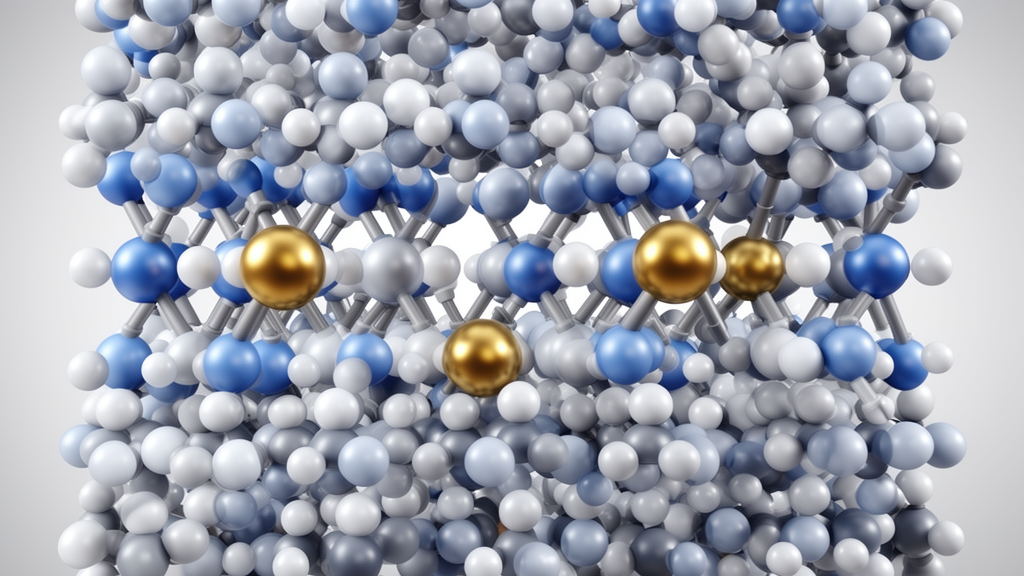
To understand the structural basis for these transport trends, the researchers employed radial distribution functions to analyze the local lithium-oxygen ordering. The data supported a change in local structure that was consistent with the observed experimental transport behavior. This structural insight helps explain why the 15% excess lithium sample outperformed others, linking the macroscopic conductivity to the microscopic arrangement of ions within the garnet lattice.
Further validation of the material’s potential was conducted through cell-level testing. It is important to note that these cell-level performance metrics were obtained under elevated-temperature and liquid-assisted conditions, which may not directly reflect performance at room temperature or in fully solid-state configurations without liquid additives.
The study concludes that optimizing the excess lithium amount is a viable strategy for enhancing the conductivity of flash-sintered Ta-substituted LLZO. By defining a practical excess-lithium window, the research offers a clear guideline for the synthesis of high-quality solid electrolytes.
Subject of Research: Optimization of excess lithium in Ta-substituted LLZO for solid-state battery electrolytes
Article Title: High conductivity enabled by optimized Li excess amounts in Ta-substituted LLZO for solid-state Li-ion batteries
Article References: Yang, Y., Zhang, Z., Ma, Y., Jia, S., Meng, J., & Lü, W. (2026). High conductivity enabled by optimized Li excess amounts in Ta-substituted LLZO for solid-state Li-ion batteries. Journal of Materials Science. https://doi.org/10.1007/s10853-026-13957-5
Image Credits: AI Generated
DOI: 10.1007/s10853-026-13957-5
Keywords: solid-state batteries, ionic conductivity, LLZO, flash sintering, lithium excess, garnet electrolyte, materials science, lithium-ion transport, High, conductivity, enabled, optimized
News Source: Denise Maddox. (November 8, 2026). Optimized Lithium Excess Boosts Conductivity in Ta-Substituted LLZO. Scienmag.