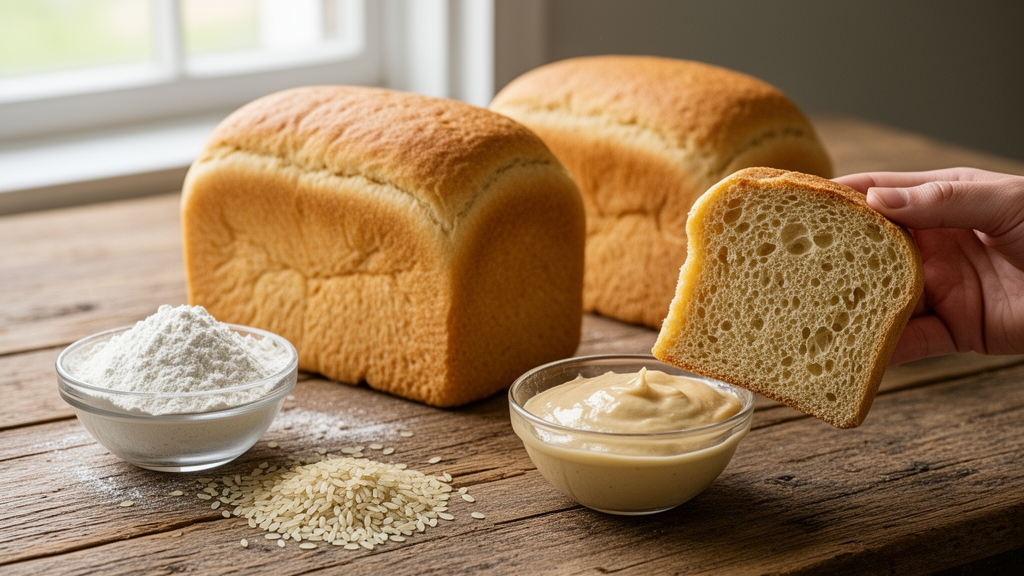
Researchers from Mahasarakham University in Thailand have identified a specific blend of germinated glutinous rice flour, corn flour, and rice flour that significantly improves the structural and sensory qualities of gluten-free bread. Published in the Journal of Agriculture and Food Research, the study demonstrates that while germination enhances the nutritional profile of rice flour, using it as the sole ingredient leads to poor loaf expansion and a sticky crumb. By strategically combining germinated glutinous rice flour with higher-amylose flours, the team developed a formulation that balances functional bioactive compounds with the technological requirements of breadmaking.
The primary challenge in gluten-free bakery production is the absence of gluten-forming proteins, specifically gliadin and glutenin. These proteins are responsible for the viscoelasticity, gas retention, and crumb development in traditional wheat bread. Without them, gluten-free doughs often suffer from low loaf volume, compact crumb structures, and reduced sensory acceptability. Consequently, formulators must rely on the functional properties of non-gluten components, such as starch composition and water-binding capacity, to stabilize the dough during mixing, fermentation, and baking.
Germinated rice flour has gained attention as a functional ingredient because the germination process activates endogenous metabolic pathways. These pathways increase the concentrations of phenolic compounds, gamma-oryzanol, tocopherols, and gamma-aminobutyric acid. However, germination also activates amylolytic enzymes, particularly alpha-amylase and beta-amylase, which partially hydrolyze starch polymers. This enzymatic activity reduces paste viscosity and alters starch gelatinization behavior, which can compromise the structural integrity of the final bread product.
The study utilized a simplex-centroid mixture design coupled with Response Surface Methodology to optimize the proportions of three flour components: germinated glutinous rice flour, corn flour, and rice flour. The researchers prepared seven distinct formulations, varying the proportions of the flours within defined ranges. Germinated glutinous rice flour was prepared by soaking glutinous paddy rice for 24 hours and germinating it at 30 degrees Celsius for 48 hours. The resulting flour was characterized for its chemical composition, enzymatic activity, and pasting properties.
Analysis of the flour components revealed that germination markedly increased the reducing sugar content and alpha-amylase activity of the glutinous rice flour. The germinated flour exhibited an alpha-amylase activity of 18.9 units per gram, compared to minimal activity in ungerminated flour. Additionally, the total phenolic content, gamma-oryzanol, and alpha-tocopherol levels were significantly higher in the germinated flour. These biochemical changes suggest that while germination enhances the bioactive profile, it simultaneously degrades the starch matrix necessary for structural stability.
Preliminary breadmaking trials confirmed that bread made exclusively with germinated glutinous rice flour exhibited poor loaf expansion and a weak crumb structure. To address this, the researchers blended the germinated flour with corn flour and rice flour, which have higher amylose contents. High-amylose starches contribute to greater paste viscosity and stronger gel formation, potentially offsetting the structural weaknesses introduced by germination. The pasting properties of the ternary blends were found to be closer to those of wheat flour than those of the individual flours.
The specific volume of the bread loaves varied significantly among the formulations. Wheat bread exhibited the highest specific volume at 2.22 cubic centimeters per gram. Among the gluten-free formulations, the blends containing 70:20:10 and 50:20:30 ratios of germinated glutinous rice flour, corn flour, and rice flour showed the highest specific volumes, reaching 2.06 and 2.00 cubic centimeters per gram, respectively. In contrast, the formulation with the highest proportion of germinated flour, at 90:0:10, exhibited the lowest specific volume at 1.14 cubic centimeters per gram, indicating limited gas retention and poor loaf expansion.
Texture profile analysis revealed distinct differences in crumb characteristics. The formulation with the highest corn flour content, at a 50:40:10 ratio, exhibited the highest hardness and gumminess, but also a more uniform crumb structure with smaller, evenly distributed gas cells. Conversely, the 90:0:10 formulation had the lowest hardness but the highest cohesiveness and chewiness, alongside a collapsed crumb appearance. These results indicate that crumb texture cannot be characterized by hardness alone and that flour composition influences multiple, distinct textural attributes.
Sensory evaluation by 30 untrained panelists showed that the 50:40:10 formulation received the highest scores for appearance, aroma, flavor, softness, and overall acceptability. These scores were not statistically different from those of the wheat bread control, suggesting that this formulation provided sensory characteristics comparable to conventional bread. The 90:0:10 formulation, however, received the lowest scores, corresponding with its poor physical properties and collapsed crumb structure. The incorporation of corn flour and rice flour was associated with improved visual quality and consumer acceptance.
Principal component analysis highlighted a clear trade-off between functionality and structure. Formulations with higher proportions of germinated glutinous rice flour were associated with greater functional compound contents but lower structural and sensory quality. The 50:40:10 blend was positioned near the wheat bread control in the analysis, indicating a favorable balance between bioactive enrichment and bread quality. This formulation was identified as the optimum using a desirability function, which maximized bioactive compounds and sensory responses while maintaining desirable crumb color.
Validation of the optimized formulation involved preparing the 50:40:10 blend in three independent batches. The experimental values for total phenolic content, gamma-oryzanol, and alpha-tocopherol were compared with the model predictions. The absolute prediction errors for sensory attributes and crumb lightness were relatively low, ranging from 1.57 to 3.60 percent. However, larger errors were observed for some bioactive compounds and the b* color coordinate, indicating that predictive performance varied among different responses.
The study concludes that blending germinated glutinous rice flour with corn flour and rice flour helps balance the functional benefits of germination with desirable bread volume and sensory acceptability. The optimized formulation provides a promising basis for developing gluten-free bakery products with enhanced functional value. Further research is warranted to investigate the effects of different germination conditions and storage stability on bioactive compound retention and shelf life.
The experimental design constrained the flour proportions to specific ranges to ensure the resulting breads remained technically viable. Germinated glutinous rice flour was limited to 50–90% of the total flour weight, while corn flour ranged from 0–40% and rice flour from 10–50%. This structured approach allowed the researchers to isolate the interactions among the three components rather than treating them as independent variables. The bread matrix included constant levels of sodium caseinate, xanthan gum, sugar, salt, yeast, and margarine. By keeping these non-flour ingredients fixed, the study minimized variation in dough rheology and gas retention, ensuring that observed differences in quality were primarily attributable to the changing ratios of the cereal flours. This controlled background allowed for a clearer assessment of how the specific starch compositions of the flours influenced the final product structure.
Chemical analysis of the breads revealed that the flour ratios significantly altered the nutritional and compositional profile of the loaves. Moisture content varied between 7.32 and 9.39 g/100 g, with formulations containing higher proportions of rice flour generally exhibiting greater moisture retention. In contrast, higher levels of germinated glutinous rice flour were associated with lower moisture content, likely due to germination-induced changes in starch structure and water-binding properties. The 90:0:10 formulation contained the highest protein, fat, and ash contents, reflecting the compositional shifts associated with the germination process. Reducing sugar content increased from 11.53 to 24.69 mg/g as the proportion of germinated flour rose, a trend consistent with enhanced enzymatic starch hydrolysis. These compositional differences highlight the direct link between the biochemical changes in the flour and the physical characteristics of the baked bread.
Color characteristics provided further evidence of the trade-off between functional enrichment and visual quality. Breads with higher proportions of germinated glutinous rice flour exhibited lower lightness values and higher redness, indicating more intense browning during baking. This effect is likely associated with the greater availability of reducing sugars generated during germination, which promote Maillard reactions and caramelization. The 50:40:10 formulation, which contained the highest proportion of corn flour among the optimized blends, displayed the highest lightness values and the lowest redness, resulting in a lighter and more uniform appearance. For all formulations, the crust showed higher redness and yellowness values than the crumb, a result of direct heat exposure at the bread surface. These color differences suggest that partial replacement of germinated flour with corn and rice flour can mitigate excessive browning, thereby improving the visual acceptability of the gluten-free product.
The statistical models used for optimization demonstrated varying degrees of predictive accuracy across different quality attributes. The coefficients of determination for the fitted mixture models ranged from 0.8219 to 0.9598, indicating that the models explained a substantial portion of the variation in the measured responses. However, the validation experiment revealed that prediction errors were not uniform. Sensory attributes and crumb lightness showed relatively low absolute prediction errors, ranging from 1.57% to 3.60%. In contrast, the bioactive compounds and the b* color coordinate exhibited larger errors, with the b* value showing a 22.93% deviation between predicted and experimental results. This variation suggests that while the model effectively captured sensory and structural trends, it was less precise in predicting the exact concentrations of specific bioactive compounds. The lack of reported lack-of-fit statistics further limits the assessment of model adequacy across the entire experimental region.
Despite the promising results, the study has several limitations that warrant consideration. The sensory evaluation was conducted as a preliminary laboratory-based test using 30 untrained panelists, which may not fully represent consumer preferences in a broader market context. Furthermore, the study did not directly measure starch molecular structure, matrix strength, or gas-cell coalescence, meaning that the proposed mechanisms for structural changes remain plausible explanations rather than confirmed causes. The germination conditions were fixed at 30 degrees Celsius for 48 hours, and the effects of varying these parameters on starch functionality and bioactive retention were not investigated. Future research should explore different germination regimes and storage stability to better understand how these factors influence the long-term quality and shelf life of gluten-free breads formulated with germinated rice flours.
Subject of Research: Balancing functionality and structure in gluten-free bread through germinated glutinous rice flour, corn flour, and rice flour blends
Article Title: Balancing functionality and structure in gluten-free bread through germinated glutinous rice flour, corn flour, and rice flour blends
Article References: Moongngarm, A., Sriwai, N., & Loypimai, P. (2026). Balancing functionality and structure in gluten-free bread through germinated glutinous rice flour, corn flour, and rice flour blends. Journal of Agriculture and Food Research, 32, Article 103423. https://doi.org/10.1016/j.jafr.2026.103423
Image Credits: AI Generated
DOI: 10.1016/j.jafr.2026.103423
Keywords: Balancing, functionality, structure, gluten-free, bread, germinated, glutinous, rice, flour, corn, blends, scientific research
News Source: Alan Morgan. (November 8, 2026). Germinated Rice Flour Blends Improve Gluten-Free Bread Quality. Scienmag.