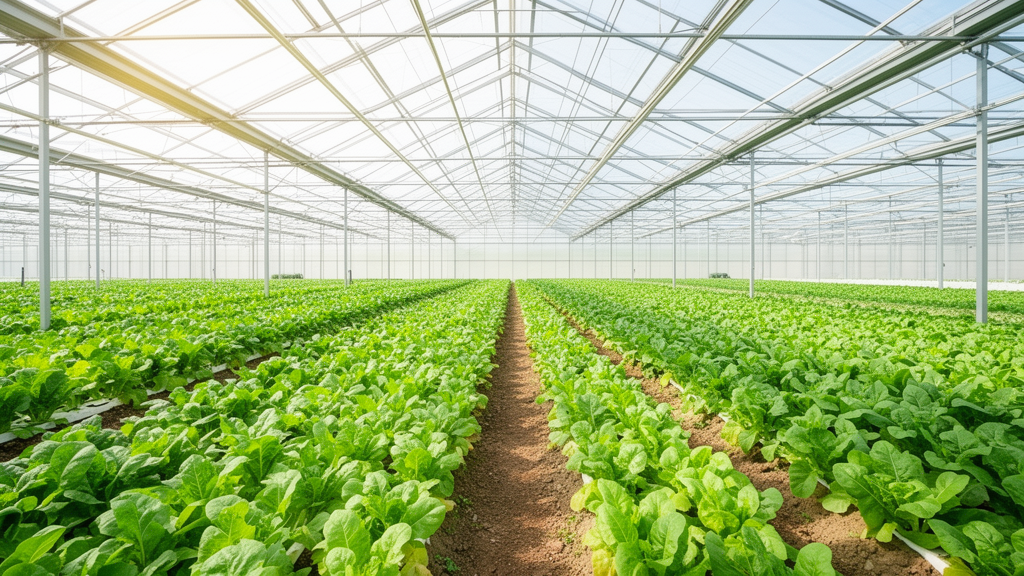
A comprehensive scoping review published in Artificial Intelligence in Agriculture reveals that fully autonomous, plant-driven control systems remain exceptionally rare in controlled-environment agriculture. The study, led by researchers including Jun Hyeun Kang and Soo Hyun Park, analyzed 204 sources to map the current state of smart farming technologies. The central finding is that fewer than 3% of the full-text-charted studies close a cultivation control loop on a directly sensed plant-state variable. This indicates a significant gap between the available sensing technologies and their actual integration into automated decision-making processes within commercial and experimental greenhouses.
The review distinguishes between microclimate-driven and plant-driven control paradigms. In conventional systems, controllers optimize environmental setpoints such as temperature, humidity, and light intensity, treating the plant as a passive output. In contrast, plant-driven autonomy requires that physiological state variables, such as transpiration rate or canopy temperature, serve as active feedback signals that directly modify control actions. The authors argue that this architectural shift is necessary to maximize biological potential, as identical microclimate trajectories can produce divergent physiological outcomes depending on the crop’s phenological stage and stress history.
To establish the scope of the review, the researchers applied a rigorous eligibility framework based on the Population–Concept–Context model. The population was restricted to agronomic crops cultivated in controlled environments, including greenhouses, plant factories, and vertical farms. The concept focused on the operational integration of plant-state or plant-response variables into cultivation control. The context included peer-reviewed literature published between January 1, 2019, and May 31, 2026. This timeframe was selected to capture the emergence of foundational developments in digital twins, reinforcement learning, and transformer-based architectures in agricultural applications.
The methodology involved a systematic search across Web of Science, Scopus, IEEE Xplore, and Semantic Scholar. The initial pool of 1,315 reports was screened using a two-stage gated pipeline assisted by large language models. The authors adjudicated discrepancies between the automated screening tools, resulting in a final charted corpus of 204 sources. Of these, 183 were charted at the full-text level, providing a detailed basis for the quantitative analysis of system architectures and control methodologies. The remaining 21 records were charted at the title-and-abstract level, primarily consisting of prior reviews and syntheses.
The review categorizes the evolution of smart farming into six distinct tiers, progressing from digital monitoring to plant-driven autonomy. The first tier involves passive data acquisition, where sensors stream environmental variables to cloud repositories for human interpretation. The second tier introduces rule-based automation, using deterministic logic to execute predefined actions such as threshold-driven ventilation. The third tier incorporates model-based optimization, utilizing mechanistic crop-growth models to forecast outcomes and suggest adjustments. The fourth tier employs data-driven intelligence, where machine learning algorithms identify patterns in phenotypic traits and environmental data to provide advisory recommendations.
The fifth tier represents autonomous farming, where closed-loop systems integrate sensing, analytics, and actuation without continuous human intervention. Deep reinforcement learning agents and digital twin paradigms are central to this stage, synthesizing control policies from simulated or live environments. The sixth and final tier, plant-driven autonomy, is the focus of the review’s critical analysis. The authors note that while the first five tiers have seen substantial development, the transition to the sixth tier is hindered by the lack of integration between sensing, modeling, and control layers. Most existing systems operate in an open-loop fashion with respect to the true biological objective, as corrective feedback does not act on the controller when plant development diverges from its intended trajectory.
Quantitative analysis of the charted corpus highlights the imbalance in research focus. Of the 186 primary studies, 148 address signal acquisition or modeling, whereas only 38 address closed-loop control or system architecture. Within the control category, only five studies close the loop on a directly sensed plant variable. These five studies, which represent the current frontier of plant-driven autonomy, operate at laboratory scale and use classical control methods rather than advanced predictive or learning-based approaches. Three of these five regulate lighting based on chlorophyll fluorescence, while others use stem electrochemical impedance or leaf turgor pressure to trigger irrigation. None of these studies coordinate multiple plant-state variables within a single multivariable loop or operate beyond a single experimental compartment.
The review identifies two interdependent architectural shortfalls that explain the persistence of this gap. The first is a control objective deficit, where controllers optimize macro-environmental boundaries and yield proxies instead of direct physiological quantities. The second is a data foundation gap, which excludes high-fidelity plant signals from the primary telemetry infrastructure. These shortfalls are mutually reinforcing; resolving the control objective is ineffective without robust data inputs, and expanding data infrastructure is inert without a coupled optimization framework. The authors propose a five-layer architectural stack—sensing, communication and edge, data management, intelligence, and control and actuation—as a framework for addressing these challenges.
Technical barriers to scaling plant-driven control include hardware costs, calibration burdens, and interoperability issues. High-throughput phenotyping sensors, such as hyperspectral cameras and chlorophyll fluorescence probes, are currently priced for academic research rather than large-scale commercial deployment. Furthermore, sensor drift over multi-month cultivation cycles can introduce systematic errors that compromise control reliability. The review notes that only 8.7% of the full-text-charted studies report quantitative economic figures, making it difficult to estimate the total cost of ownership or payback period for plant-driven architectures. This lack of economic evidence is identified as a primary obstacle to commercial adoption.
Interoperability gaps also persist across the communication and data management layers. While transport protocols like MQTT and CoAP are mature, there is no standardized representation for carrying plant-state descriptors, with their units and uncertainty, into a controller as a control-relevant variable. The semantic and metadata stratum, which includes frameworks like MIAPPE, does not yet provide a vocabulary for control-relevant physiological signals. This disconnect prevents the seamless integration of sensing data with decision-making algorithms, forcing developers to rely on ad-hoc scripts and proprietary middleware. The authors emphasize that standardization is a critical prerequisite for cross-site generalization and the development of shared benchmarks.
The review also addresses the challenges of model generalization and transferability. Deep learning models trained on a single cultivar in one greenhouse often degrade when deployed to different sites or seasons. The lack of standardized reference datasets for plant-state trajectories hampers the development of robust, generalizable models. The authors suggest that agricultural foundation models, pretrained on large multimodal datasets, could mitigate this issue, but their current application in controlled-environment agriculture is minimal. Only one of the 183 full-text-charted studies uses a vision foundation model analytically, indicating that this area remains largely unexplored.
Security and privacy concerns are also highlighted as autonomous systems become more integrated. Connected sensors and actuators expand the attack surface for cyber threats, which could corrupt plant-state measurements or issue unsafe commands to irrigation and lighting systems. Plant-state data also raise privacy issues, as they can reveal cultivar-specific performance and facility-specific cultivation strategies, representing grower-level intellectual property. The review recommends secure data-sharing agreements and privacy-preserving collaborative learning to balance model development with the protection of commercially sensitive information.
The authors conclude that plant-driven autonomy is not a novel concept but the first technologically viable instantiation of a long-standing agricultural ideal. The transition from environment-driven to plant-driven control requires resolving seven key obstacles, including economic evidence, affordable sensing, trajectory specification, multi-timescale control, reference data, generalization, and interoperability. These challenges demand sustained collaboration among plant physiologists, data scientists, and control engineers. The review provides a roadmap for this interdisciplinary effort, emphasizing that the individual components of the technology stack have largely matured, but their systematic architectural integration remains the immediate priority.
Subject of Research: Closing the loop on plant state: A scoping review of autonomous control in controlled-environment agriculture
Article Title: Closing the loop on plant state: A scoping review of autonomous control in controlled-environment agriculture
Article References: Kang, J. H., Gang, M.-S., Yang, J.-S., Jung, D.-H., Park, J. M., Hwang, I., Kwon, Y., Kim, S., Jeon, H. W., Lee, J., Choi, H., Moon, T., & Park, S. H. (2026). Closing the loop on plant state: A scoping review of autonomous control in controlled-environment agriculture. Artificial Intelligence in Agriculture. https://doi.org/10.1016/j.aiia.2026.10.008
Image Credits: AI Generated
DOI: 10.1016/j.aiia.2026.10.008
Keywords: Closing, loop, plant, state, scoping, review, autonomous, control, controlled-environment, agriculture, scientific research
News Source: Alan Morgan. (November 8, 2026). Scoping Review Finds Plant-Driven Greenhouse Control Rare. Scienmag.