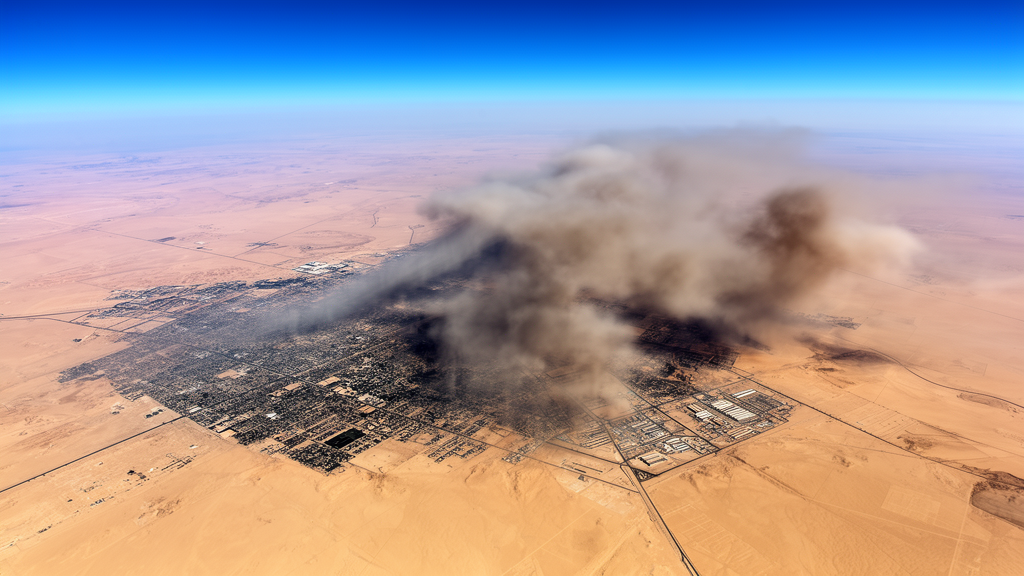
A comprehensive satellite-based study published in Air Quality, Atmosphere & Health has mapped the spatio-temporal variability of seven major air pollutants across all 13 administrative regions of Saudi Arabia from 2005 to 2024. The research, led by Almustafa Abd Elkader Ayek and colleagues, addresses the limited availability of long-term, multi-pollutant assessments covering the entire Kingdom. By integrating data from multiple satellite sources, the study provides a detailed overview of how industrial emissions, rapid urban growth, and natural dust transport interact to shape the country’s air quality profile over two decades.
The study utilized Sentinel-5P TROPOMI data for the period between 2019 and 2024, alongside MODIS MAIAC data spanning from 2005 to 2024. These datasets were processed using the Google Earth Engine platform to analyze tropospheric nitrogen dioxide (NO₂), sulfur dioxide (SO₂), carbon monoxide (CO), total-column ozone (O₃), tropospheric formaldehyde (HCHO), column-averaged methane (XCH₄), and aerosol optical depth at 550 nm (AOD). To validate the satellite-derived aerosol optical depth, the researchers compared MAIAC AOD values against ground-based measurements from five AERONET stations, finding reasonable agreement with a correlation coefficient of 0.62 and a root mean square error of 0.16 across 250 data points, although the satellite data tended to underestimate AOD at inland desert sites.
Statistical trends were assessed using ordinary least squares regression, the seasonal Mann–Kendall test, the Theil–Sen estimator, and the Ljung–Box test. The analysis identified three persistent NO₂ hotspots: the Eastern Province, Greater Riyadh, and the Jeddah–Yanbu corridor.
In contrast to the mixed results for some pollutants, column-averaged methane (XCH₄) and total-column ozone (O₃) showed statistically significant increases in all 13 regions of Saudi Arabia between 2019 and 2024, with p-values of 0.004 or lower. Methane levels rose by approximately 45 parts per billion over this five-year period. The study highlights that while some pollutants showed no significant national trend, regional variations were pronounced, such as a significant increase in SO₂ over the Jizan region.
The researchers linked the seven pollutants to 11 Sustainable Development Goal (SDG) targets using a Pressure–State–Response framework. This approach allowed them to evaluate progress toward environmental and health-related goals. Of the 91 indicator–region series analyzed, 33 showed significant increases, four showed significant decreases, and 54 exhibited no significant change. Jizan emerged as a critical hotspot, with significant increases in six of the seven indicators, whereas the Northern Borders region showed significant decreases in both NO₂ and AOD.
The study emphasizes that all estimates are column quantities subject to retrieval uncertainty, particularly over bright surfaces, and should be interpreted with caution. The results support the objectives of Saudi Vision 2030 and align with SDGs 3, 7, 9, 11, 13, 15, and 17, offering a data-driven pathway toward sustainable development.
Subject of Research: Integrated satellite-derived assessment of multi-pollutant spatio-temporal variability across Saudi Arabia (2005–2024): urban environmental implications and pathways toward sustainable development goals
Article Title: Integrated satellite-derived assessment of multi-pollutant spatio-temporal variability across Saudi Arabia (2005–2024): urban environmental implications and pathways toward sustainable development goals
Article References: Ayek, A. A. E., Loho, M. A., Alturki, A. A., Asaa, A. A., Abd-Elmaboud, M. E., Hamdi, I. M., & Youssef, Y. M. (2026). Integrated satellite-derived assessment of multi-pollutant spatio-temporal variability across Saudi Arabia (2005–2024): urban environmental implications and pathways toward sustainable development goals. Air Quality, Atmosphere & Health, 19(11), Article 254. https://doi.org/10.1007/s11869-026-02142-x
Image Credits: AI Generated
DOI: 10.1007/s11869-026-02142-x
Keywords: Integrated, satellite-derived, assessment, multi-pollutant, spatio-temporal, variability, across, Saudi, Arabia, urban, environmental, implications
News Source: Russell Cooper. (November 8, 2026). Satellite Data Reveals Persistent Air Pollution Hotspots Across Saudi Arabia. Scienmag.