Researchers at VIB and KU Leuven in Leuven have identified how mutations in the ASPM gene disrupt the development of neural stem cells that drive human brain growth, providing a mechanistic explanation for microcephaly, a congenital condition marked by an abnormally small brain and head that is often accompanied by intellectual disability. The work, published in Developmental Cell on 3 November 2026, also offers insight into why differences in brain development can leave humans more vulnerable to certain genetic conditions than other mammals.
Microcephaly is most often caused by a mutation in the ASPM gene. Patients are born with a significantly smaller brain and suffer from cognitive impairment. Notably, humans appear uniquely sensitive to the condition: mouse models carrying the same genetic mutation do not develop a smaller brain than normal. This species difference has long suggested that something distinctive about human brain development determines whether the mutation produces disease.
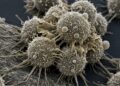
The team addressed this question using human cortical organoids, three-dimensional models that mimic aspects of the developing brain. These organoids allowed the researchers to examine the effects of ASPM mutations in a human developmental context, using patient-derived cells alongside matched controls. Within this system, they found that ASPM mutations disrupt the development of a specific population of neural progenitor cells that is specifically expanded in the human fetal brain.
More precisely, the mutations lead to premature displacement and impaired specification of outer radial glia cells, neural stem cells that are thought to enable human brain expansion. When genetic mutations impair these processes, malformations and disease can follow.
That selectivity fits with earlier observations. Past research has shown that ASPM mutations are present throughout the bodies of patients, yet the gene’s mutation appears to exert a prominent effect only during brain development. The researchers suggest that the gene’s crucial role may be compensated by other processes everywhere except in outer radial glia cells. Identifying the functional effects of these cells and understanding their behavior during brain development remains a future challenge for the field.
Prof. Pierre Vanderhaeghen of the VIB-KU Leuven Center for Neuroscience framed the result as a matter of context rather than novelty. In his view, the gene has not acquired a new function in the human species; instead, the cellular process it controls has become particularly important and sensitive during human brain expansion.
The study, classified as an experimental study with cells as its subject of research, was released as a peer-reviewed publication by the Vlaams Instituut voor Biotechnologie. Its article title, “Microcephaly-causative ASPM mutations disrupt mitotic spindle orientation and timely specification of human outer radial glia cells,” points to the two concrete defects observed: misoriented cell division machinery and a failure of neural stem cells to mature on schedule.
Important questions remain open. Vanderhaeghen noted that a key task for the future will be determining what these developmental defects mean for the fully grown brain: which neurons are most affected as a consequence of the developmental defect, how they connect, and whether the consequences extend beyond simply having fewer neurons. Because the study relies on organoid models that mimic aspects of development rather than on a growing fetal brain itself, the findings describe mechanisms in a controlled human cellular system, and their full consequences in patients will require further investigation.
Subject of Research: How ASPM mutations disrupt human outer radial glia development and cause microcephaly
Article Title: Researchers uncover why humans are more sensitive than other species to a brain developmental disease
Article References: Researchers uncover why humans are more sensitive than other species to a brain developmental disease. Original publication (Bibliographic details unavailable.)
Image Credits: AI Generated
DOI: Not provided
Keywords: ASPM, microcephaly, outer radial glia, neural stem cells, cortical organoids, brain development, VIB, KU Leuven, Developmental Cell, genetic mutation, human cortex, neurodevelopment
News Source: Cassandra Pierce. (November 8, 2026). ASPM mutations derail human neural stem cells and explain microcephaly sensitivity. Scienmag.