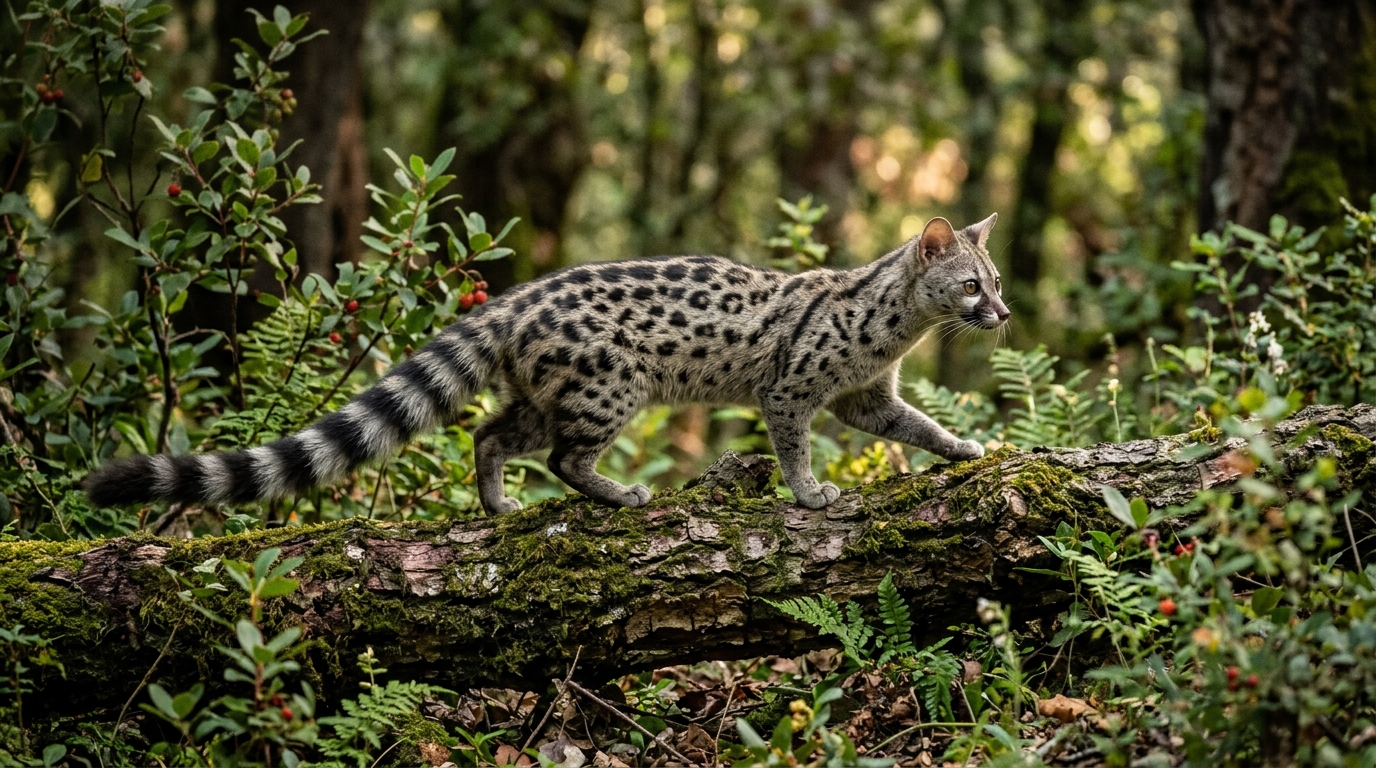
A new study published in Animal Biotelemetry presents the first case study examining the movement behavior and energy expenditure of mesocarnivores within large-scale Eucalyptus plantations. The research, led by Gonçalo Matias and colleagues, investigates how human-driven habitat modification, specifically production forestry, affects the spatial and energetic dynamics essential for wildlife survival. By tracking individuals from both forest-dwelling and generalist species, the study highlights the critical role of remnant native vegetation in supporting carnivore persistence within simplified production landscapes.
Production forestry, which includes extensive Eucalyptus plantations, represents one of the most significant forms of forest alteration globally. This type of land use reduces habitat complexity and connectivity, creating a structurally simplified environment. Such structural simplification can constrain animal mobility, increase the energetic costs of movement, and alter habitat selection patterns. These effects are particularly pronounced for carnivores, which have large spatial needs and rely heavily on prey availability for their survival.
The researchers utilized high-resolution GPS tracking and 3D accelerometers to monitor the movements and activity levels of three mesocarnivore species: the stone marten (Martes foina), the common genet (Genetta genetta), and the red fox (Vulpes vulpes). The stone marten and common genet are classified as forest-dwelling species, while the red fox is considered a generalist.
The findings revealed that individuals from the forest-dwelling species consistently selected native vegetation and structurally complex habitats, such as low vegetation and forests. In these areas, the animals spent more time and expended less energy. Conversely, these species avoided the Eucalyptus plantations and areas near forest certification-designated conservation zones.
In contrast, the red fox, a generalist species, displayed higher behavioral flexibility. While red foxes occasionally used the plantations, they did so with higher energy costs. Despite this flexibility, the red foxes still favored native patches and areas near conservation zones for resting and foraging activities. This indicates that even generalist species benefit from the presence of native vegetation, which provides more efficient movement corridors and refuge.
The study emphasizes that remnant native vegetation is critical for mesocarnivores, providing essential refuge and efficient movement corridors within production landscapes. Conservation zones embedded within plantations were found to enhance habitat suitability, particularly for individuals of the generalist species. These preliminary findings, based on a small number of individuals, highlight the need for explicit inclusion of animal movement as a core metric in conservation planning. When promoting landscape permeability is a key conservation goal, understanding how animals move through and use different habitat types is crucial for effective management.
Effective management strategies should combine the retention and restoration of native patches with the strategic placement and enhancement of conservation zones. This approach aims to meet the species-specific habitat needs of various mesocarnivores, thereby supporting both wildlife persistence and sustainable forestry practices.
Limitations of the study include the small sample size, which may limit the generalizability of the findings to broader populations or different geographic regions.
Subject of Research: Mesocarnivore movement ecology and energy expenditure in Eucalyptus plantations
Article Title: Dwelling in production landscapes: a case study of mesocarnivore movement ecology in exotic plantations
Article References: Matias, G., Rosalino, L. M., Afonso, B. C., Valdez, V., English, H. M., Corradini, A., Heurman, M., & Cagnacci, F. (2026). Dwelling in production landscapes: a case study of mesocarnivore movement ecology in exotic plantations. Animal Biotelemetry. https://doi.org/10.1186/s40317-026-00482-0
Image Credits: AI Generated
DOI: 10.1186/s40317-026-00482-0
Keywords: mesocarnivores, Eucalyptus plantations, movement ecology, energy expenditure, habitat modification, production forestry, GPS tracking, conservation zones, Animal Biotelemetry, wildlife survival, Dwelling, production
News Source: Margaret Porter. (November 8, 2026). Mesocarnivores Prefer Native Vegetation Over Eucalyptus Plantations. Scienmag.