Researchers from The University of Tokyo have developed a novel polyionic complex micelle platform capable of stably encapsulating the radioactive isotope indium-111 within its crosslinked core. This approach addresses a significant barrier in nuclear medicine, where conventional nanocarriers often rely on surface-bound chelators that expose isotopes to biological transchelation and detachment. By anchoring the radionuclide inside the micelle using DOTA chelation, the study demonstrates a method to enhance radiochemical stability while preserving the carrier’s native surface characteristics. The work, published in EJNMMI Radiopharmacy and Chemistry, highlights the potential of this core-loading strategy for diagnostic imaging applications.
The study focuses on the development of DOTA-functionalized polyionic complex micelles, or DOTA-PICm, which are fabricated through the electrostatic self-assembly of PEG-based polymers. The micelles are constructed from a poly(ethylene glycol)-b-poly(aspartic acid) block copolymer and a poly(ethylene glycol)-b-poly([5-aminopentyl]-α,β-aspartamide) block copolymer. After self-assembly, the micellar core is stabilized by crosslinking the carboxyl and amine groups present on the polymer sidechains. Subsequently, DOTA-NHS is conjugated to the remaining residual amine groups, creating a robust structure designed to hold the indium-111 isotope securely within the micelle’s interior rather than on its surface.
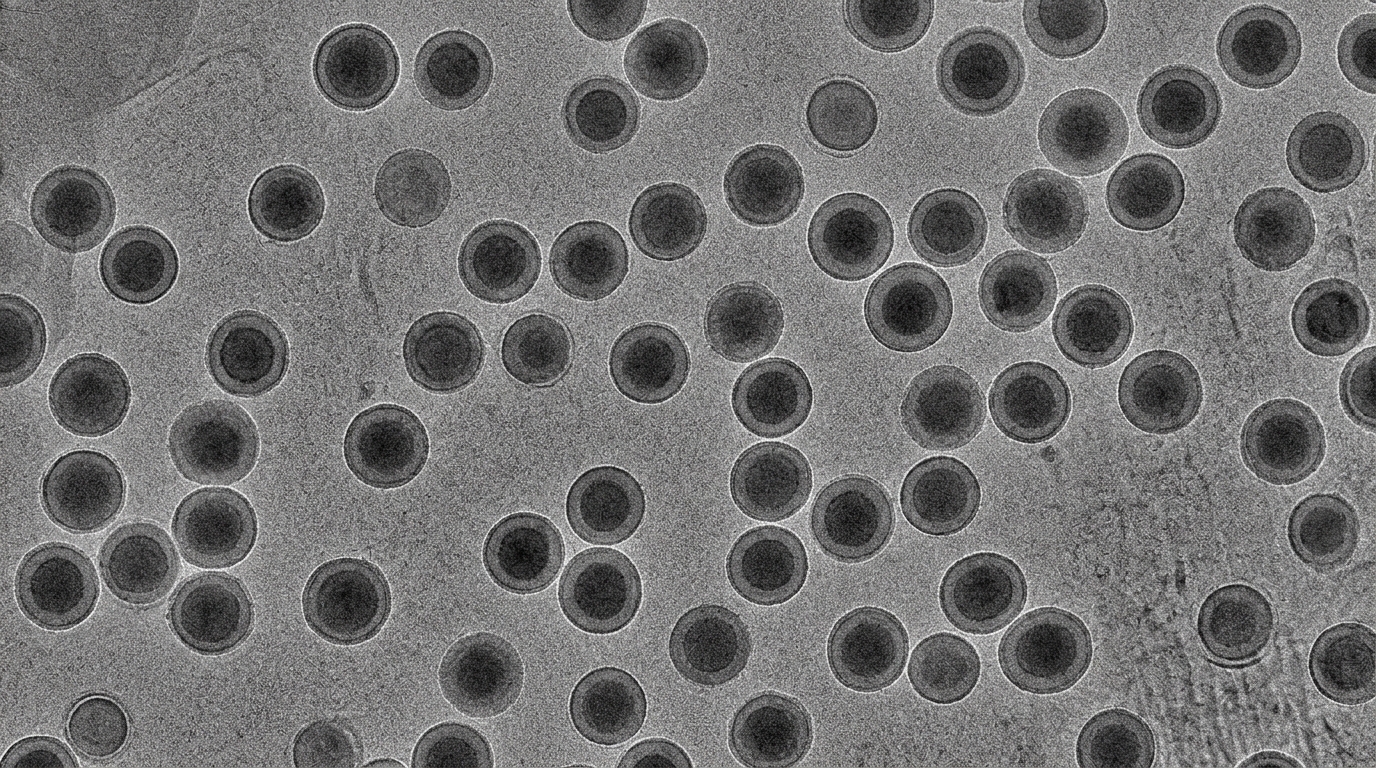
Dynamic light scattering analysis confirmed that the resulting DOTA-PICm exhibited a highly uniform size distribution, with an average diameter of 32.6 ± 6.3 nm and a polydispersity index of 0.044 ± 0.031. These dimensions are consistent with the micelles before DOTA installation, indicating that the functionalization process did not alter the physical size of the particles. Zeta potential measurements indicated a modestly negative surface charge of − 4.9 ± 1.0 mV. This negative charge is considered ideal for minimizing non-specific uptake by organs with negatively charged blood-organ interfaces, such as the liver and spleen, thereby potentially extending the systemic circulation lifetime of the nanocarriers.
A critical requirement for the radiolabeling process is the stability of the micelles under acidic conditions, which are necessary to maintain the solubility of indium-111 during chelation. The researchers assessed the structural stability of DOTA-PICm by incubating them in acidic buffers at pH levels ranging from 4.5 to 7.4. Under these conditions, the micelles underwent reversible size swelling, with the diameter increasing to approximately 50 nm and the polydispersity index rising to 0.15. However, following purification via ultracentrifugation, both the particle size and polydispersity index fully recovered to their initial as-prepared states. This reversibility indicates that the morphological change was driven by polymer protonation and electrostatic repulsion rather than permanent aggregation or collapse.
To validate the efficacy of the stable core-encapsulation platform, the in vitro radiochemical stability of the 111In-PICm was evaluated under challenging biological and competitive conditions. Following a 24-hour incubation at 37 °C, the formulation exhibited excellent stability in both physiological saline and fetal bovine serum, with 97% and 98% of the indium-111 remaining intact within the core, respectively. A stringent competition assay using a 5 mM DTPA solution was also performed to evaluate resistance against transchelation. Even under this aggressive thermodynamic challenge, 70% of the indium-111 remained securely complexed within the PICm core after 24 hours, demonstrating robust protection against premature radiometal leakage.
The in vivo biodistribution kinetics were evaluated in female BALB/c Slc-nu/nu nude mice bearing CT26 colon adenocarcinoma tumors. The CT26 cell line was selected because it is a well-characterized syngeneic model known to exhibit robust neovasculature, making it suitable for evaluating passive accumulation via the enhanced permeability and retention effect. The 111In-PICm was administered intravenously, and tissue uptake was tracked over a 72-hour period. The results revealed that the micellar formulation displayed prolonged systemic presence, with a high concentration of 2.3 ± 1.1 %ID/g remaining in the blood at 5 hours post-injection. This extended circulation time gradually cleared over the 72-hour observation window, contrasting sharply with the rapid clearance of small-molecule controls.
Tumor accumulation of the 111In-PICm reached a peak of 2.3 ± 0.4 %ID/g at 24 hours post-injection, followed by a gradual washout through 72 hours. This accumulation is attributed to the enhanced permeability and retention effect, facilitated by the micelles’ ability to evade immediate glomerular filtration due to their nanoparticle size. In contrast, 111In-DOTA, which served as the small-molecular control, showed virtually no accumulation within the tumor tissue at any analyzed time point. The control group demonstrated an approximately 50-fold lower peak tumor uptake than the micellar formulation, highlighting the superior targeting efficiency of the core-loaded micelles.
The biodistribution profile of the 111In-PICm aligned with typical nanoparticle clearance pathways, showing significant accumulation in the liver and spleen. Hepatic uptake is attributed to the liver’s robust filtration effect, characterized by high blood flow and the direct exposure of nanoparticles to liver macrophages such as Kupffer cells. Similarly, splenic accumulation is a consequence of the organ’s phagocytic activity, which promotes the filtration of macromolecular carriers. The 111In-DOTA control, conversely, exhibited rapid renal clearance, with blood radioactivity levels dropping to near-negligible levels by 5 hours post-injection, accompanied by transient accumulation in the kidneys.
The synthetic methodology utilized in this study offers distinct advantages over alternative core-loading techniques, such as ionophore-mediated trapping commonly used for liposomal formulations. While ionophores enable efficient loading, the retention of the isotope is heavily dependent on the physical integrity of the lipid bilayer, which can be destabilized in vivo. In contrast, the PICm platform utilizes DOTA, a macrocyclic chelator renowned for its high thermodynamic stability and kinetic inertness with indium. By covalently anchoring DOTA within the crosslinked core, the indium-111 is chemically tethered rather than merely physically confined, thereby mitigating the risk of transchelation and dissociation during systemic circulation.
The observed gradual decline in tumor radioactivity between 24 and 72 hours suggests a steady metabolic clearance of the carrier from the tumor mass rather than permanent, non-specific entrapment. This progressive washout profile is considered an essential safety feature for translational development, as it demonstrates that the formulation does not cause irreversible tissue retention. Such behavior potentially minimizes long-term radiation doses to surrounding healthy tissues, addressing a key concern in the development of radiopharmaceuticals for diagnostic imaging.
The study concludes that the core-loading of polyionic complex micelles may offer significant advantages over surface-chelated nanocarriers. By maintaining structural integrity during radiolabeling and extending systemic circulation in vivo, the 111In-PICm platform demonstrates robustness and passive tumor accumulation. These results validate the feasibility of using crosslinked polyionic complex micelles as a versatile vehicle for the delivery of diagnostic radionuclides, offering a stable and effective alternative for noninvasive imaging and potential targeted radiotherapy applications.
Subject of Research: Development and biodistribution assessment of indium-111 encapsulated in crosslinked polyionic complex micelles
Article Title: Stable core-encapsulation of indium-111 in crosslinked polyionic complex micelles and assessment of its biodistribution
Article References: Mizuno, H. L., Miyao, S., Takahashi, H., Akimitsu, N., & Anraku, Y. (2026). Stable core-encapsulation of indium-111 in crosslinked polyionic complex micelles and assessment of its biodistribution. EJNMMI Radiopharmacy and Chemistry, 11(1), Article 50. https://doi.org/10.1186/s41181-026-00478-4
Image Credits: AI Generated
DOI: 10.1186/s41181-026-00478-4
Keywords: indium-111, polyionic complex micelles, radiopharmacy, DOTA chelation, tumor imaging, biodistribution, nanocarriers, nuclear medicine, radiochemical stability, EPR effect, Stable, core-encapsulation
News Source: Nathaniel Bowman. (November 8, 2026). Crosslinked Micelles Stabilize Indium-111 for Tumor Imaging. Scienmag.