A narrative review published in Discover Viruses evaluates universal mechanistic pathways of viral infection to identify accessible interventions that could help blunt future pandemics. Authored by researcher Marco Leitzke, the perspective argues that while vaccine innovation remains vital, comprehensive pandemic preparedness requires integrating strategies that directly disrupt conserved host-pathogen interactions. Drawing on evidence documented during the coronavirus disease 2019 crisis, the review highlights how respiratory viruses exploit shared host enzymes for cellular entry, subvert neuro-immune inflammatory controls, and hijack intracellular replication cascades. By targeting these shared biological vulnerabilities—using approaches ranging from protease inhibitors and cholinergic ligands to simple antiseptic rinses—the author suggests that transmission chains can be suppressed and disease severity curtailed before novel viral variants escape established vaccine defenses.
The foundation for this perspective rests on the severe societal and clinical fallout experienced during the global spread of severe acute respiratory syndrome coronavirus 2, which the World Health Organization declared over as a public health emergency on May 5, 2023. Beyond causing acute medical crises, the pandemic imposed immense economic burdens, generating an annual global economic loss of approximately one trillion United States dollars, equivalent to roughly one percent of worldwide economic output. Leitzke emphasizes that the crisis also revealed profound vulnerabilities in social cohesion and institutional trust. Public health responses, while necessary to avert catastrophic hospital collapse as seen in Bergamo and Manaus, fostered sharp social divisions between supporters of interventions and those doubting viral causality. Hostile polarization emerged over vaccination, face masks, and gathering limits, eroding confidence in medical governance and leaving enduring disruptions across communities.
Compounding these systemic tensions were the chronic health burdens that emerged following initial infections and mass immunization efforts. The review highlights the substantial prevalence of postviral syndromes, clinically termed long COVID, which in severe presentations can manifest as myalgic encephalomyelitis or chronic fatigue syndrome. Affected patients endure debilitating physical exhaustion and multisystem impairments that remain exceptionally difficult to diagnose paraclinically because medicine lacks validated biomarkers and a fully defined pathogenesis. Similar clinical pictures have been observed following vaccination, creating recognized postvaccination syndromes that pose identical diagnostic and therapeutic challenges. Without clear mechanistic explanations for post-acute infection syndromes, standard practice has lacked curative therapies, demonstrating the pressing need to investigate the fundamental biological mechanisms of viral injury.
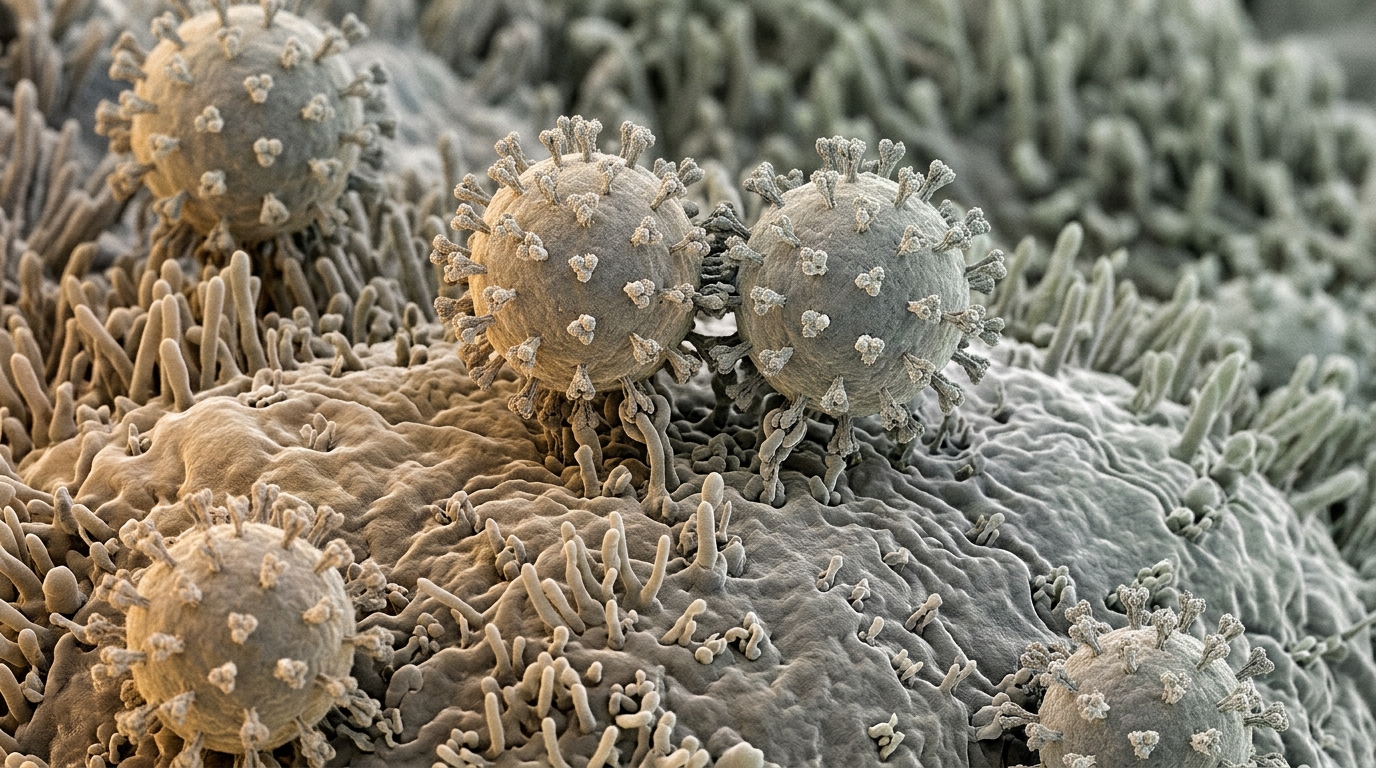
To establish effective defenses against subsequent outbreaks, the analysis examines the prerequisites of pandemic emergence: high human population density, a highly transmissible pathogen, and the absence of rapid spread-prevention measures. In SARS-CoV-2, transmission velocity was accelerated by host enzymatic priming in the upper respiratory tract. Specifically, transmembrane serine protease 2 cleaves the viral spike glycoprotein into distinct S1 and S2 subunits. This enzymatic cleavage increases the binding affinity between the spike protein and human angiotensin-converting enzyme 2 receptors by a factor of ten to fifteen. Consequently, the viral dose required to establish an active infection decreases by that exact same factor. By lowering the infective threshold and speeding cellular entry, this host protease interaction fueled rapid increases in societal viral loads, transforming localized outbreaks into widespread contagion.
Once inside host cells, viral virulence is further magnified through the subversion of the nuclear factor kappa B signaling pathway, an innate cellular defense mechanism. Severe COVID-19 presentations frequently resemble bacterial sepsis because viral replication relies directly on this transcription pathway. SARS-CoV-2 stimulates the enzymatic deubiquitination of cytoplasmic nuclear factor kappa B precursors—including p65, p50, p52, c-Rel, RelA, and RelB—mediated by the cellular proteasome and inhibitor of kappa B kinase. This processing causes excessive translocation of these mature subunits into the nucleoplasm. The resulting unrestricted nuclear transcription drives massive production of the virus itself, alongside a surge of proinflammatory cytokines such as tumor necrosis factor-alpha, interleukin-1, interleukin-6, and interleukin-8. Concurrently, hypertranscription of prothrombotic tissue factor and antifibrinolytic plasminogen activator inhibitor 1 initiates hypercoagulation, precipitating hypoxic multiorgan failure and severe disease.
Under normal physiological conditions, unrestrained inflammatory cascades are arrested by the nervous system through the cholinergic anti-inflammatory pathway, an innate regulatory reflex governed by the vagus nerve. Afferent sensory signals from damaged tissues travel to the nucleus tractus solitarii within the dorsal vagal complex, where impulses are integrated through a central muscarinic network and relayed to downstream vagal centers, including the area postrema and nucleus accumbens. Efferent signals directed from these structures and the dorsal motor vagus nucleus stimulate the localized release of acetylcholine. When released acetylcholine binds to homomeric alpha-7 nicotinic acetylcholine receptors on cytokine-synthesizing cells, it halts nuclear factor kappa B activity, suppressing cytokine transcription and preventing tissue destruction. However, SARS-CoV-2 disables this biological brake through a specific proline-arginine-arginine-alanine sequence in its spike glycoprotein, which nonintrinsically adheres to and blocks these nicotinic receptors.
This receptor blockade provides a plausible pathophysiological explanation for postviral syndromes like long COVID and chronic fatigue. Beyond homomeric alpha-7 receptors, the viral spike motif also interacts antagonistically with heteromeric nicotinic subtypes, such as alpha-3-beta-2, alpha-4-beta-2, and alpha-9 receptors. Because physical stamina depends heavily on efficient cholinergic transmission, younger and more physically active cohorts experience a markedly higher incidence of long COVID-related fatigue compared to less active or older demographics. Conversely, pediatric patients naturally maintain robust sympathovagal balance, explaining why severe acute progressions are exceptionally rare in children without severe autonomic comorbidities. Restoring vagal signaling through noninvasive vagus nerve stimulation has shown clinical benefits. Furthermore, transcutaneous administration of low-dose nicotine, which binds nicotinic receptors with thirty times greater affinity than the viral spike protein, has shown promising anecdotal recovery, successfully displacing the blocking viral fragment.
Evolutionary analyses reinforce the hypothesis that cholinergic receptor interference represents a clinically significant host-pathogen interaction. Leitzke highlights a 2023 comparative genomic investigation by Romeu, which revealed that ancestral SARS-CoV-2 isolates and related bat coronaviruses from Laos and Vietnam exhibited minimal or absent furin cleavage motifs containing the proline-arginine-arginine-alanine sequence. Subsequent clinical strains isolated from human hosts, however, demonstrated complete sequence homology with human coding messenger RNA, suggesting that this receptor-blocking sequence became stabilized under selective pressure during replication within humans. Similar receptor interactions occur across unrelated pathogens: human immunodeficiency virus type 1, rabies virus, and Epstein-Barr virus have all been shown to bind acetylcholine receptors. Furthermore, in vitro research by Cheng and colleagues demonstrated that filoviruses, including Marburg virus, exploit muscarinic acetylcholine receptors for cellular entry, where competitive receptor blockade successfully prevented viral invasion.
The dependence on host proteases for viral activation extends across multiple respiratory viral families, indicating that transmembrane serine protease 2 represents a broad therapeutic target. Host protease cleavage is utilized by SARS-CoV-1, Middle East respiratory syndrome coronavirus, seasonal coronaviruses such as HKU1, 229E, NL63, and OC43, as well as influenza A and B strains, including H1N1, H2N9, and H3N2. Cell culture studies confirm that transmembrane serine protease 2 also cleaves fusion glycoproteins of human parainfluenza viruses types 1 through 4b, human metapneumoviruses, and Sendai virus. Because viral transmissibility correlates with enzymatic affinity, deploying protease antagonists could suppress transmission across diverse pathogens. Synthetic compounds such as N-0385, nafamostat, camostat, and upamostat have demonstrated antiviral potency and human safety across randomized trials and in vitro studies, while naturally occurring compounds like bromhexine, quercetin, and epigallocatechin gallate show comparable inhibitory capabilities.
Addressing acute viral transmission and downstream inflammatory surges also brings simpler biochemical interventions into focus. Antiseptic mouthwashes containing agents like hydrogen peroxide, chlorhexidine digluconate, povidone-iodine, cetylpyridinium chloride, anionic phthalocyanine derivatives, beta-cyclodextrin-citrox, or sorbitol with xylitol have demonstrated capacity to reduce oral viral load following exposure. Because mouthwashes act on the virus extracellularly before intracellular replication begins, developing viral resistance is exceptionally unlikely, avoiding the selective pressures driving vaccine-resistant mutations. In parallel, hyperactivated inflammatory cascades driven by nuclear factor kappa B can be modulated using Toll-like receptor inhibitors, including eritoran, resiquimod, resatorvid, chloroquine, and hydroxychloroquine.
Leitzke contrasts these host-directed proposals with mainstream pandemic preparedness blueprints, which predominantly emphasize global genomic surveillance, expanded diagnostic testing, contact tracing, international treaty convergence, and rapid vaccine manufacturing. Although these conventional frameworks are vital, they largely overlook the conserved biological mechanisms that drive rapid infection and hyperinflammation in the human host. The review concludes that while these measures cannot guarantee complete prevention of future viral outbreaks, their widespread affordability and ease of distribution could dramatically reduce healthcare burdens and enhance global health equity, providing resilient defenses for lower-income regions with fragile healthcare infrastructure.
Subject of Research: Mechanistic antiviral interventions and physiological pathway targets for pandemic prevention
Article Title: Measures that could prevent the next viral pandemic
Article References: Leitzke, M. (2025). Measures that could prevent the next viral pandemic. Discover Viruses, 2(1), Article 19. https://doi.org/10.1007/s44370-025-00024-x
Image Credits: AI Generated
DOI: 10.1007/s44370-025-00024-x
Keywords: viral pandemics, TMPRSS2 inhibitors, cholinergic anti-inflammatory pathway, SARS-CoV-2, nicotinic acetylcholine receptors, NF-kB pathway, antiseptic mouthwashes, long COVID, Measures, prevent, next, viral
News Source: Kristina Jarvis. (November 8, 2026). Targeting Host Entry and Cholinergic Pathways Could Blunt Future Viral Pandemics. Scienmag.