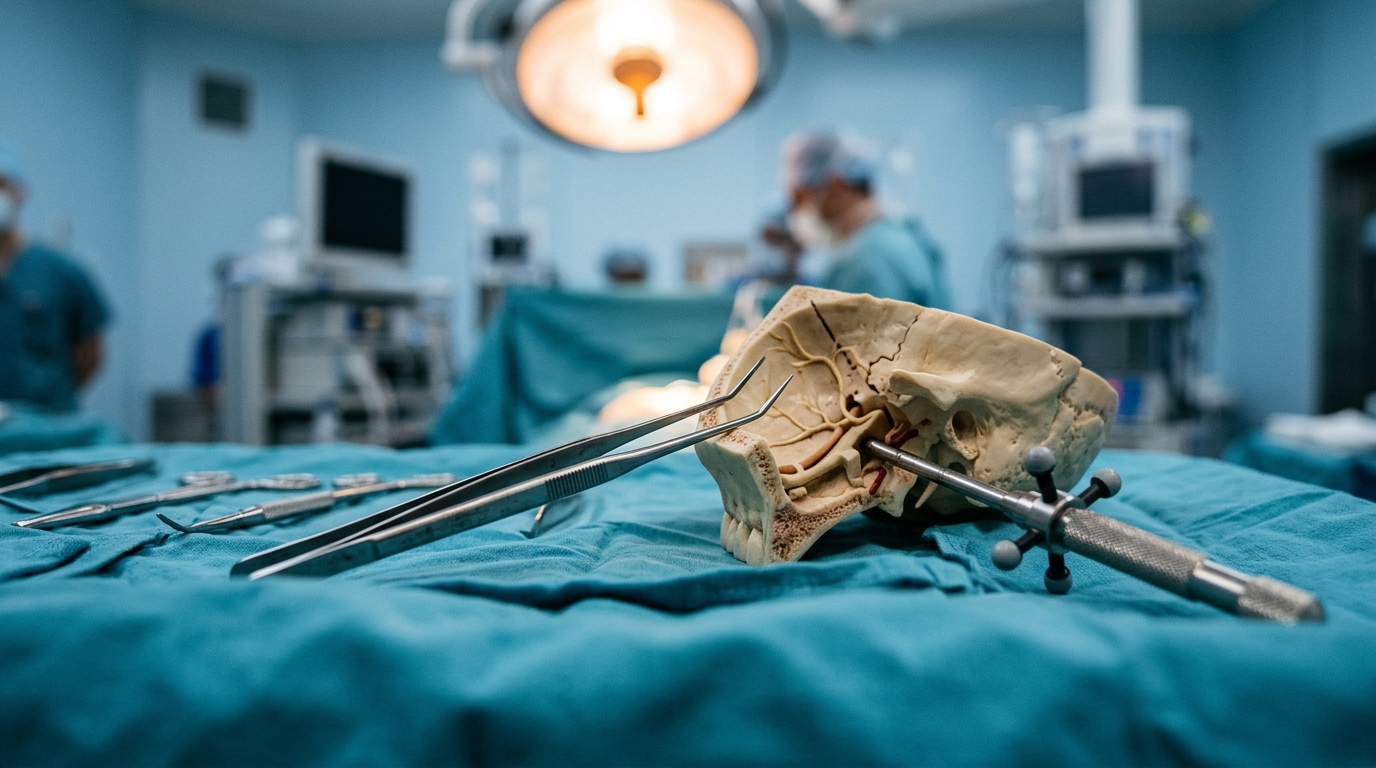
A systematic review evaluating surgical approaches to the infratemporal fossa demonstrates that corridor selection must be strictly target-driven, according to findings published in Acta Neurochirurgica by Andrei Cristian Albu, Bogdan Vintilă, and Mugurel Constantin Rusu. The infratemporal fossa represents an anatomically deep and neurovascularly dense compartment reached through an expanding array of open and endoscopic corridors. Because earlier anatomical and clinical investigations evaluated these diverse pathways using heterogeneous parameters, direct comparisons between techniques have historically been difficult to establish. To address this issue, the investigators systematically reviewed the anatomical and clinical evidence to compare individual corridors regarding exposure, reachable targets, and attendant morbidity.
To structure their research, the authors conducted the systematic review in accordance with PRISMA 2020 guidelines, analyzing cadaveric-anatomical, radio-anatomical, and clinical investigations. Systematic literature searches were conducted across PubMed/MEDLINE, Scopus, Embase, and Web of Science from each database’s inception through 20 January 2026. The search protocol also incorporated comprehensive reference-list screening of identified articles, with eligibility criteria strictly limited to reports published in the English language.
Cadaveric-anatomical studies were appraised using the QUACS scale, whereas clinical studies were evaluated using the Joanna Briggs Institute checklists. Due to the pronounced heterogeneity of reported metrics across the retrieved literature, the authors determined that statistical pooling via meta-analysis was not feasible. Instead, the research team synthesized the findings through a structured narrative and tabular synthesis, systematically comparing corridor attributes without mathematically combining disparate anatomical measurements or heterogeneous clinical outcomes.
A total of twenty-nine studies met all eligibility criteria and were included in the final review. The comparative analysis demonstrated that endoscopic endonasal corridors offer direct, incision-free surgical access to the medial infratemporal fossa and the pterygopalatine fossa. However, these minimally invasive endonasal routes exhibited clear limitations in anatomical exposure, specifically providing limited control of the parapharyngeal segment of the internal carotid artery and restricted visualization of the lateral infratemporal fossa. To overcome these constraints and enlarge surgical exposure, the reviewed evidence documented the utilization of incremental maxillectomy procedures alongside multiportal surgical combinations.
Conversely, lateral and transcranial routes maximized surgical freedom and vascular control within the deep infratemporal space. However, these substantial technical advantages came at the expense of greater patient morbidity.
In evaluating surgical efficacy, reported rates of gross-total or near-total resection across the clinical studies ranged from approximately 57 percent to 88 percent. The authors underscored that resection extent was strongly dependent upon the selected operative corridor and the specific underlying pathology. Because of extensive clinical heterogeneity among the included studies, the investigators noted that resection outcomes cannot be validly compared across different corridors.
Regarding adverse outcomes and procedural morbidity, trigeminal nerve dysfunction was identified as the most frequently reported morbidity across the reviewed clinical literature.
Based on these findings, the authors concluded that corridor selection must remain strictly target-driven. Finally, the authors emphasized a crucial limitation of the current evidence: the available literature is heavily dominated by cadaveric feasibility work rather than extensive clinical outcomes data. Consequently, the investigators stressed that anatomical feasibility demonstrated in anatomical specimens must not be interpreted as equivalent to proven clinical efficacy in surgical patients.
Subject of Research: Surgical corridors and clinical outcomes in infratemporal fossa approaches
Article Title: Surgical corridors to the infratemporal fossa: a systematic review of the anatomical and clinical evidence
Article References: Albu, A. C., Vintilă, B., & Rusu, M. C. (2026). Surgical corridors to the infratemporal fossa: a systematic review of the anatomical and clinical evidence. Acta Neurochirurgica. https://doi.org/10.1007/s00701-026-07049-1
Image Credits: AI Generated
DOI: 10.1007/s00701-026-07049-1
Keywords: infratemporal fossa, skull base surgery, endoscopic endonasal approach, transcranial approaches, surgical anatomy, systematic review, trigeminal dysfunction, surgical corridors, Surgical, corridors, infratemporal, fossa
News Source: Ophelia Keating. (November 8, 2026). Infratemporal Fossa Surgical Corridors Require Target-Driven Selection, Review Finds. Scienmag.