Researchers from Heilongjiang University of Chinese Medicine, the Second Affiliated Hospital of Guangzhou University of Chinese Medicine, and Lunan Pharmaceutical Group Co Ltd have published a multi-omics study demonstrating that Jingfang Mixture (JF) alleviates inflammation in a rat model of urticaria-like allergic inflammation. The study, published in Frontiers in Cellular and Infection Microbiology, investigates the potential role of the gut-skin axis in this condition. By integrating 16S rRNA gene sequencing, fecal untargeted metabolomics, and skin data-independent acquisition-based quantitative proteomics, the team sought to understand how this traditional Chinese medicine formula acts at the level of microbiota, metabolites, and skin signaling.
The research addresses a gap in understanding the systemic and relapsing nature of urticaria, which cannot be fully explained by cutaneous mast-cell activation alone. The authors hypothesized that the gut contributes to the disease process and that JF might act through a gut-skin route. To test this, they used an ovalbumin and aluminum hydroxide-induced urticaria-like allergic inflammation rat model.
The results indicated that JF suppressed both Th2 and Th17/pro-inflammatory responses in the treated rats. Specifically, the treatment reduced levels of immunoglobulin E, interleukin-4, interleukin-6, tumor necrosis factor-alpha, and interleukin-17.
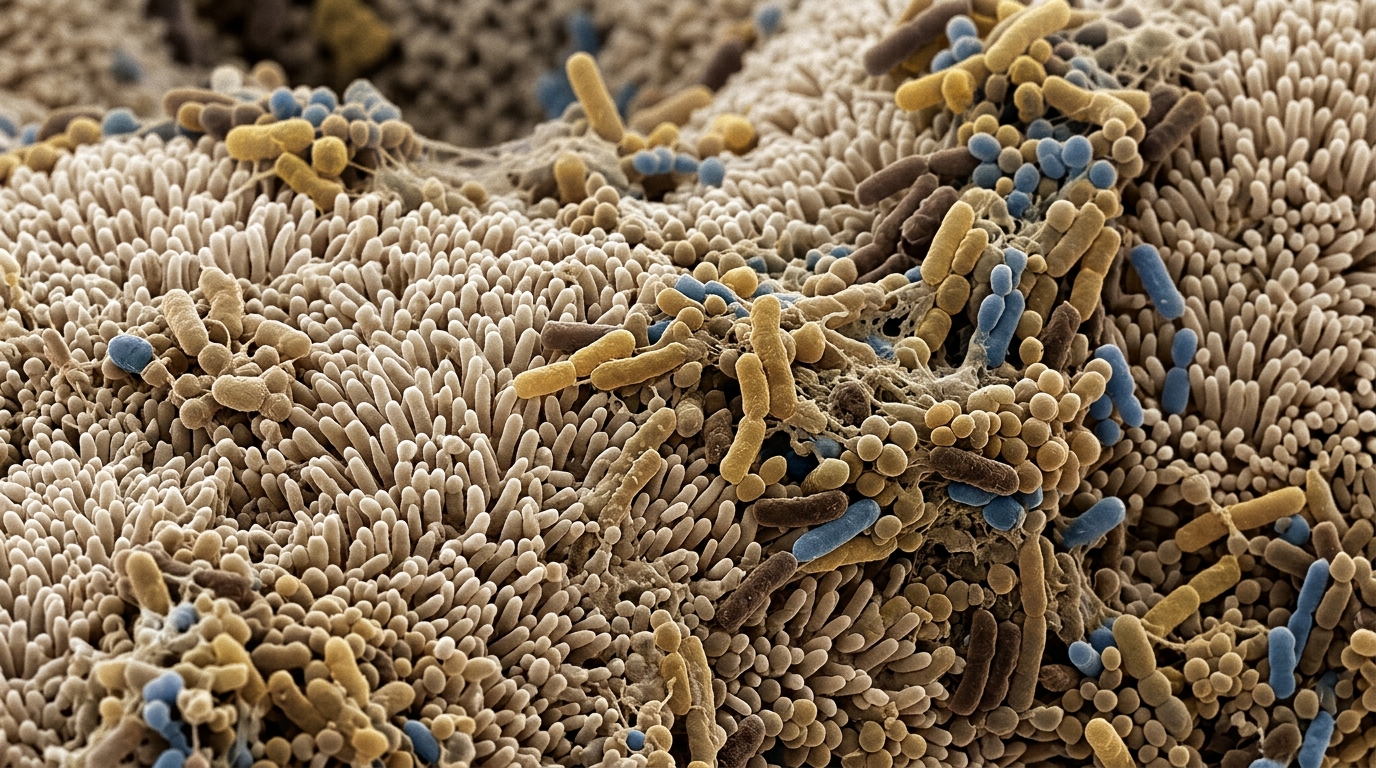
At the microbial level, JF partially reversed gut dysbiosis by restoring short-chain fatty acid-producing bacteria. The abundance of Bacteroidia, Clostridia, Lachnospirales, and Oscillospirales increased, while Proteobacteria and Enterobacterales decreased.
Fecal metabolomics analysis revealed that JF normalized the fecal metabolome. The treatment elevated anti-inflammatory metabolites, including butyrate, indole, indole-3-acetic acid, and docosahexaenoic acid. Conversely, it reduced pro-inflammatory mediators such as arachidonic acid, leukotriene B4, and secondary bile acids.
At the skin level, proteomics data showed that JF activated AMP-activated protein kinase signaling and suppressed aberrant activation of the p38 mitogen-activated protein kinase and phosphoinositide 3-kinase-protein kinase B pathways. Spearman correlation analysis further revealed that short-chain fatty acids and indole derivatives were positively correlated with the abundance of AMPK-pathway-related proteins and negatively correlated with p38 MAPK and PI3K-Akt proteins.
The authors conclude that JF mitigates urticaria-like inflammation likely through the modulation of gut microbiota and the regulation of short-chain fatty acid, bile acid, tryptophan, and lipid metabolism. This multi-omics evidence suggests that JF may act through the gut microbiota-metabolite-skin signaling axis to confer anti-urticarial benefits.
However, the authors note that further causal validation experiments and clinical investigations are warranted.
Subject of Research: Multi-omics analysis of Jingfang Mixture effects on urticaria-like inflammation in rats
Article Title: Multi-omics analysis revealed that Jingfang Mixture alleviates inflammation in an OVA/Al(OH)3-induced urticaria-like rat model by regulating the AMPK/p38 MAPK/PI3K-Akt pathway associated with the gut-skin axis
Article References: Song, X., Liu, X., Yang, L., Yan, G., Sun, H., Sun, Y., Zhang, G., Kong, L., Han, Y., Guan, Y., & Wang, X. (2026). Multi-omics analysis revealed that Jingfang Mixture alleviates inflammation in an OVA/Al(OH)3-induced urticaria-like rat model by regulating the AMPK/p38 MAPK/PI3K-Akt pathway associated with the gut-skin axis. Frontiers in Cellular and Infection Microbiology, 16, Article 1973292. https://doi.org/10.3389/fcimb.2026.1973292
Image Credits: AI Generated
DOI: 10.3389/fcimb.2026.1973292
Keywords: Jingfang Mixture, Urticaria, Gut-skin axis, Multi-omics, Rat model, AMPK pathway, Gut microbiota, Metabolomics, Proteomics, Allergic inflammation, analysis, revealed
News Source: Morgan Morrow. (November 8, 2026). Rat Study Links Gut Microbiota to Urticaria Relief. Scienmag.