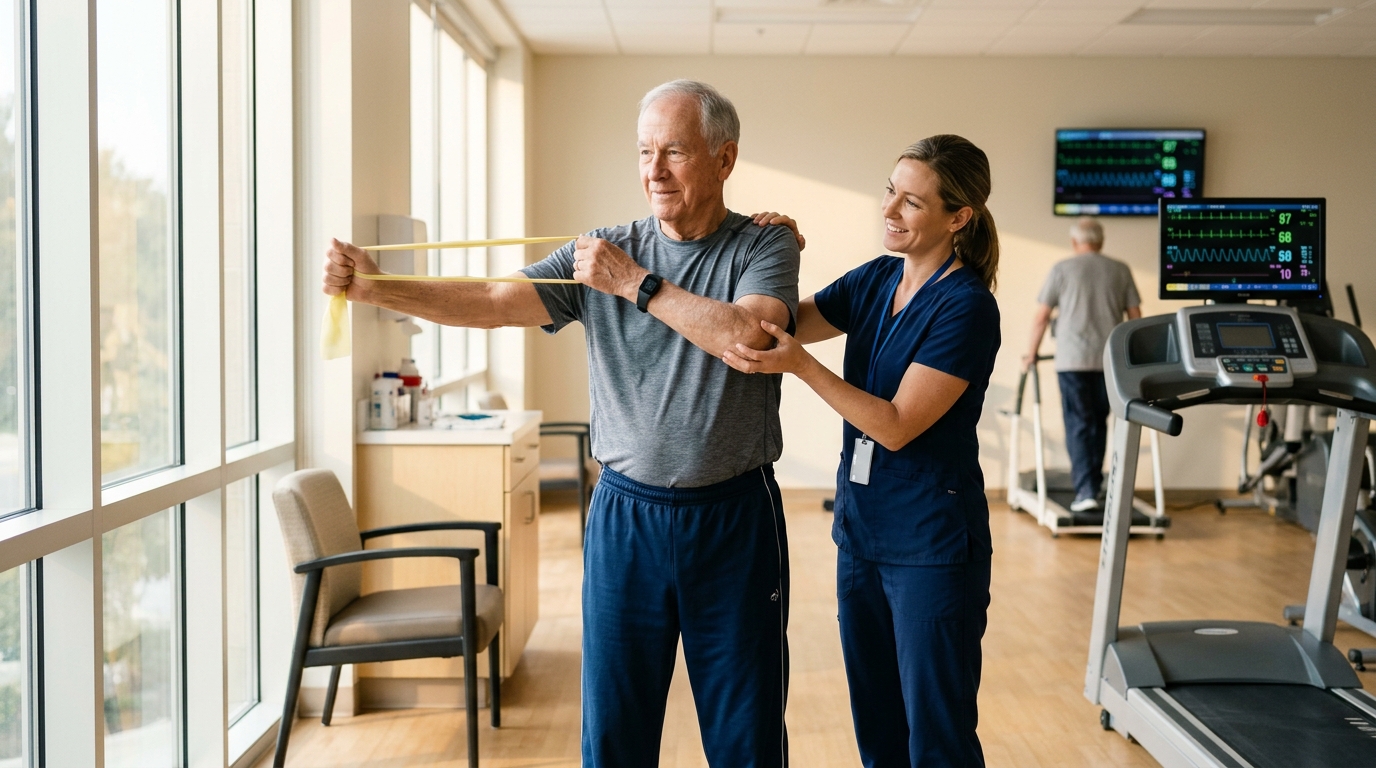
A randomized controlled trial evaluating the vascular and myocardial effects of structured physical activity has demonstrated that six months of personalized low-intensity resistance exercise does not alter central systolic blood pressure or resting cardiac workload in kidney transplant recipients, whereas standard post-transplant care yields meaningful reductions across these key hemodynamic markers. Published in Artery Research, the clinical investigation examined how non-invasive measures of central aortic pressure and pulsatile afterload respond to targeted strength training compared to routine clinical management. Cardiovascular disease persists as the leading cause of morbidity and premature mortality among individuals with a functioning renal allograft, sustained in large part by long-standing cardiorenal damage and high rates of post-transplant hypertension. Although completing the supervised resistance exercise program did not lower central arterial pressures or decrease resting myocardial work, it also induced no adverse elevations in pulsatile cardiovascular stress. The findings provide objective evidence that low-intensity resistance exercise represents a hemodynamically safe conditioning modality for kidney transplant recipients, while highlighting that conventional clinical management actively lowers central cardiac load.
Understanding the precise cardiovascular responses to post-transplant therapies is critical because kidney transplantation, despite substantially improving metabolic balance and patient survival relative to chronic dialysis, leaves recipients burdened by chronic vascular complications. Over eighty percent of kidney transplant recipients experience hypertension, a condition driven partly by the obligatory use of standard immunosuppressive medications, such as calcineurin inhibitors and corticosteroids, which can induce persistent vasoconstriction and sodium retention. Chronic hypertension promotes structural and functional stiffening of the central elastic arteries, accelerating arterial pulse wave propagation and causing early backward wave reflections to return to the heart during systole rather than diastole. This premature wave reflection augments central systolic blood pressure without generating forward systemic blood flow, a phenomenon quantified as wasted pressure effort that elevates left ventricular afterload, increases myocardial oxygen consumption, and compromises coronary perfusion. Standard cuff-based brachial blood pressure assessments often underestimate these pathological central hemodynamic shifts, creating an urgent clinical need to evaluate therapeutic strategies using direct central vascular measurements.
Exercise training has long been recommended as an essential supportive strategy to attenuate cardiovascular risk profiles in renal transplant populations, yet the specific physiological impact of resistance training on central hemodynamics has remained poorly defined. Although aerobic exercise possesses well-documented safety and cardiovascular benefits, clinical evidence regarding resistance modalities has presented unresolved questions regarding arterial loading. High-intensity resistance training involves forceful muscular contractions that can provoke dramatic blood pressure surges and increase pulsatile afterload on the heart, potentially exacerbating central cardiovascular stress in vulnerable transplant recipients. Conversely, low-intensity resistance training was hypothesized to offer a more favorable hemodynamic stimulus by avoiding the pronounced Valsalva maneuver-mediated pressure spikes associated with heavy lifting, while remaining sufficiently demanding to counteract post-transplant muscle wasting and bone loss. Previous studies had observed reductions in aortic stiffness following resistance exercise without accompanying drops in brachial blood pressure, prompting the researchers to test whether six months of structured low-intensity resistance training would systematically reduce central systolic pressure and alleviate myocardial workload.
The study was conducted as a retrospective analysis of a parallel-group randomized controlled trial undertaken at the Integrative Physiology Laboratory at the University of Illinois at Chicago. Investigators enrolled 135 middle-aged kidney transplant recipients who were between 18 and 65 years of age, at least two months post-transplantation, ambulatory, and free of medical contraindications to physical exertion. Participants were allocated to either the low-intensity resistance training intervention or standard clinical care using a two-to-one randomization ratio designed to maintain participant retention within the higher-contact exercise cohort. Demographic and clinical profiles were closely matched between the study arms at baseline, with no significant differences in age, biological sex, body composition, resting blood pressure, or renal function markers such as serum creatinine and estimated glomerular filtration rate. A majority of participants in both the exercise cohort and the control group identified as Black. Complete longitudinal hemodynamic data were successfully obtained from an analytical sample of 85 recipients, representing completion rates of 71 percent in the exercise group and 85 percent under standard care.
Participants assigned to the exercise intervention engaged in biweekly, 60-minute one-on-one training sessions over a continuous six-month period under the direct supervision of trained personnel. The protocol utilized the Greg Hachaj method, an exercise philosophy designed to minimize energetic expenditure while systematically stimulating muscular strength, physical function, and health improvements. Each session began with a light warm-up and stretching routine, followed by a full-body resistance circuit comprising exercises for the upper body, such as biceps curls, chest presses, shoulder presses, triceps pushdowns, lat pull-downs, front rows, and sit-ups, alongside lower-body movements including leg extensions, leg curls, leg presses, and hip abduction and adduction. Training intensity and participant fatigue were regulated across three distinct progression phases using a 10-point fatigue scale and the modified Borg rating of perceived exertion. Rest intervals between sets were strictly maintained until fatigue scores subsided, preventing excessive physical exhaustion and ensuring high compliance, with participant adherence exceeding 90 percent across the trial.
To evaluate central hemodynamics and cardiac performance, the researchers utilized non-invasive pulse wave contour analysis and arterial tonometry performed in a controlled laboratory setting. Radial artery pressure waveforms were captured using high-fidelity applanation tonometry and calibrated against resting brachial systolic and diastolic pressures measured with an automated oscillometric cuff. Central aortic pressure waveforms were mathematically reconstructed through a validated generalized transfer function, providing precise derivations of central systolic blood pressure, end-systolic pressure, and heart rate-adjusted augmentation index. Resting cardiac workload was operationalized through two distinct parameters: wasted pressure effort, which reflects the extra left ventricular work generated by early reflected pressure waves, and the systolic pressure time integral, an established surrogate of total myocardial work determined by the product of central systolic pressure and ejection time. Aortic stiffness was assessed via carotid-femoral pulse wave velocity using transit times obtained from electrocardiographic gating, allowing mathematical partitioning into structural stiffness and load-dependent stiffness components.
The primary analytical findings revealed statistically significant group-by-time interaction effects for central systolic blood pressure, end-systolic pressure, augmentation pressure, wasted pressure effort, and the systolic pressure time integral. However, contrary to the original experimental hypothesis, the low-intensity resistance exercise group demonstrated no significant changes across any of these central vascular markers over the six-month intervention. In sharp contrast, recipients assigned to standard medical care exhibited statistically significant decreases across all central loading parameters. Within the standard care cohort, central systolic pressure dropped by a mean difference of 9 millimeters of mercury, wasted pressure effort declined by 992 dyne-seconds per square centimeter, and the systolic pressure time integral decreased by 3302 millimeters of mercury times milliseconds. Carotid-femoral pulse wave velocity and structural aortic stiffness remained completely unchanged across time in both groups, although load-dependent stiffness decreased specifically within the standard care arm, directly mirroring the reduction observed in central aortic pressure.
Secondary physical and physiological assessments demonstrated that the low-intensity resistance regimen did not elicit measurable improvements in muscular force production or alter habitual physical activity patterns. Isokinetic dynamometry revealed that peak knee extension and flexion torques remained unaltered at multiple testing angles following six months of training. Both the exercise and standard care groups achieved equivalent, statistically significant improvements in functional aerobic capacity, increasing their six-minute walk test distance by an average of 26 meters. Objective accelerometry data confirmed that neither light physical activity nor moderate-to-vigorous physical activity changed over time in either study arm. Furthermore, participants in both cohorts displayed modest but statistically significant gains in body mass index, total fat mass, and lean tissue mass. Biomarkers of renal allograft function remained stable across the six-month trial, with serum creatinine concentrations and estimated glomerular filtration rates showing no significant time or interaction effects, confirming that neither intervention compromised graft stability.
In evaluating why low-intensity resistance training did not alter central hemodynamics, the investigators noted that the training stimulus, while safe and well tolerated, was likely insufficient in mechanical intensity to stimulate central vascular remodeling or improve muscular strength. Prior clinical trials in kidney transplant recipients that observed reductions in arterial stiffness implemented high-intensity protocols operating at approximately 80 percent of one-repetition maximum, suggesting that higher mechanical loads may be required to influence aortic properties. Meanwhile, the favorable reductions in central systolic pressure and myocardial workload observed within the standard care group appeared to be mediated primarily by load-dependent hemodynamic mechanisms rather than structural vascular changes. Standard medical management often facilitates the progressive post-surgical resolution of uremia and extracellular fluid overload, while routine adjustments to antihypertensive medications, including agents that promote peripheral vasodilation and delay wave reflection arrival, likely offset the vasoconstrictive pressor effects of immunosuppressive therapy to relieve ventricular afterload.
The authors emphasized several methodological limitations that warrant careful consideration when interpreting the study outcomes. The clinical trial did not systematically record granular pharmaceutical data or pre-transplant dialysis histories, preventing statistical adjustment for individual drug classes or potential medication changes that occurred during the follow-up period. Additionally, the intentional two-to-one randomization design yielded an unbalanced sample distribution of 57 exercise participants compared to 28 standard care participants, which may have limited statistical power for certain secondary comparisons. The mathematical derivation of wasted pressure effort relied on a pressure-only algorithm rather than combined pressure-flow measurements, and calculations of structural stiffness assumed a uniform blood density constant despite potential hemorheological variations in transplant recipients. Overall, the trial demonstrates that low-intensity resistance training imposes no adverse central arterial burden, affirming its safety for kidney transplant recipients, while highlighting the significant hemodynamic reductions in cardiac workload achievable through standard medical care.
Subject of Research: Central hemodynamic and cardiac workload responses to resistance training in kidney transplant recipients
Article Title: Cardiac Workload in Kidney Transplant Recipients is Unchanged with Low-Intensity Resistance Training but Decreases with Standard Care: A Randomized Controlled Trial
Article References: Marôco, J. L., Kastelz, A., Baynard, T., Tzvetanov, I., Benedetti, E., & Fernhall, B. (2026). Cardiac Workload in Kidney Transplant Recipients is Unchanged with Low-Intensity Resistance Training but Decreases with Standard Care: A Randomized Controlled Trial. Artery Research, 32(1), Article 22. https://doi.org/10.1007/s44200-026-00122-1
Image Credits: AI Generated
DOI: 10.1007/s44200-026-00122-1
Keywords: kidney transplantation, cardiac workload, resistance training, central hemodynamics, arterial stiffness, wasted pressure effort, pulse wave velocity, randomized controlled trial, Cardiac, Workload, Kidney, Transplant
News Source: Ophelia Keating. (November 7, 2026). Standard Care Reduces Cardiac Workload While Low-Intensity Resistance Training Proves Safe. Scienmag.