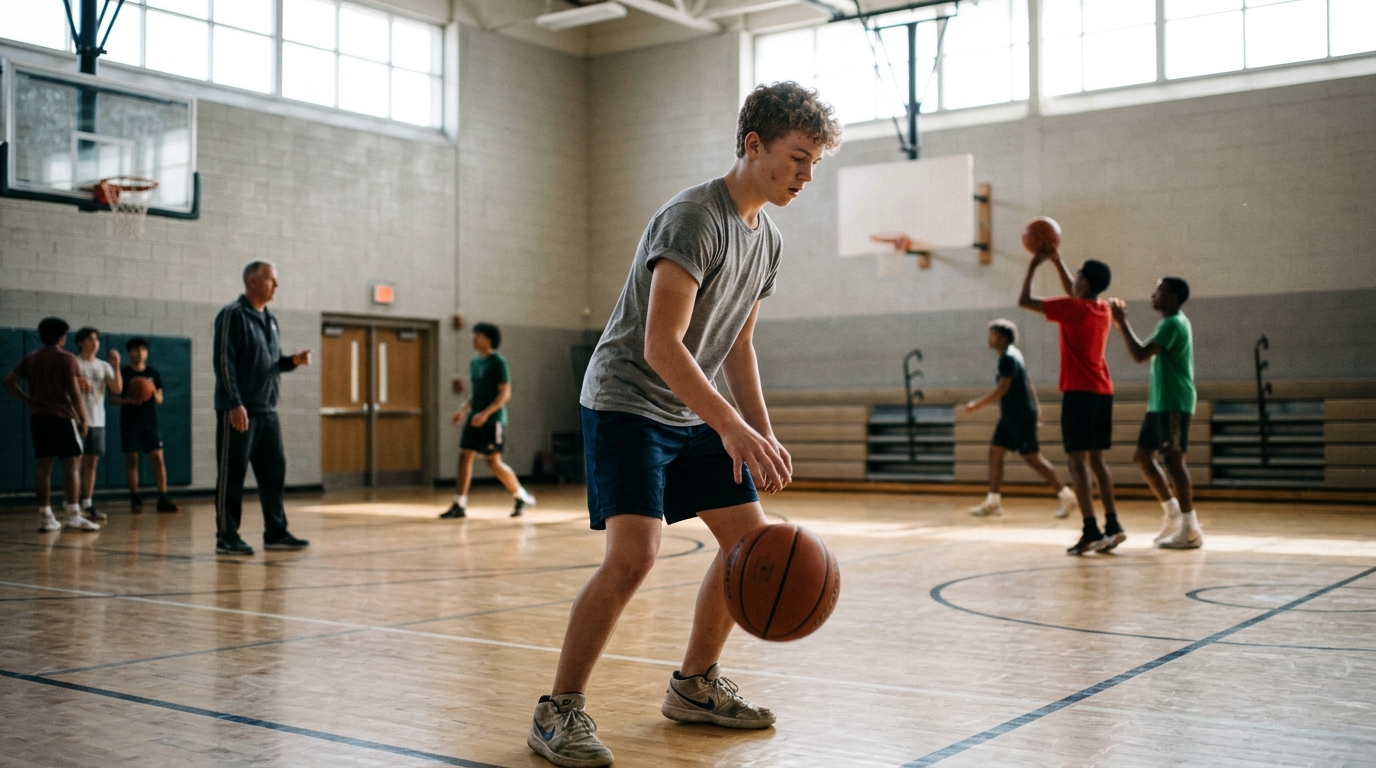
A cross-sectional study published in BMC Medical Education has examined how university students perceive the importance of professional competencies required for physical education majors to serve as sports training instructors. The research, conducted by Chao Chao and Wenwen Liu, utilized exploratory factor analysis to investigate the underlying structure of these importance ratings among students from non-physical education disciplines at a single university in China. The study aimed to identify which specific skills are viewed as most critical for this emerging professional pathway and to determine whether these perceptions follow a unified structural pattern or are divided into distinct categories.
The survey was administered to first- through third-year undergraduate students who were not majoring in physical education. Of the 1,245 questionnaires collected, 1,152 valid responses were retained for analysis. The questionnaire assessed the perceived importance of 15 professional competency indicators using a five-point Likert scale. These indicators were categorized into five content areas: professional and technical skills, teaching implementation, interpersonal interaction, professional qualities, and safety-related competencies.
Statistical methods included Cronbach’s alpha, the Kaiser–Meyer–Olkin test, Bartlett’s test of sphericity, and exploratory factor analysis using principal axis factoring. Additionally, independent-samples t-tests and one-way analyses of variance were used to examine whether perceived importance varied across student characteristics such as gender, grade level, weekly exercise frequency, and previous sports training experience.
The results indicated that all 15 competence indicators received mean importance ratings above 4.00 on the five-point scale. Specific competencies such as patience, safety awareness, sports injury management, and emergency response received the highest ratings, each with a mean of 4.45. When asked to select priority competencies, professional technical level was the most frequently chosen, selected by 61.5% of respondents. Teaching explanation ability and action demonstration ability followed, with selection rates of 42.3% and 37.2%, respectively.
The exploratory factor analysis revealed a single common factor that explained 83.592% of the variance after extraction. Factor loadings for the 15 indicators ranged from 0.881 to 0.935, indicating a strong association with this single factor. The high internal consistency of the instrument, with a Cronbach’s alpha of 0.987, further supported the coherence of the responses. This factor was interpreted as representing the overall perceived importance of sports training instructor competencies, suggesting that students view these skills as part of a unified professional dimension rather than separate, unrelated domains.
Significant differences in overall perceived competence importance were found based on gender and weekly exercise frequency. However, no significant differences were observed based on grade level or previous sports training experience. The finding related to exercise frequency was noted as exploratory and had a small effect size, with an eta-squared value of 0.008. The authors caution that this specific result should be interpreted with care due to its exploratory nature and limited magnitude.
The study concludes that university students perceive professional and technical skills, teaching implementation, interpersonal interaction, professional qualities, and safety-related competencies as important for physical education majors serving as sports training instructors. The single-factor structure of these importance ratings suggests a shared underlying dimension in students’ perceptions. These findings may inform physical education teacher education programs by highlighting the need for practical learning opportunities that address competencies relevant to sports training contexts. Integrating these skills alongside traditional technical and instructional preparation could better prepare students for diverse professional roles in the field.
By extending research on physical education teacher education, this study highlights the importance of competencies beyond sport-specific knowledge and teaching techniques. The empirical insights provided offer a foundation for curriculum development, practical training, and experiential learning opportunities.
Subject of Research: Perceptions of competency importance for physical education majors as sports training instructors
Article Title: University students’ perceptions of competency importance for physical education majors as sports training instructors: an exploratory factor analysis
Article References: Chao, C., & Liu, W. (2026). University students’ perceptions of competency importance for physical education majors as sports training instructors: an exploratory factor analysis. BMC Medical Education. https://doi.org/10.1186/s12909-026-10821-7
Image Credits: AI Generated
DOI: 10.1186/s12909-026-10821-7
Keywords: physical education, sports training, competency assessment, factor analysis, teacher education, student perceptions, professional skills, safety awareness, curriculum development, cross-sectional study, University, students
News Source: Courtney Benton. (November 7, 2026). Study Finds Single Factor in PE Student Competency Perceptions. Scienmag.