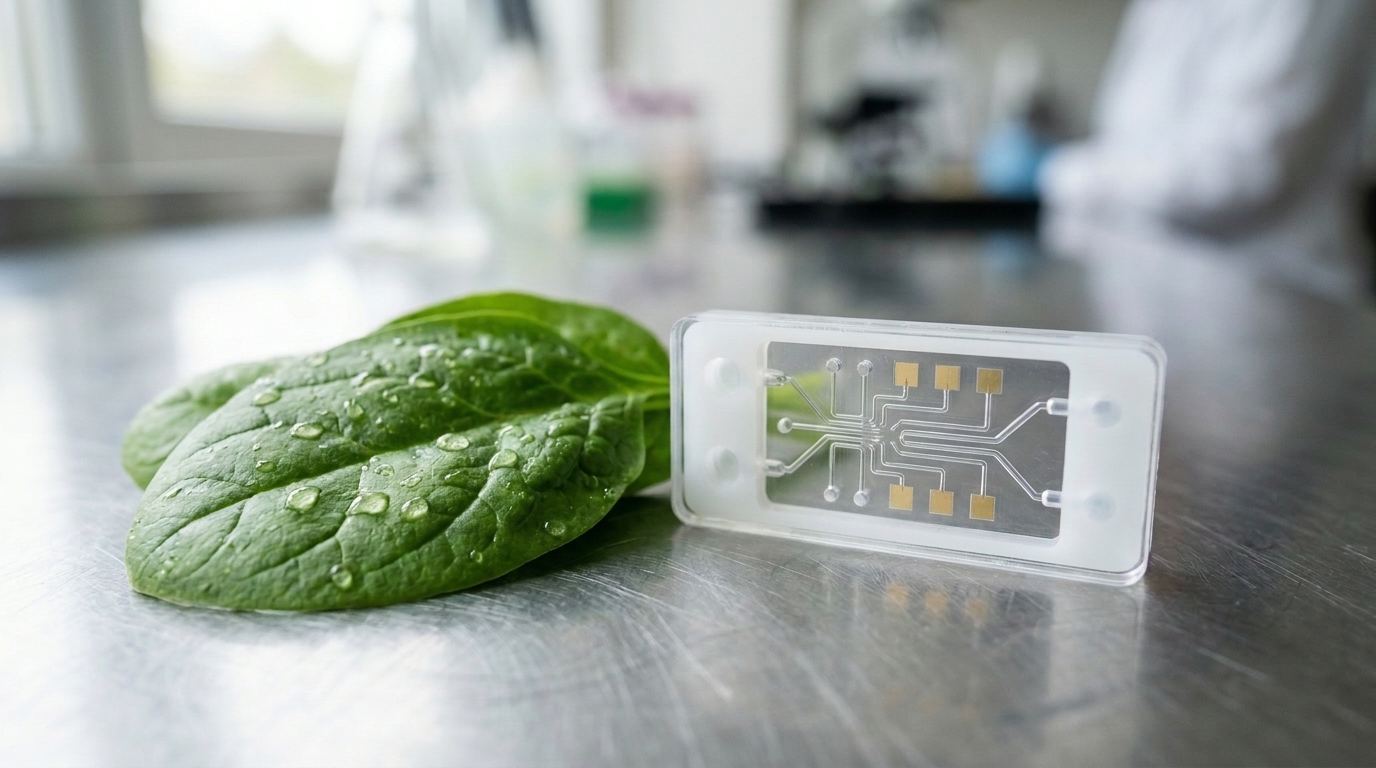
A comprehensive review published in the journal Food, Nutrition and Health synthesizes emerging biosensing strategies designed to monitor food quality, contamination, and authenticity. The study, authored by Sanamdeep Singh, Pooja Sharma, and Nitika Thakur, examines how biological recognition elements such as enzymes, antibodies, nucleic acids, and whole cells are being integrated with nanomaterials and microfluidic platforms. This review provides a critical assessment of these technologies, highlighting their potential to transform food safety monitoring by offering faster, more sensitive, and more accessible alternatives to traditional laboratory methods. The authors establish a comparative framework to evaluate key performance metrics, including sensitivity, cost, and translational readiness, while acknowledging the persistent challenges of scalability and environmental stability.
The urgency for advanced detection systems is underscored by global health statistics. The World Health Organization estimates that approximately 600 million people are exposed to foodborne diseases annually, resulting in 420,000 deaths and 33 million lost years of good health. Traditional detection methods, such as microbiological plating and polymerase chain reaction (PCR), are often labor-intensive, time-consuming, and require expensive equipment. While PCR methods are sensitive and relatively fast, they demand extensive nucleic acid extraction and specialized infrastructure. Immunological assays, conversely, have lower sensitivity, typically ranging from 103 to 105 colony-forming units per milliliter. These limitations make conventional methods less suitable for rural regions or developing nations where foodborne diseases are prevalent.
Enzyme-based biosensors represent one of the primary pillars of this emerging technology. These sensors utilize enzymes as catalysts to accelerate biological reactions, allowing for the determination of analyte concentrations through catalytic transformation or inhibition. They are versatile in monitoring quality markers and spoilage indicators, such as sugars, organic acids, ethanol, and histamine, across dairy, beverages, meat, and seafood matrices. Despite their advantages, enzymes can be unstable in extreme pH or high-fat environments. Recent developments in third-generation architectures and hybrid nanomaterials are addressing these limitations, making enzyme-based platforms increasingly practical for real-time food quality assurance.
Whole-cell biosensors (WCBs) offer a distinct approach by utilizing intact living cells, typically bacteria, yeast, or mammalian cells, as molecular recognition components. These biosensors detect specific analytes that elicit a cellular response, which is then converted into an electrical or optical signal. This holistic approach enables the detection of complex stressors and toxicity without prior knowledge of a specific molecular target. For instance, Escherichia coli strains have been used to gauge mycotoxin burdens in cereal storage, leveraging stress-response pathways to flag aflatoxin exposure. However, WCBs face challenges such as osmotic stress in brines and pH fluctuations in fermented beverages, which can reduce cell viability and signal stability by 15 to 25 percent.
Antibody-based biosensors, or immunosensors, are essential for the rapid and specific detection of foodborne pathogens, allergens, and mycotoxins. These systems utilize monoclonal antibodies or nanobodies to identify contaminants such as Salmonella, Listeria, and aflatoxins. Antibody-functionalized electrochemical platforms have achieved limits of detection ranging from 0.05 to 10 nanograms per milliliter for allergens and 102 to 103 colony-forming units per milliliter for pathogens, often within 5 to 30 minutes. Nanobody derivatives, derived from camelids, enhance stability and reduce steric issues, enabling the sensitive detection of mycotoxins like aflatoxin B1 at 0.005 nanograms per milliliter. Despite their speed and selectivity, immunosensors struggle with non-specific binding and biofouling in high-fat and protein-rich food matrices.
Nucleic acid-based genosensors, particularly those leveraging CRISPR/Cas systems, provide ultrasensitive tools for food safety and authenticity. These platforms enable the direct detection of genetic signatures from pathogens and adulterants. CRISPR/Cas-driven assays typically complete analyses in 15 to 60 minutes, a significant improvement over the 2 to 4 hours required for quantitative PCR or the 4 to 24 hours for liquid chromatography-tandem mass spectrometry. The per-test costs for CRISPR biosensors are approximately USD 0.50 to 3 for paper-based lateral flow variants, making them viable for small-scale processors. However, CRISPR platforms face challenges related to contamination risks from aerosolized amplicons, with false-positive rates climbing to 5 to 15 percent in non-sterile field settings.
Nanomaterials play a crucial role in enhancing the sensitivity and selectivity of these biosensors. Materials such as gold nanoparticles, carbon nanotubes, and metal-organic frameworks can amplify electrochemical or optical signals by up to 100-fold. These nanostructured platforms also impart antifouling properties, allowing for the attomolar-level detection of mycotoxins, pathogens, and heavy metals directly in unprocessed samples. For example, a gold-DNA-conjugated electrochemical sensor has achieved a detection limit of 0.59 micrograms per milliliter for pork content in meat samples, aiding in the prevention of food fraud. The integration of nanotechnology bridges the gap between laboratory prototypes and practical deployment throughout the food supply chain.
Smart packaging represents another frontier in biosensor application, transforming passive barriers into dynamic interfaces that actively monitor food quality. These systems incorporate biorecognition elements into biopolymer matrices like chitosan or polylactic acid. Chitosan films with pH-sensitive dyes change color in response to volatile amines from bacterial metabolism, indicating freshness in vacuum-packed beef. In the dairy sector, polylactic acid composites with immobilized glucose oxidase produce hydrogen peroxide upon lactose breakdown, triggering electrochemical alerts for early souring detection. While these prototypes show promise, commercialization faces challenges including integration costs of USD 0.10 to 0.50 per unit and regulatory scrutiny that can delay approvals by 12 to 24 months.
The application of biosensors in real-world food systems is frequently hampered by the inherent complexities of food matrices. Heterogeneous mixes of lipids, proteins, and polysaccharides introduce interferences that compromise sensor reliability. High-fat contents in dairy or meat products can cause biofouling, reducing signal-to-noise ratios by up to 50 percent in prolonged exposures. Protein-rich environments promote non-specific adsorption, triggering false positives or diminished detection limits. Mitigation strategies include surface modifications with zwitterionic polymers and the use of extremozymes, which offer superior resilience to extreme pH and thermal stability up to 80 degrees Celsius. These adaptations are essential for bridging the divide between controlled laboratory efficacy and practical robustness in industrial settings.
Despite the transformative potential of these technologies, significant translational challenges remain. The high cost of nanomaterial synthesis, with gold nanoparticles averaging USD 0.50 to 2 per gram at laboratory scales, hinders widespread adoption. Integration into existing workflows requires strict alignment with Hazard Analysis and Critical Control Point protocols, which can extend validation timelines by 12 to 18 months. Only 20 to 30 percent of pilot programs currently achieve seamless integration, often due to training gaps among operators. Future progress depends on the development of collaborative frameworks and standardized biofabrication techniques. Hybrid designs that combine CRISPR’s molecular precision with AI-driven signal correction and antifouling nanomaterials offer the most direct approach to overcoming these limits, aiming for scalable, decentralized monitoring that ensures equitable access to safer food systems.
Subject of Research: Towards safer food systems: emerging biosensing strategies for food quality, contamination, and authenticity
Article Title: Towards safer food systems: emerging biosensing strategies for food quality, contamination, and authenticity
Article References: Singh, S., Sharma, P., & Thakur, N. (2026). Towards safer food systems: emerging biosensing strategies for food quality, contamination, and authenticity. Food, Nutrition and Health, 3(1), Article 16. https://doi.org/10.1007/s44403-026-00061-4
Image Credits: AI Generated
DOI: 10.1007/s44403-026-00061-4
Keywords: Towards, safer, food, systems, emerging, biosensing, strategies, quality, contamination, authenticity, scientific research
News Source: Daisy Hatcher. (November 7, 2026). Biosensors Offer Rapid, Sensitive Tools for Food Safety. Scienmag.