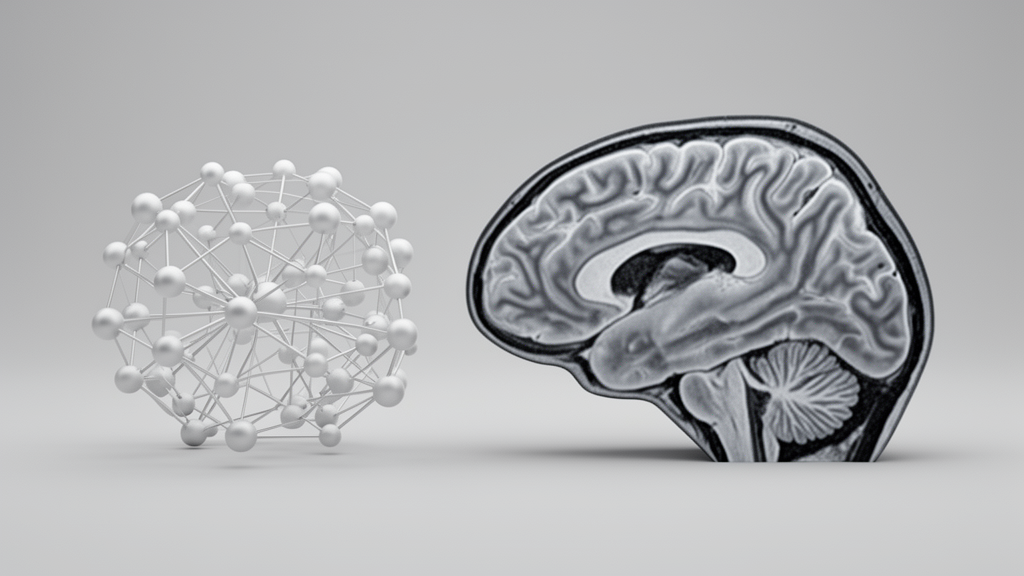
Researchers published a multi-cohort evaluation in Brain Informatics demonstrating that a relatively simple deep learning architecture outperforms more complex models when predicting age and sex from brain MRI scans. The study, led by Radhika Juglan and colleagues, systematically compared three three-dimensional neural network architectures: the Simple Fully Convolutional Network (SFCN), DenseNet121, and the Swin Transformer. The central finding is that the SFCN, a convolutional model, generalized more reliably across independent imaging cohorts than the attention-based Swin Transformer or the densely connected DenseNet121. This suggests that increased model complexity does not necessarily translate to better performance in diverse neuroimaging settings, a critical consideration for the clinical translation of artificial intelligence tools in medicine.
The study utilized four publicly available neuroimaging datasets to test the robustness of these models. The primary training and internal testing cohort was the UK Biobank (UKB), which provided high-resolution 3D T1-weighted brain MR images from 47,390 participants. To assess external generalizability, the researchers applied the trained models to three independent cohorts: the Dallas Lifespan Brain Study (DLBS) with 132 participants, the Parkinson’s Progression Markers Initiative (PPMI) with 108 healthy controls, and the Information eXtraction from Images (IXI) dataset with 319 participants. All cohorts provided demographic labels for sex and age, allowing for a standardized evaluation of predictive accuracy across different populations and imaging centers.
The technical approach involved preprocessing all MRI scans to ensure spatial consistency. Brain images were registered to the Montreal Neurological Institute (MNI) space, and non-brain structures were removed using the HD-BET algorithm. The images were then intensity normalized and center-cropped to a standardized volume of 180 by 180 by 180 voxels. The models were trained on a subset of the UK Biobank data, with a specific imaging center, Newcastle, held out as an internal test set to evaluate cross-center generalizability before the models were applied to the external DLBS, PPMI, and IXI cohorts. This rigorous validation framework was designed to mitigate the common issue of overfitting to specific cohort characteristics.
For the task of sex classification, the SFCN model demonstrated exceptional performance. In the internal UK Biobank test set, the model achieved an Area Under the Receiver Operating Characteristic Curve (AUC) of 1.00, indicating perfect discrimination between sexes. When applied to the external cohorts, performance remained high, with AUC values ranging from 0.85 to 0.91. Specifically, the SFCN achieved an AUC of 0.91 in the DLBS cohort, 0.85 in the PPMI cohort, and 0.87 in the IXI cohort. While this represents a decline from the internal test set, it confirms that the model can predict sex from structural brain MRI with high accuracy across diverse populations.
Age prediction presented a more challenging task, as it requires continuous regression rather than binary classification. In the internal UK Biobank test set, the SFCN achieved a Mean Absolute Error (MAE) of 2.66 years and a Pearson’s correlation coefficient (r) of 0.89. This strong correlation indicates that the model’s predictions closely tracked the true chronological age of the participants. However, as expected in external validation, performance decreased. In the external cohorts, the MAE ranged from 4.98 to 5.81 years, with Pearson’s r values between 0.55 and 0.70. The DLBS cohort showed the best external performance with an MAE of 4.98 years, while the IXI cohort showed the lowest accuracy with an MAE of 5.81 years.
When comparing the three architectures, the SFCN consistently outperformed the Swin Transformer in most cohorts. Statistical analysis using pairwise DeLong tests for classification and Wilcoxon signed-rank tests for regression, both with Bonferroni correction, confirmed that the SFCN’s performance was significantly better than the Swin Transformer in the majority of external cohorts. The DenseNet121 model did not differ significantly from the SFCN on external test sets for sex classification, but for age prediction, the SFCN significantly outperformed both DenseNet121 and the Swin Transformer in all cohorts. The Swin Transformer, despite its hierarchical structure and self-attention mechanisms, struggled to generalize, yielding MAEs as high as 7.35 years in the DLBS cohort.
The researchers also conducted a subgroup analysis to assess potential demographic biases in the SFCN model. For sex classification, the model maintained high performance across different age groups (40–50, 50–60, and 60–70 years) in all cohorts, with no significant age-related bias observed. For age prediction, the model showed slightly better performance for females than males in the UK Biobank and IXI cohorts, but this difference was not substantial. In the DLBS and PPMI cohorts, the performance differences between sexes were minimal. These findings suggest that the SFCN does not exhibit significant demographic bias, which is crucial for ensuring equitable application in clinical settings.
To understand how the models make their predictions, the researchers applied gradient-based explainability methods, specifically Gradient x Input (I x G) attribution maps. These maps highlight the brain regions that most contribute to the model’s output. The analysis revealed task-specific and spatially consistent attention patterns across all four cohorts. For both age and sex prediction, the model’s attention was predominantly distributed across the brainstem, central subcortical structures, and surrounding parts of the limbic lobe, insular cortex, cerebellum, temporal lobe, and occipital lobe. This consistency across independent datasets suggests that the model is identifying generalizable neuroanatomical features rather than dataset-specific artifacts.
Further quantitative analysis involved correlating the model’s prediction scores with regional gray matter volumes from 139 Image-Derived Phenotypes (IDPs) provided by the UK Biobank. For sex classification, the strongest volume correlations were observed in the Lingual Gyrus, the posterior division of the Cingulate Gyrus, and the right anterior division of the Parahippocampal Gyrus. For age prediction, the Brain Stem, Ventral Striatum, and Planum Polare in the temporal lobe exhibited the highest absolute volume correlations. The alignment between the model’s attention maps and these structural associations supports the interpretability of the SFCN.
The study acknowledges several limitations that must be considered when interpreting the results. First, the training cohort, while large, was limited in age range (40–71 years) and population diversity. This may restrict the model’s generalizability to younger or older populations and to more diverse ethnic groups. Second, the comparison of architectures was not based on fully architecture-specific hyperparameter optimization. The Swin Transformer and DenseNet121 may require more extensive, tailored optimization to reach their full potential, and the current results may not reflect their optimal performance. Third, gradient-based explainability methods have known theoretical and empirical limitations, and their interpretation should be approached with caution. Further validation is needed to confirm the biological and clinical significance of the identified attention patterns.
Despite these limitations, the study provides valuable insights into the development of deep learning models for neuroimaging. It highlights the importance of external validation in assessing the robustness of AI models. The findings suggest that simpler convolutional architectures may be more suitable for large-scale neuroimaging analyses where generalizability and interpretability are key. The SFCN’s favorable balance between predictive performance and computational efficiency makes it a strong candidate for future applications in degenerative neurological diseases such as Alzheimer’s disease, Parkinson’s disease, and Multiple Sclerosis. Understanding how neurodegeneration affects age and sex predictions could help refine the accuracy and applicability of these models in clinical settings.
In conclusion, this multi-cohort evaluation demonstrates that the SFCN is a robust and explainable architecture for predicting age and sex from brain MRI. Its superior generalizability compared to more complex models underscores the need for careful model selection in medical imaging. The study’s emphasis on external validation and explainability provides a framework for developing trustworthy AI tools for clinical use. As deep learning continues to advance in neuroimaging, balancing model complexity with robustness and interpretability will remain a critical challenge. The findings of this study offer practical guidance for researchers and clinicians seeking to leverage AI for the analysis of structural brain MRI data.
Subject of Research: Multi-cohort evaluation of 3D deep learning architectures for age and sex prediction from brain MRI
Article Title: Generalizable and explainable deep learning for brain MRI: a multi-cohort evaluation of 3D architectures for age and sex prediction
Article References: Juglan, R., Ligero, M., Carrero, Z. I., Rabasco Meneghetti, A., Lenz, T., Misera, L., Veldhuizen, G. P., Kuntke, P., Kitzler, H. H., Nebelung, S., Truhn, D., & Kather, J. N. (2026). Generalizable and explainable deep learning for brain MRI: a multi-cohort evaluation of 3D architectures for age and sex prediction. Brain Informatics, 13(1), Article 31. https://doi.org/10.1186/s40708-026-00316-y
Image Credits: AI Generated
DOI: 10.1186/s40708-026-00316-y
Keywords: deep learning, brain MRI, age prediction, sex classification, neuroimaging, generalizability, explainability, SFCN, Swin Transformer, DenseNet121, Generalizable, explainable
News Source: Cassandra Pierce. (November 7, 2026). Simpler AI Models Predict Brain Age and Sex More Reliably. Scienmag.