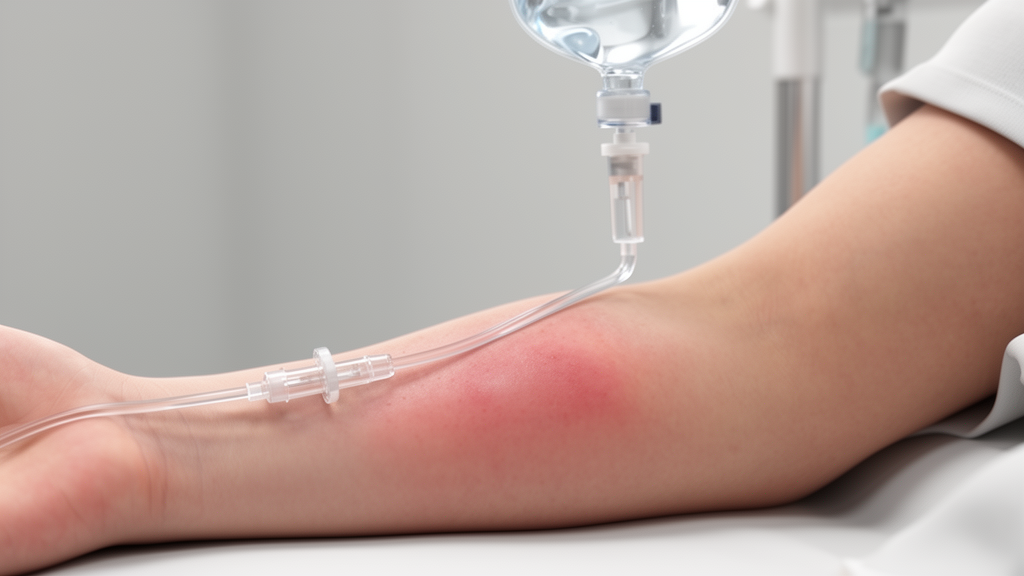
A published clinical case report in Allergy, Asthma & Clinical Immunology describes a 70-year-old woman with stage I mucosa-associated lymphoid tissue lymphoma who developed delayed rituximab-induced serum sickness eight days after experiencing an immediate anaphylactic reaction during the same rituximab infusion course. Clinicians identified this presentation as a documented instance where rituximab-induced serum sickness emerged several days after the resolution of immediate rituximab-induced anaphylaxis triggered by a single treatment administration.
Rituximab is a chimeric IgG monoclonal antibody containing murine and human components that targets the CD20 antigen expressed on normal and malignant B cells, serving as a standard therapy for B-cell malignancies and autoimmune diseases. Despite its established therapeutic activity, adverse events including immune-related complications frequently lead to treatment discontinuation. Rituximab-associated hypersensitivity reactions span type I, type III, and type IV immune responses, in addition to infusion-related, cytokine-release, and mixed patterns. Immediate reactions encompass both cytokine-mediated pathways and IgE- or non-IgE-mediated anaphylaxis, whereas rituximab-induced serum sickness constitutes a type III immune complex-mediated hypersensitivity reaction characterized by fever, rash, and arthralgia that typically manifests roughly one week post-infusion.
The patient initially received single-agent rituximab monotherapy on a weekly schedule for her stage I mucosa-associated lymphoid tissue lymphoma. The first three weekly infusions of rituximab, dosed at 375 mg/m2, were administered without any documented significant adverse events at an outside medical institution. However, four days following the third infusion, the patient presented with fever, nonpruritic flat erythema, and arthralgia. These initial symptoms improved spontaneously within two days, and no formal infectious workup was conducted at that time.
Two weeks after the third infusion, following full clinical resolution of those transient symptoms, rituximab monotherapy was re-administered. Approximately 30 minutes after beginning the infusion, the patient developed acute dyspnea and nausea, prompting clinicians to immediately discontinue the treatment in accordance with the European Academy of Allergy and Clinical Immunology anaphylaxis guidelines. The medical team administered two separate 100 mg doses of intravenous hydrocortisone, resulting in gradual clinical recovery, with no urticaria, systemic hypotension, or documented hypoxia recorded during that acute episode.
One year later, follow-up evaluations demonstrated slight progression of the lymphoma, leading clinicians to initiate combination therapy using bendamustine and rituximab. The patient completed bendamustine infusions on days 1 and 2 without experiencing any adverse reactions. On day 6, rituximab was infused at 375 mg/m2 across an extended administration duration three to four times longer than the standard infusion rate in an effort to minimize severe reaction risks. Within minutes of starting the infusion, the patient exhibited nasal congestion and hoarseness, which resolved after administration of 100 mg of intravenous hydrocortisone, allowing the scheduled infusion to finish.
Eight days after the day 6 rituximab infusion, corresponding to day 14 of the treatment cycle, the patient presented with high fever, vomiting, diarrhea, systemic hypotension, and widespread pruritic edematous erythematous plaques distributed across her trunk and extremities. Laboratory evaluations demonstrated significant elevations in inflammatory markers, including a C-reactive protein level of 19.20 mg/dL and a peripheral leukocyte count of 17,800/µL, with no evidence of bacterial infection detected. These clinical manifestations improved spontaneously within three days without additional anti-infective interventions.
Serological testing revealed markedly elevated levels of human anti-chimeric antibodies exceeding the upper limit of the electrochemiluminescence immunoassay at greater than 5000 ng/mL, compared to the assay reference threshold of less than 25 ng/mL. Although human anti-chimeric antibodies target the chimeric region of rituximab and appear in roughly 60 percent of serum sickness cases, the authors noted that circulating antibody titers do not necessarily correlate directly with rituximab-induced serum sickness severity. Based on the distinctive clinical manifestations and elevated serology, clinicians considered the delayed systemic response indicative of rituximab-induced serum sickness.
Allergy diagnostics included scratch tests using bendamustine at 2.4 mg/mL, rituximab at 2 mg/mL, and the formulation excipient polysorbate 80 at 0.14 mg/mL across serial tenfold dilutions ranging from 1:1000 to undiluted saline concentrations, all of which produced negative results. An intradermal test using rituximab at a validated non-irritant concentration of 1 mg/mL yielded a positive immediate wheal reaction. While this wheal initially began resolving, the injection site exhibited progressive worsening erythema on the following day that persisted for at least two days before fully subsiding without residual post-inflammatory pigmentation.
A graded intravenous challenge with bendamustine, escalating stepwise by tenfold increments from a 1:100 dilution to full strength under 30-minute observation intervals, elicited no adverse reactions. Given the positive skin testing and clinical history, oncologists suspended further rituximab administration and planned bendamustine monotherapy in the event of subsequent lymphoma progression. Reviewing published reports, the authors observed that previously documented combinations of rituximab-induced anaphylaxis and serum sickness either occurred during separate courses or presented as overlapping reactions during a single infusion, distinguishing this delayed sequential presentation.
The authors emphasized that skin testing provided objective support for concurrent immediate and delayed hypersensitivity patterns, while noting several critical study limitations. Serum tryptase was not measured during the delayed presentation on day 8, preventing definitive exclusion of delayed or persistent immediate-type anaphylactic mechanisms. Furthermore, total IgG and IgM levels, complement fractions C3 and C4, circulating immune complexes, and cryoglobulins were not evaluated, highlighting the need for standardized diagnostic frameworks and careful extended post-infusion monitoring.
In analyzing the timing of the patient’s secondary systemic reaction, the researchers addressed the critical clinical challenge of distinguishing delayed serum sickness from late-onset anaphylactic phenomena. While acute hypersensitivity occurred within minutes of starting the infusion, the secondary episode emerged eight days later. The authors pointed out that biphasic anaphylaxis, which involves a secondary recurrence of immediate allergic manifestations, typically develops within seventy-two hours of the initial exposure. Given this distinct temporal gap, the emergence of fever, widespread cutaneous plaques, digestive disturbances, and hypotension more than a week post-infusion made biphasic anaphylaxis highly improbable, pointing instead toward rituximab-induced serum sickness. Nevertheless, interpreting such delayed systemic complications remains challenging because previous clinical reports have described delayed rituximab-induced anaphylaxis arising between five and eleven days after drug administration, where measured serum tryptase levels verified the participation of immediate-type hypersensitivity. In this patient, serum tryptase was not measured during the second reaction, leaving unresolved whether the delayed symptoms represented isolated serum sickness or a more complex presentation involving concurrent anaphylactic mechanisms.
The diagnostic trajectory in this case also provided meaningful insights into the performance and interpretation of cutaneous allergy testing for monoclonal antibodies. Although skin prick testing is generally preferred in standard clinical practice, the medical team utilized scratch testing in accordance with local institutional protocols across serial tenfold dilutions of bendamustine, rituximab, and the excipient polysorbate eighty, all of which yielded negative findings. For intradermal evaluation, clinicians selected a rituximab concentration of one milligram per milliliter, a threshold established in previous investigations as non-irritant and associated with a minimal risk of generating false-positive cutaneous responses. The immediate wheal response observed at this concentration supported the presence of an IgE-mediated sensitization pathway underlying her initial acute reactions. Furthermore, administering bendamustine through a graded challenge, beginning at a one-to-one-hundred dilution and progressing stepwise tenfold to the undiluted solution under thirty-minute observation intervals, confirmed that the patient could tolerate the chemotherapy agent safely without adverse events.
Beyond the immediate wheal, the patient’s intradermal site displayed a delayed erythematous flare that worsened the following day and persisted for at least two days before subsiding completely without post-inflammatory pigmentation. The investigators noted that this localized sequence closely mirrored the chronological transition seen during systemic treatment, where acute intolerance was succeeded days later by widespread cutaneous and systemic pathology. However, the exact immunological process driving this delayed cutaneous reaction remains ambiguous. The authors explained that delayed local skin responses can develop as late-phase IgE-mediated allergic reactions rather than specific type III hypersensitivity. Classical type III responses are driven by immune complex formation involving complement-fixing IgG or IgM antibodies, but the relationship between positive cutaneous testing and circulating immune complexes has not been firmly established. Because of this uncertainty, the report highlights the clinical value of monitoring patients over several days following intradermal skin testing to capture delayed localized developments.
The broader clinical implications of this presentation underline the intricate nature of managing anti-CD20 monoclonal antibody therapy. Rituximab-induced serum sickness is known to manifest more frequently in individuals treated for autoimmune or rheumatologic conditions than in patients receiving therapy for hematological malignancies such as lymphoma. The development of human anti-chimeric antibodies, directed against the murine components of the chimeric molecule, occurs in approximately sixty percent of serum sickness cases and correlates with higher rates of infusion reactions and diminished therapeutic efficacy. To better differentiate overlapping hypersensitivity pathways in future cases where diagnostic boundaries blur, the authors proposed integrating additional investigative tools, including basophil activation testing and detailed profiling of both IgE antibodies and anti-chimeric titers. Above all, when immediate adverse events take place during rituximab administration, comprehensive patient education emphasizing the prompt reporting of delayed systemic symptoms remains paramount to ensure timely recognition and intervention.
Subject of Research: Sequential immediate anaphylaxis and delayed rituximab-induced serum sickness
Article Title: Sequential anaphylaxis and delayed rituximab-induced serum sickness with skin testing findings: a case report
Article References: Mori, S., Okata-Karigane, U., Arai, M., Takahashi, C., Tahara, U., Fukushima-Nomura, A., Matsuki, E., Masaki, K., & Adachi, T. (2026). Sequential anaphylaxis and delayed rituximab-induced serum sickness with skin testing findings: a case report. Allergy, Asthma & Clinical Immunology, 22(1), Article 52. https://doi.org/10.1186/s13223-026-01050-0
Image Credits: AI Generated
DOI: 10.1186/s13223-026-01050-0
Keywords: rituximab, anaphylaxis, serum sickness, MALT lymphoma, hypersensitivity, intradermal test, human anti-chimeric antibodies, drug allergy, Sequential, delayed, rituximab-induced, serum
News Source: Ophelia Keating. (November 7, 2026). Case Study Documents Delayed Serum Sickness Following Immediate Anaphylaxis from Rituximab. Scienmag.