A small exploratory pilot study conducted in New Zealand has demonstrated the feasibility of using consumer smartwatches to quantify the continuous physical activity and heart rate-derived physiological stress of dairy farm workers during the intensive spring block-calving period. The research, published in Frontiers in Animal Science, evaluated whether wearable technology could provide reliable, whole-day data on workload and physiological arousal in a setting where clinical measurement is typically impractical. By tracking nine farm workers across five seasonal, pasture-based dairy farms, the study offers preliminary insights into the variable physical demands and stress exposures experienced by agricultural laborers during one of the most demanding times of the year.
The study was designed to address a gap in quantitative evidence regarding whole-day workload and physiological stress among farm workers in seasonal dairy systems. In New Zealand, spring block-calving systems concentrate calving, milking, calf care, and feed management into a short, intense period, creating a predictable peak in workload. The authors aimed to assess whether a robust smartwatch could generate usable 24-hour profiles of activity and stress, describe the temporal patterns of these metrics across the calving period, and explore preliminary relationships between specific farm tasks and physiological responses.
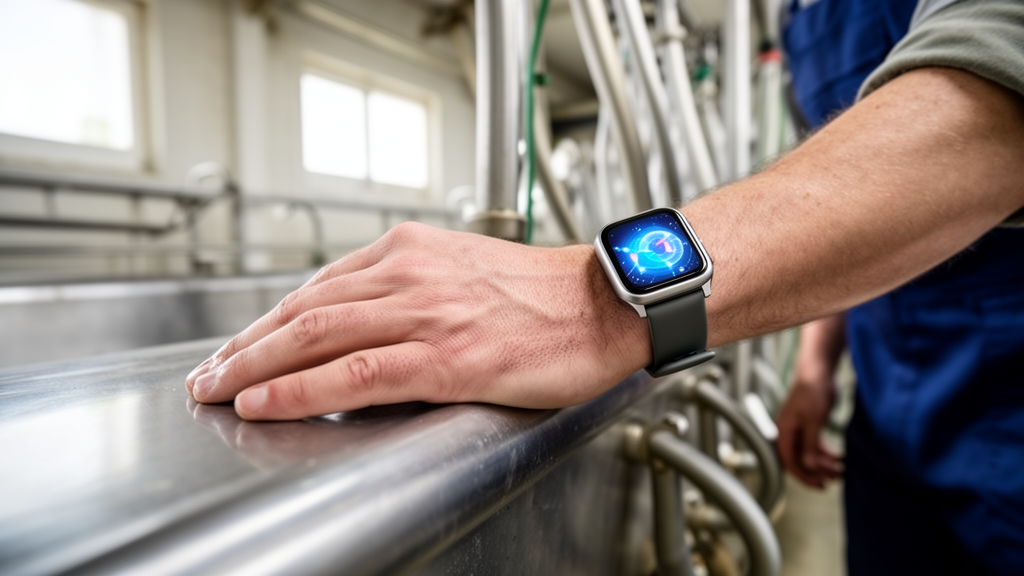
Nine male farm workers, aged between 25 and 44 years, were enrolled from five farms located in the Waikato, Bay of Plenty, West Coast, and Canterbury regions of New Zealand. The farms operated under a seasonal spring-calving system, with herd sizes ranging from 235 to 800 cows at peak calving. Participants wore a Garmin Instinct 2 smartwatch for an average of 49 days during the 2024 calving period. The device was selected for its robustness and water resistance, making it suitable for the rugged conditions of commercial dairy farming. The watches were fitted to the participants’ preferred wrists, and they were asked to wear the sensors as much as possible and upload data daily via a smartphone application.
The smartwatch captured heart rate and heart rate variability data, which were used to calculate a physiological stress score indicating sympathetic nervous system activation. This score, ranging from 0 to 100, was interpreted as physiological arousal rather than purely psychological stress, as it can reflect both negative stress and positive excitement. Additionally, heart rate data combined with participant-entered age, weight, and height were used to estimate metabolic equivalent of task (MET) minutes and minutes of moderate-to-vigorous physical activity (MVPA). These metrics provide standard measures of physical activity intensity, where a MET score of 1 indicates rest and higher scores correspond to more vigorous activity.
Feasibility was assessed through wear-time compliance and reported health and safety concerns. The sensors were worn for more than 23 hours on 71% of study days, a level of compliance that the authors noted was higher than that reported in previous studies using Oura rings for sleep monitoring. No health or safety concerns were reported by participants regarding the use of the smartwatch while working, suggesting that the device did not interfere with their ability to perform farm tasks. This high level of engagement indicates that consumer smartwatches can be a practical tool for collecting continuous physiological data in agricultural settings without imposing significant additional burden on workers.
The results revealed that participants accumulated high and highly variable levels of physical activity during the calving period. Median daily minutes of MVPA were frequently above 50 minutes, with some farms exhibiting much higher values. For instance, Farm 4, which operated a milking frequency of three times in two days, recorded the highest median MVPA at 89 minutes per day, although differences between farms were not statistically significant due to the small sample size. The interquartile ranges for MVPA were also large on some farms, indicating substantial day-to-day variation in physical workload. This level of activity is comparable to or exceeds the recommended 150 minutes of moderate-intensity exercise per week for healthy adults, suggesting that dairy farming during calving can meet or exceed general health guidelines for physical activity on a daily basis.
Minutes of high physiological stress, defined as scores above 75, ranged from a median of 16 minutes per day on Farm 2 to 82 minutes per day on Farm 5. The patterns of stress over the calving period were markedly different for each farm; some farms exhibited consistent stress levels, while others showed peaks and troughs that may have been attributed to specific calving patterns or management practices. The authors cautioned that because farm characteristics such as milking frequency and location were completely confounded in the study design, it is not possible to attribute these differences to specific management practices. Instead, the findings should be interpreted descriptively, highlighting the variability in physiological exposure among dairy workers.
Task-level analysis, based on manual recording by participants for two consecutive days at peak calving, provided additional context for the physiological data. Milking was the task that occupied the greatest proportion of the working day for all farms, averaging around 30% of the time. However, the amount of physical effort, as measured by MVPA minutes, was not directly proportional to the time spent on a task. For example, Farm 2 spent a similar proportion of working time milking as Farm 3, but the MVPA minutes associated with milking were markedly higher on Farm 2. This discrepancy suggests that factors not recorded in the study, such as terrain, animal behavior, or individual work pace, influence the intensity of labor. The highest MET scores were recorded for people tasks, such as team meetings, and the highest MVPA for office tasks on one farm, which the authors suggested might indicate errors in task recording or alignment with sensor data.
The study highlights several limitations that must be considered when interpreting the results. The small sample size of nine participants limits the generalizability of the findings, and all participants were male, aged 25 to 44 years. The use of a consumer smartwatch with proprietary algorithms that have not been specifically validated for dairy farm tasks means that absolute estimates of MET minutes, MVPA, and physiological stress should be interpreted with caution. Furthermore, the physiological stress score may reflect physical exertion, heat, or excitement rather than negative psychological stress alone. Task recording was limited to two days and relied on manual reporting, which likely introduced errors in timing and classification. Contextual factors such as weather, staffing pressure, and individual fitness were not fully captured, limiting the ability to explain differences between farms.
Despite these limitations, the study provides preliminary evidence that smartwatch-based methodologies can be applied to collect broad, temporally rich datasets on farmers’ work activity and physiological experience. The findings suggest that dairy farming during the calving period involves significant physical demands and variable physiological stress exposure, which may have implications for worker fatigue, recovery, and workplace productivity. The authors recommend further investigation into the sources of worker physiological stress on dairy farms and the development of automated methods for task recording to reduce participant burden and improve data accuracy.
Subject of Research: Feasibility of wearable technology for monitoring dairy farm worker activity and stress
Article Title: Profiling dairy farm workers’ daily activity and physiological stress over the block-calving period with wearable technology – a pilot study
Article References: Hall, L. S., Eastwood, C. R., Dale, K., Kuhn-Sherlock, B., & Dela Rue, B. T. (2026). Profiling dairy farm workers’ daily activity and physiological stress over the block-calving period with wearable technology – a pilot study. Frontiers in Animal Science, 7, Article 1930182. https://doi.org/10.3389/fanim.2026.1930182
Image Credits: AI Generated
DOI: 10.3389/fanim.2026.1930182
Keywords: dairy farming, wearable technology, physiological stress, physical activity, occupational health, New Zealand, smartwatch, calving period, agricultural labor, Profiling, dairy, farm
News Source: Drew Townsend. (November 7, 2026). Pilot study tracks dairy worker stress with smartwatches. Scienmag.