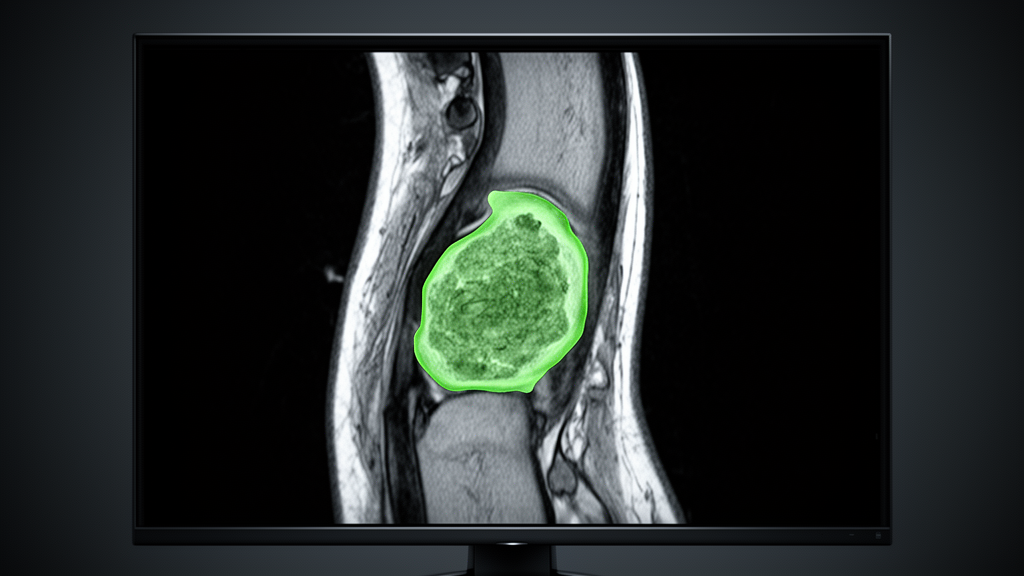
A semi-supervised diffusion model can segment vascular plaques across the carotid arteries, aorta, and iliac arteries on non-contrast computed tomography scans with accuracy approaching fully supervised methods while using only 14 labeled training scans, according to findings published in the International Journal of Computer Assisted Radiology and Surgery. Researchers developed the framework to automate the identification of arterial plaques alongside surrounding anatomy on non-contrast CT, demonstrating that semi-supervised learning can substantially lower manual annotation requirements for large-scale vascular imaging assessment.
Accurate segmentation of vascular plaques within the carotid, aortic, and iliac arteries provides critical clinical information because overall plaque burden relates directly to cardiovascular and stroke risk and helps guide patient treatment. However, manual labeling across extensive vascular regions is time-consuming and frequently infeasible for large cohorts. Semi-supervised learning methods address this operational bottleneck by leveraging large amounts of unlabeled CT data, enabling accurate plaque delineation with only limited annotated examples.
To implement the approach, the investigators formulated the non-contrast CT segmentation task as a multi-class problem covering vascular plaques and 26 adjacent anatomical structures. The method utilizes a teacher–student architecture featuring a shared diffusion encoder designed to learn domain-invariant feature representations. To reduce overfitting and improve robustness across data distributions, the architecture decouples labeled and unlabeled data by employing separate teacher and student decoders.
Because vascular plaques are small relative to surrounding structures, the segmentation task presents severe class imbalance during training. To resolve this issue, the researchers designed a plaque-aware oversampling strategy to ensure sufficient representation of plaque targets. Additionally, they introduced a labeled-data-guided training procedure specifically tailored for the shared encoder and student decoder.
The framework was trained and internally validated using 142 non-contrast CT scans from the National Institutes of Health, partitioned into 119 training scans and 23 validation scans. For external evaluation, the researchers tested the system on two independent cohorts comprising 95 scans from the University of Wisconsin and 50 scans from Medipol University Mega Hospital, benchmarking performance against supervised nnU-Net and an established semi-supervised learning baseline.
Experimental evaluations showed that when using only 14 labeled training scans, the improved semi-supervised method significantly outperformed both the original semi-supervised baseline and supervised training using the same architecture (p < 0.0001). With these 14 labeled scans, the framework achieved Dice similarity coefficient values of 58.8% on CTRATE and 82.3% on Renal Donor, remaining within 2.7 to 2.8 percentage points of the identical architecture trained with all 119 scans labeled, supporting scalable assessment of vascular plaque burden.
Subject of Research: Automated segmentation of vascular plaques on non-contrast CT
Article Title: A semi-supervised diffusion model for automated segmentation of vascular plaques
Article References: Liu, J., Balamuralikrishna, P. T. S., Locke, L., Pickhardt, P. J., & Summers, R. M. (2026). A semi-supervised diffusion model for automated segmentation of vascular plaques. International Journal of Computer Assisted Radiology and Surgery. https://doi.org/10.1007/s11548-026-03813-x
Image Credits: AI Generated
DOI: 10.1007/s11548-026-03813-x
Keywords: vascular plaques, computed tomography, semi-supervised learning, diffusion models, medical image segmentation, carotid arteries, aorta, iliac arteries, semi-supervised, diffusion, model, automated
News Source: Ophelia Keating. (November 7, 2026). Semi-Supervised Diffusion Model Accurately Segments Vascular Plaques on CT Scans. Scienmag.