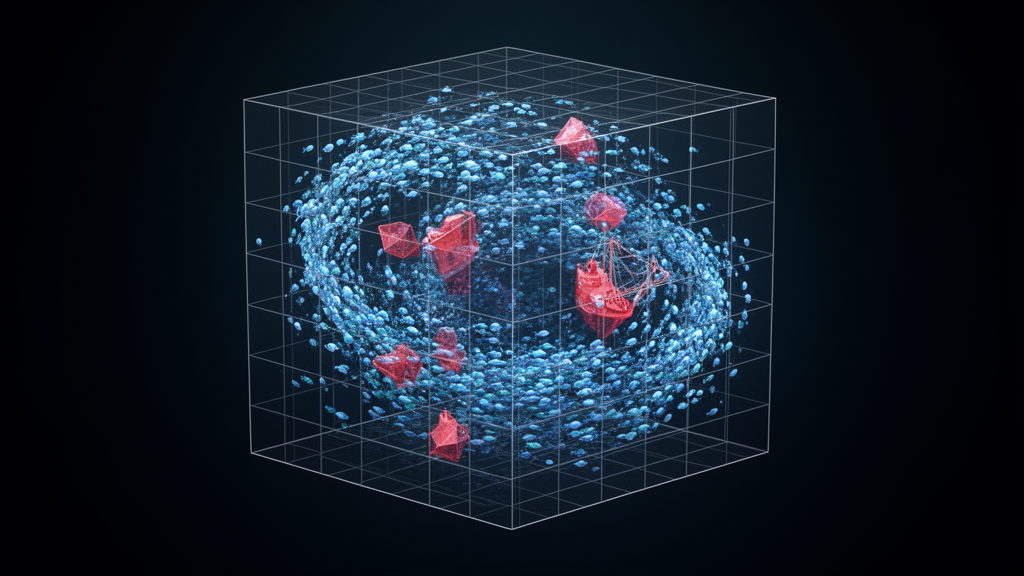
A computational framework named SwimmingIndividuals has been introduced to advance the simulation of physiological processes, animal movement, higher trophic level marine ecosystem dynamics, and fisheries removals at large ecological scales. Developed by researchers Matthew S. Woodstock, Jann Paul Mattern, Zhen Wu, and Gregory L. Britten, the software is designed as an open-source agent-based model. Mechanistic models are considered essential tools for projecting ecological responses to novel conditions because their formulations are established on theoretical foundations. However, mechanistic agent-based modeling applications in marine ecology have historically been constrained by significant computational limitations.
To overcome these computational constraints and make simulations tractable at scale, SwimmingIndividuals relies on a hybrid CPU/GPU computing architecture written in the Julia programming language. The primary contributions of the software consist of a comprehensive suite of mechanistic sub-models governing the complete life cycle of each individual agent. These sub-models incorporate visual prey detection, adaptive behavioral routines such as diel vertical migration, and a spatial pathfinding algorithm designed to guide habitat-seeking movement across marine environments.
In addition to movement and sensory mechanisms, the framework integrates a flexible bioenergetics engine configured with three taxon-specific metabolic architectures. Prior agent-based models frequently relied on fixed perception radii or single-equation bioenergetics representations that limited physiological detail. SwimmingIndividuals departs from those approaches by enabling emergent ecological dynamics across populations of superindividual agents, providing a more versatile structure for representing physiological diversity and ecological interactions.
The capabilities of the framework were evaluated and demonstrated through three simulations conducted for the Gulf of America. In these evaluations, the model successfully reproduced observed diel vertical migration, cetacean diving patterns, and size-based trophic shifts. Furthermore, the framework reproduced von Bertalanffy growth curves that are consistent with published King Mackerel stock assessments, demonstrating that agent-level mechanisms can accurately reflect established fishery assessment data.
In long-term simulations, SwimmingIndividuals generated realistic population dynamics over extended periods while quantifying the direct impacts of fishery harvest control rules across five distinct fishing fleets. By linking physiological mechanisms, movement algorithms, and high-performance computing, the authors conclude that SwimmingIndividuals provides a powerful, flexible, and open-source platform for ongoing mechanistic marine ecosystem research and ecosystem-based fisheries management.
Subject of Research: Agent-based modeling of marine ecosystems and fisheries management
Article Title: SwimmingIndividuals: A high-performance agent-based model for marine ecosystems
Article References: Woodstock, M. S., Mattern, J. P., Wu, Z., & Britten, G. L. (2026). SwimmingIndividuals: A high-performance agent-based model for marine ecosystems. PLOS Computational Biology, 22(11), e1013610. https://doi.org/10.1371/journal.pcbi.1013610
Image Credits: AI Generated
DOI: 10.1371/journal.pcbi.1013610
Keywords: agent-based modeling, marine ecosystems, computational biology, fisheries management, Julia programming, diel vertical migration, bioenergetics, superindividuals, SwimmingIndividuals, high-performance, agent-based, model
News Source: Gavin Prescott. (November 7, 2026). Open-Source Agent-Based Model Simulates Marine Ecosystem Dynamics and Fisheries Removals. Scienmag.