• HOME
  • NEWS
  • EXPLORE
    • CAREER
      • Companies
      • Jobs
    • EVENTS
    • iGEM
      • News
      • Team
    • PHOTOS
    • VIDEO
    • WIKI
  • BLOG
  • COMMUNITY
    • FACEBOOK
    • INSTAGRAM
    • TWITTER
Saturday, November 7, 2026
BIOENGINEER.ORG
No Result
View All Result
  • Login
  • HOME
  • NEWS
  • EXPLORE
    • CAREER
      • Companies
      • Jobs
        • Lecturer
        • PhD Studentship
        • Postdoc
        • Research Assistant
    • EVENTS
    • iGEM
      • News
      • Team
    • PHOTOS
    • VIDEO
    • WIKI
  • BLOG
  • COMMUNITY
    • FACEBOOK
    • INSTAGRAM
    • TWITTER
No Result
View All Result
Bioengineer.org
No Result
View All Result
Home NEWS Science News Technology

Study Models Seismic Performance of Masonry Arch Bridge

by
November 7, 2026
in Technology
Reading Time: 2 mins read
0
Study Models Seismic Performance of Masonry Arch Bridge

Study Models Seismic Performance of Masonry Arch Bridge

Share on FacebookShare on TwitterShare on LinkedinShare on RedditShare on Telegram

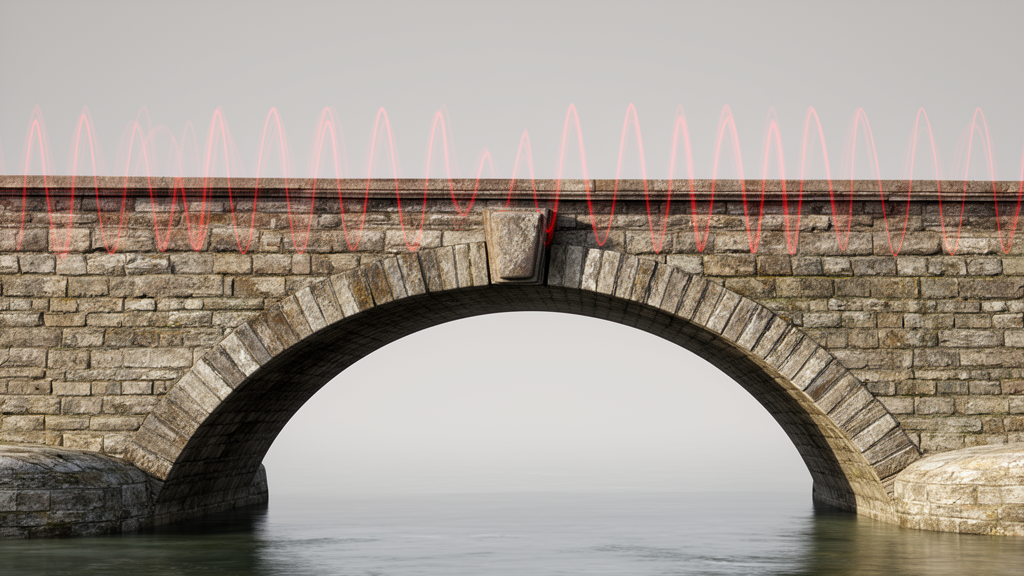
Researchers analyzed the seismic behavior of the historical single-span masonry arch Kireçli Bridge using both nonlinear dynamic and static methods. The study, published in Earthquake Engineering and Engineering Vibration, aimed to identify the most suitable lateral load pattern and damping model for evaluating the seismic performance of similar structures.

To ensure the accuracy of their finite element model, the authors calibrated the linear masonry material properties using experimentally measured natural vibration frequencies and mode shapes. Additionally, the nonlinear material properties and the model’s cracking and crushing capabilities were validated through experimental specimen results.

The investigation focused on identifying damage mechanisms under critical horizontal and vertical loading conditions using nonlinear static analyses. The researchers evaluated various lateral load patterns to replicate earthquake-induced damage. Their findings showed consistent mechanisms between pushover and nonlinear dynamic analyses.

Maximum seismic demands were calculated using the capacity spectrum method and compared with results from time-history analyses. Furthermore, an equivalent damping model was developed to characterize the bridge’s seismic energy dissipation.

The study concludes by identifying the most suitable lateral load pattern and damping model for evaluating the seismic performance of single-span masonry arch bridges with nonlinear static procedures.

The research was conducted by İlker Kazaz, Suat Gökhan Özkaya, and Muhammed Alperen Özdemir.

Subject of Research: Seismic performance assessment of single-span masonry arch bridges

Article Title: Load pattern and damping model for performance assessment of single-span masonry arch bridge

Article References: Kazaz, İ., Özkaya, S. G., & Özdemir, M. A. (2026). Load pattern and damping model for performance assessment of single-span masonry arch bridge. Earthquake Engineering and Engineering Vibration, 25(4), 1065-1087. https://doi.org/10.1007/s11803-026-2421-1

Image Credits: AI Generated

DOI: 10.1007/s11803-026-2421-1

Keywords: seismic engineering, masonry arch bridge, finite element modeling, nonlinear analysis, structural dynamics, heritage preservation, damping model, load pattern, Load, pattern, damping, model

News Source: Denise Maddox. (November 7, 2026). Study Models Seismic Performance of Masonry Arch Bridge. Scienmag.


Tags: dampingdamping modelFinite Element Modelingheritage preservationloadload patternmasonry arch bridgemodelnonlinear analysispatternseismic engineeringstructural dynamics
Share12Tweet7Share2ShareShareShare1

Related Posts

Flexible PVC Composites Doped With WO3 and Brine Sludge Shield Radiation

Flexible PVC Composites Doped With WO3 and Brine Sludge Shield Radiation

November 7, 2026
LiveCtx Boosts Conversational AI Accuracy by Selecting Context at Query Time

LiveCtx Boosts Conversational AI Accuracy by Selecting Context at Query Time

November 7, 2026

First Complete Mitochondrial and Chloroplast Genomes Assembled for Crateva unilocularis

November 7, 2026

Factors Associated With Surgical Decision-Making in Early-Stage Non-Small Cell Lung Cancer

November 7, 2026

POPULAR NEWS

  • Lycopene Protects Chicken Testes Against Zearalenone Damage by Suppressing Necroptosis and Inflammation

    Lycopene Protects Chicken Testes Against Zearalenone Damage by Suppressing Necroptosis and Inflammation

    29 shares
    Share 12 Tweet 7
  • Finnish Experts Reach Consensus on Medication Documentation Standards

    29 shares
    Share 12 Tweet 7
  • Borderline Symptoms Predict Lower Empathy and Decreased Acceptance of Fair Offers

    29 shares
    Share 12 Tweet 7
  • Terminal Domains Drive Rice OsYchF1-OsGAP1 Complex Formation and Guide Modeling

    29 shares
    Share 12 Tweet 7

About

We bring you the latest biotechnology news from best research centers and universities around the world. Check our website.

Follow us

Recent News

Scientists Review Liver Abscess Risks and Emerging Treatments Following Pancreatic Surgery

Study Assesses Metabolic Syndrome Rates and Clinical Features in Gout Patients

Flexible PVC Composites Doped With WO3 and Brine Sludge Shield Radiation

Subscribe to Blog via Email

Enter your email address to subscribe to this blog and receive notifications of new posts by email.

Join 86 other subscribers
  • Contact Us

Bioengineer.org © Copyright 2023 All Rights Reserved.

Welcome Back!

Login to your account below

Forgotten Password?

Retrieve your password

Please enter your username or email address to reset your password.

Log In
No Result
View All Result
  • Homepages
    • Home Page 1
    • Home Page 2
  • News
  • National
  • Business
  • Health
  • Lifestyle
  • Science

Bioengineer.org © Copyright 2023 All Rights Reserved.