An adapted Arabic version of the Global Physical Activity Questionnaire demonstrates high test-retest reliability but shows weak correlation with objective step counts recorded by pedometers, according to a cross-sectional validation study of Egyptian adults. Investigators evaluating the self-administered instrument found that while it consistently reproduced participant rankings across a two-week interval and correlated strongly with a secondary self-report survey, it yielded substantially higher physical activity estimates than objective ambulatory monitoring. In statistical evaluations against consecutive seven-day pedometer tracking, the questionnaire showed no significant correlation with step counts among male participants and a weak negative correlation among female participants. Because the questionnaire captures metabolic exertion across multiple life domains rather than ambulatory movement alone, the authors concluded that the instrument is suitable for ranking individual activity levels rather than determining absolute energy expenditure.
Accurate assessment of physical activity represents an essential cornerstone for public health surveillance, enabling authorities to track behavioral trends and address non-communicable conditions, including type 2 diabetes, cardiovascular disease, hypertension, and specific cancers. Although wearable electronic devices provide direct objective measurements, large-scale epidemiological investigations rely predominantly on self-report questionnaires due to their low cost, minimal participant burden, and administrative ease. To establish standardized international surveillance, the World Health Organization created the Global Physical Activity Questionnaire as part of its STEPwise approach to chronic disease risk factor surveillance, targeting developing nations. The survey quantifies the frequency and duration of moderate and vigorous activity across three distinct settings: work, which encompasses paid and unpaid labor; transportation, such as walking and cycling; and recreational pursuits, alongside daily sedentary sitting time.
Because psychometric performance varies across differing socio-cultural contexts, occupational norms, and physical environments, standardized questionnaires require rigorous adaptation before being implemented in new populations. To establish an instrument tailored to Egyptian adults, researchers adapted the official World Health Organization Arabic version of the questionnaire. Two bilingual specialists in sport sciences and public health reviewed the Arabic text against the original English source, followed by independent blinded back-translation and expert panel resolution. Cognitive interviews and pilot testing in ten Egyptian adults guided contextual modifications to create the final adapted version. Specifically, instructions expanded the work domain to explicitly cover unpaid domestic labor and volunteer work, preventing underreporting among homemakers. In addition, examples of sedentary behavior were modernized to include mobile phone and video game usage, matching contemporary lifestyle behaviors.
The validation protocol evaluated a community-based convenience sample in Assiut, Egypt, establishing a balanced cohort to assess the instrument across sexes. Initially, 195 candidates were screened; 15 were excluded for failing inclusion criteria or declining participation. The remaining 180 participants received pedometers, but 29 were excluded during follow-up: 17 for providing fewer than four valid device wear days and 12 for missing the Day 15 retest session. The final analytical sample comprised 151 healthy adults, including 76 men and 75 women. Demographically, the cohort exhibited a mean age of 25.91 years, a mean body mass index of 25.03 kilograms per square meter, and high educational levels, with 68.9 percent holding a university bachelor’s degree and 26.5 percent having completed postgraduate education.
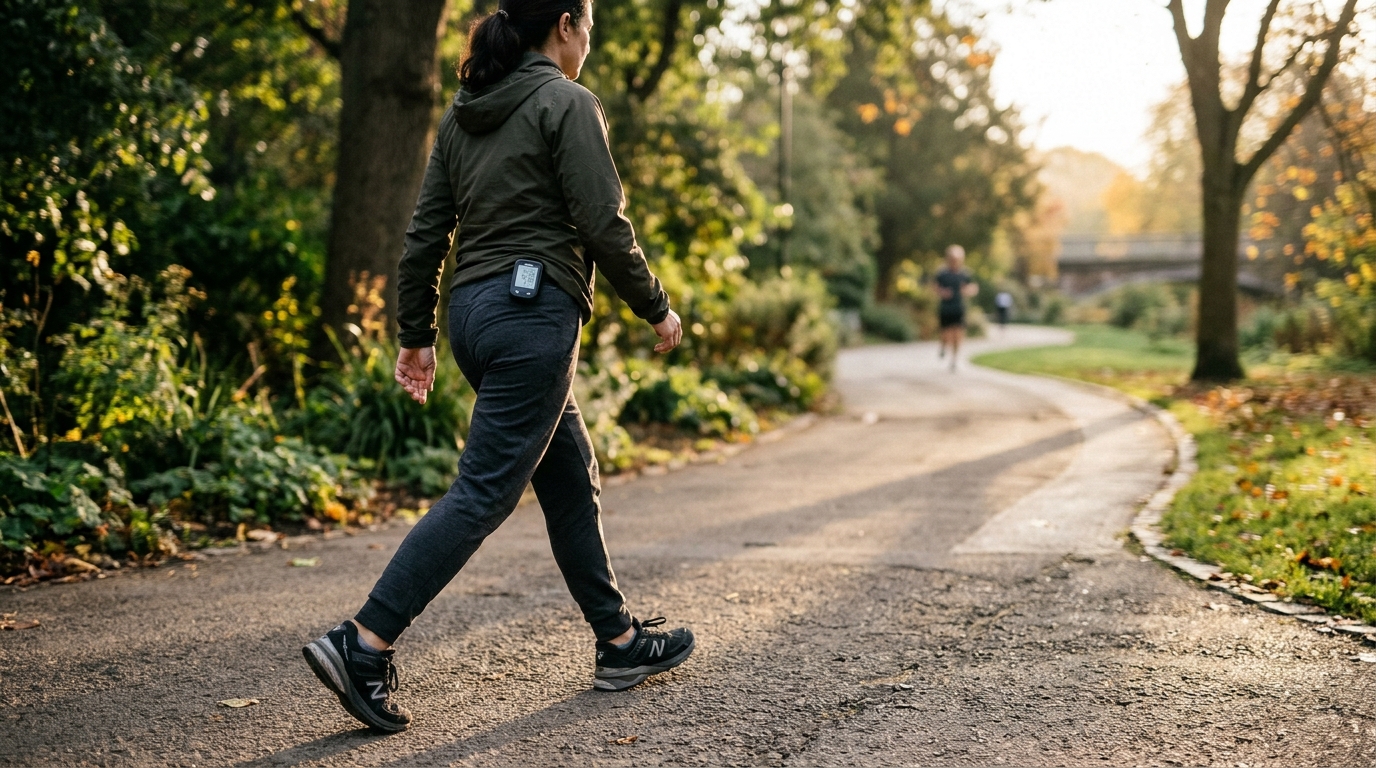
The research design utilized a cross-sectional framework with a two-week retest to evaluate reliability and concurrent and criterion validity. On Day 1, participants completed demographic assessments, the adapted questionnaire, and the International Physical Activity Questionnaire Short Form to capture baseline activity over the preceding seven days. Participants then received Yamax Digiwalker CW-700 pedometers, worn on the right hip during waking hours for seven consecutive days, recording daily step counts in logs. Daily text reminders encouraged adherence. On Day 15, participants completed the adapted questionnaire a second time to evaluate test-retest reliability. This staged schedule avoided pedometer reactivity during baseline self-report, although it resulted in a temporal gap between the pre-baseline questionnaire recall window and the subsequent seven-day objective pedometer recording period.
Test-retest reliability analyses demonstrated high consistency across domains over the two-week administration interval. For men, Spearman rank correlation coefficients for activity duration ranged from 0.863 for moderate-intensity activity to 0.991 for vigorous-intensity activity, with total activity duration achieving a correlation of 0.928. When converted into intensity-weighted energy expenditure expressed as metabolic equivalent minutes per week, men showed correlations of 0.969 for work, 0.840 for transport, 0.987 for leisure, and 0.952 for total activity. Absolute agreement across the two administrations was confirmed by an intraclass correlation coefficient of 0.933 for male total energy expenditure. In addition, Wilcoxon signed-rank tests revealed no statistically significant systematic score shifts between the two testing administrations for male participants across any of the evaluated activity domains.
Female participants likewise displayed strong test-retest reliability across questionnaire categories, though their longitudinal responses revealed notable stability differences compared to men. Female duration correlations reached 0.887 for moderate activity, 0.977 for vigorous activity, and 0.950 for total activity. In metabolic equivalent expenditure, female correlations reached 0.956 for work, 0.980 for leisure, and 0.941 for total energy expenditure, yielding an intraclass correlation coefficient of 0.898 for absolute agreement. However, transport expenditure demonstrated a lower correlation of 0.686. Furthermore, Wilcoxon signed-rank testing identified statistically significant reductions in female reported leisure activity and total physical activity during the second administration. Researchers suggested this shift could indicate a response shift, whereby initial questionnaire completion prompted female participants to reflect more critically on habitual exertion, leading to more conservative recall during retesting.
In evaluations of concurrent validity, the adapted questionnaire showed high convergence with the International Physical Activity Questionnaire Short Form. Total intensity-weighted scores demonstrated strong positive correlations between the two instruments, reaching 0.896 among males and 0.907 among females, confirming agreement between the self-report measures. The authors emphasized, however, that high convergence reflects alignment between two subjective recall tools that share identical vulnerabilities to memory limitations and social desirability bias, rather than validation against objective physiological reality. Both instruments also produced elevated volume estimates, with the adapted questionnaire reporting higher baseline median weekly expenditures than the short form among males (5,040 versus 3,732 metabolic equivalent minutes) and females (7,740 versus 6,555 metabolic equivalent minutes), with occupational physical activity constituting the largest component of total reported volume across sexes.
In contrast to its strong agreement with the alternative survey, the adapted questionnaire demonstrated poor criterion validity when compared against daily pedometer step counts. Total self-reported energy expenditure showed no significant correlation with daily steps among men (correlation coefficient 0.005) and a significant but weak negative correlation among women (correlation coefficient minus 0.257). The International Physical Activity Questionnaire Short Form displayed similar criterion disconnects, showing an insignificant correlation of 0.018 in men and a weak negative correlation of minus 0.202 in women. These divergent associations illustrate the fundamental construct mismatch between broad multi-domain questionnaires, which capture overall metabolic expenditure across occupational, domestic, and recreational settings, and mechanical pedometers, which record ambulatory locomotion without assessing movement intensity or detecting non-walking physical tasks.
Cross-tabulation of activity categories underscored substantial classification discrepancies between self-reported survey results and objective pedometer counts. Only 17.1 percent of men and 22.7 percent of women received identical activity classifications across both instruments. By contrast, the adapted questionnaire placed 80.3 percent of men and 70.7 percent of women into higher activity categories than indicated by their pedometer step counts. The researchers noted that while male overreporting may reflect social desirability bias encouraging inflated reporting of recreational exercise, the negative association observed in women likely reflects non-ambulatory domestic labor. In Egyptian households, women frequently perform heavy chores—such as manual laundry and thorough cleaning—that demand high metabolic effort but involve minimal stepping. Because the questionnaire explicitly captures these domestic tasks, women report high energy expenditure despite registering modest pedometer counts.
Several methodological limitations contextualize these psychometric findings and influence their generalizability across broader populations. The study evaluated a convenience sample from a single community in Assiut, composed predominantly of young, well-educated participants whose literacy may have facilitated comprehension of the complex sixteen-item questionnaire, potentially yielding higher reliability than might occur in less-educated cohorts. Additionally, a temporal mismatch existed between observation windows: the baseline survey captured activity during the week prior to Day 1, whereas pedometers recorded steps during the subsequent seven days. Although scheduled deliberately to prevent device reactivity from altering baseline recall, natural weekly variations in physical behavior likely weakened statistical correlations between the tools. Finally, pedometers cannot capture movement intensity, upper-body exertion, or non-ambulatory tasks, and longitudinal responsiveness was not evaluated.
From an epidemiological perspective, the adapted questionnaire provides a practical instrument for public health surveillance in Egypt, provided its application aligns with its psychometric strengths. Given its high test-retest reliability alongside systematic volume overestimation, the tool is best suited for ranking individuals into relative activity tiers or identifying inactive population groups, rather than determining absolute caloric or metabolic expenditure. The investigators recommend that future health monitoring programs adopt multi-tiered strategies, combining self-report surveys with wearable objective monitors in representative subsamples to periodically calibrate population estimates. Furthermore, integrating qualitative approaches, such as semi-structured interviews and activity logs, could clarify cultural categorizations of occupational and domestic tasks. Such combined methodologies will enhance surveillance accuracy while maintaining practical feasibility for evaluating physical activity initiatives across regional communities.
Subject of Research: Psychometric reliability and validity of an adapted Arabic physical activity questionnaire
Article Title: Psychometric evaluation of an adapted Arabic version of the Global Physical Activity Questionnaire (GPAQ-AR)
Article References: Aly, M., Alzahrani, T., Mohamed, S., Youssef, H., & Ammar, A. (2026). Psychometric evaluation of an adapted Arabic version of the Global Physical Activity Questionnaire (GPAQ-AR). Frontiers in Sports and Active Living, 8, Article 1663425. https://doi.org/10.3389/fspor.2026.1663425
Image Credits: AI Generated
DOI: 10.3389/fspor.2026.1663425
Keywords: physical activity, Global Physical Activity Questionnaire, psychometrics, validation study, public health surveillance, pedometer step counts, test-retest reliability, Egypt, Psychometric, evaluation, adapted, Arabic
News Source: Ophelia Keating. (November 7, 2026). Adapted Arabic Activity Survey Proves Reliable but Mismatches Objective Pedometer Steps. Scienmag.