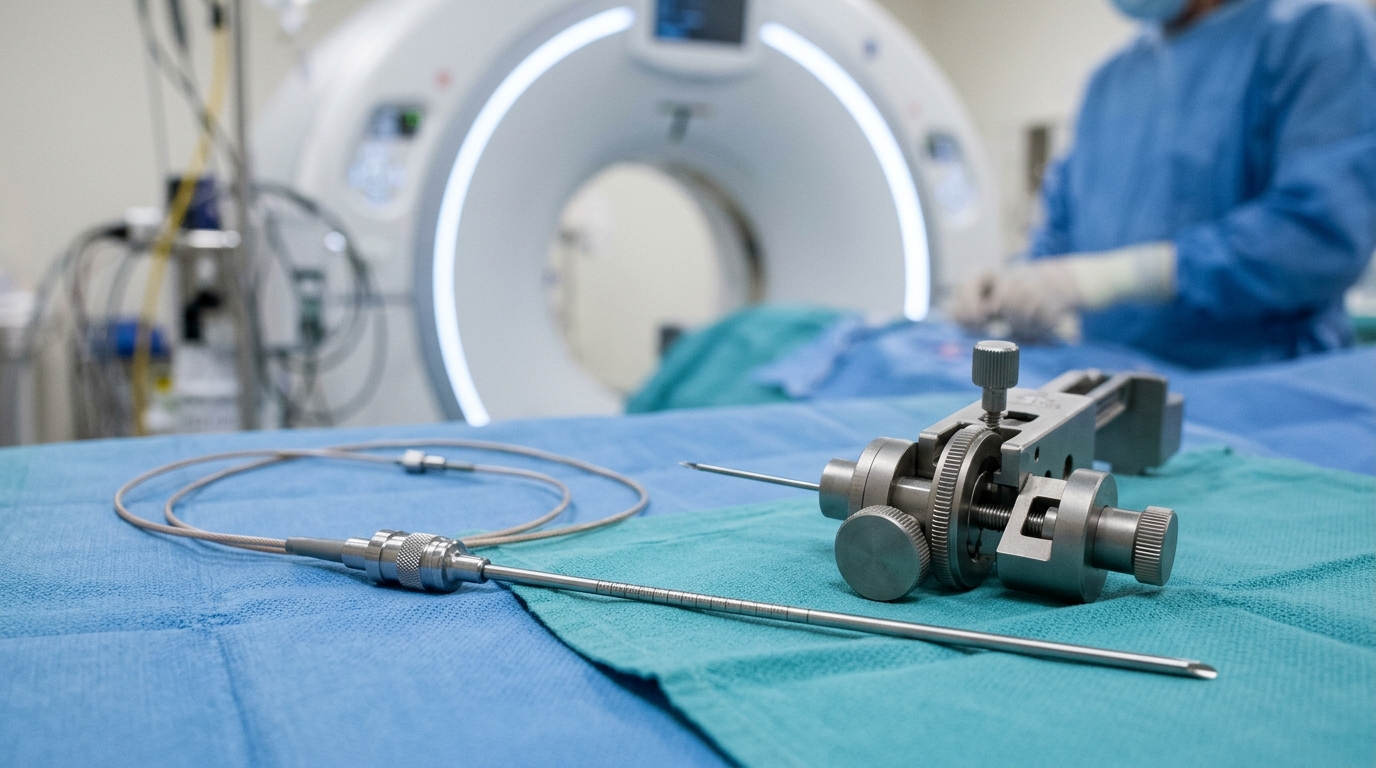
In a retrospective study published in BMC Surgery, researchers found that CT-guided radiofrequency ablation targeting the facial nerve via the stylomastoid foramen provided immediate symptom improvement for patients with primary hemifacial spasm, but was accompanied by substantial recurrence during post-procedure follow-up. The observational investigation focused on short-term efficacy and safety outcomes in a cohort of carefully selected individuals who had declined established treatments, specifically botulinum toxin injections and microvascular decompression.
The clinical cohort comprised 195 patients diagnosed with primary hemifacial spasm who received partial radiofrequency ablation of the facial nerve at the Pain Department of the First Hospital of Jiaxing between August 2018 and August 2023. Under CT guidance, all 195 patients underwent successful percutaneous puncture to target the facial nerve via the stylomastoid foramen. The clinical team administered continuous standard radiofrequency treatment using a stepwise temperature increase from low to high temperatures.
Patient monitoring occurred over a median follow-up duration of 15 months, spanning an overall range from 1 to 58 months. Among the 195 individuals in the study cohort, follow-up milestones were completed by 182 patients (93.3%) at 3 months, 158 patients (81.0%) at 6 months, and 86 patients (44.1%) at 12 months. Patients who remained free of recurrence throughout the observation window were censored at the time of their final contact.
Over the entire follow-up timeframe, the overall crude recurrence rate reached 52.8%, representing recurrence in 103 of the 195 patients. Using Kaplan-Meier analysis, the authors estimated cumulative recurrence-free survival rates of 90.3% at 3 months, 79.3% at 6 months, and 52.7% at 12 months post-procedure. The analysis determined a median recurrence-free survival time of 13 months, with a 95% confidence interval extending from 12 to 18 months.
Postoperative facial nerve function was systematically evaluated at predefined time points using the House-Brackmann grading system. Assessments across all 195 participants revealed that 49 patients (25.1%) maintained normal facial function at Grade I, 76 patients (39.0%) developed mild facial weakness at Grade II, and 70 patients (35.9%) developed moderate facial weakness at Grade III, with no patients experiencing severe paralysis classified as Grade IV or higher. Although most facial weakness cases exhibited gradual improvement across the 3-month follow-up window, researchers emphasized that the relatively short evaluation period limits long-term assessment of nerve recovery. In addition to facial paralysis grades, recurrence timing, and complications, the study gathered baseline preoperative metrics alongside Self-Rating Anxiety Scale and Self-Rating Depression Scale scores before and after treatment, concluding that while this minimally invasive approach offers a possible alternative for select patients, its efficacy compared to standard interventions remains to be determined.
The clinical investigation was formally registered with the Chinese Clinical Trial Registry under the identifier ChiCTR2500103743 on June 5, 2025.
Subject of Research: Clinical efficacy and safety of CT-guided radiofrequency ablation for primary hemifacial spasm
Article Title: Efficacy and safety of ct-guided radiofrequency ablation via the stylomastoid foramen for primary hemifacial spasm: A retrospective study
Article References: Ma, Y., Ni, H., Yao, M., Huang, B., Peng, H., & Xia, Z. (2026). Efficacy and safety of ct-guided radiofrequency ablation via the stylomastoid foramen for primary hemifacial spasm: A retrospective study. BMC Surgery. https://doi.org/10.1186/s12893-026-04317-w
Image Credits: AI Generated
DOI: 10.1186/s12893-026-04317-w
Keywords: hemifacial spasm, radiofrequency ablation, facial nerve, stylomastoid foramen, CT guidance, House-Brackmann grading, recurrence-free survival, pain management, Efficacy, safety, ct-guided, radiofrequency
News Source: Ophelia Keating. (November 7, 2026). Retrospective Study Evaluates CT-Guided Radiofrequency Ablation for Hemifacial Spasm. Scienmag.