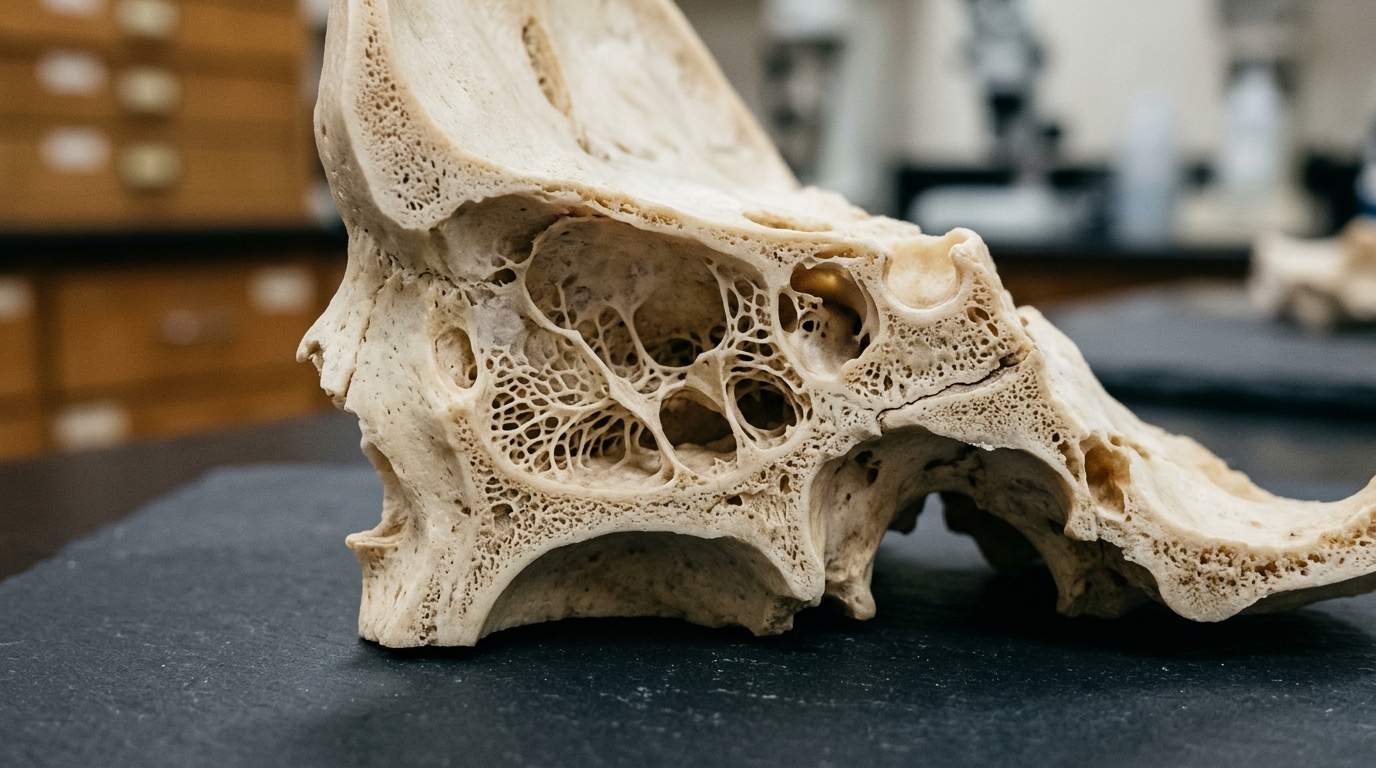
The sphenoid sinus is an air-filled cavity at the base of the skull, and a new radiological study examined how its pneumatization patterns and dimensions differ between children and older patients. A study published in Pediatric Radiology set out to map how the anatomical and morphometric characteristics of this sinus behave in children, comparing them with an older control group and testing whether sex and age influence how far the sinus expands into surrounding bone.
The study, authored by Seyide Tugce Gokdeniz and Kaan Orhan, defined the paediatric group as patients aged 0 to 16 years, while patients aged 16 and older formed the control group. In the study, sphenoid sinus measurements and pneumatization classification were performed by two maxillofacial radiologists. In the study, sphenoid sinus pneumatizations were divided into three groups: sellar, clival, and lateral.
The lateral category proved the most age-sensitive. On the right side, the types of lateral pneumatization showed significant differences between age groups, with a P value of 0.023. The Lat-D type was significantly more prevalent in the control group, while the Lat-B type appeared only in the paediatric group. The left side told a similar story: lateral pneumatization types again differed significantly between age groups, with P equal to 0.013. Here the Lat-D type was significantly more common among the older controls, whereas the Lat-C type was observed more frequently in children.
Symmetry between the two sides also shifted with age, though more modestly. The study reports a borderline significant difference between age groups in terms of symmetry, with P approximately 0.05. The study reports a borderline significant difference between age groups in terms of symmetry, with P approximately 0.05.
Beyond classification, the researchers examined how the dimensions of the sphenoid sinus relate to nearby critical structures. The height of the sinus showed a weak positive correlation with the length of the optic chiasm, the crossing point of the optic nerves that sits just above the sinus, with R equal to 0.273 and P below 0.001. Meanwhile, both the anteroposterior length and the width of the sinus demonstrated moderate positive correlations with the intercarotid distance, the space between the internal carotid arteries that flank the sinus on either side, with R values of 0.333 and 0.435 respectively, both with P below 0.001.
The study’s conclusion distils the findings into two strands. Lateral pneumatization type showed significant age-related changes, and optic chiasm length correlated with sphenoid sinus height while intercarotid distance correlated with both sphenoid sinus anteroposterior length and width. The study's conclusion states that lateral pneumatization type showed significant age-related changes, and that optic chiasm length correlated with sphenoid sinus height while intercarotid distance correlated with both sphenoid sinus anteroposterior length and width.
The Lat-B type, seen exclusively in the paediatric group in this study, illustrates how certain configurations belong to a particular developmental window.
Subject of Research: Age-related changes in sphenoid sinus pneumatization and morphometry in children and their relationship to nearby optic and carotid structures
Article Title: Evaluation of the relationship between the anatomical and morphometric characteristics of the sphenoid sinus in the paediatric population
Article References: Gokdeniz, S. T., & Orhan, K. (2026). Evaluation of the relationship between the anatomical and morphometric characteristics of the sphenoid sinus in the paediatric population. Pediatric Radiology. https://doi.org/10.1007/s00247-026-06826-5
Image Credits: AI Generated
DOI: 10.1007/s00247-026-06826-5
Keywords: sphenoid sinus, paediatric radiology, pneumatization, skull base anatomy, optic chiasm, intercarotid distance, endoscopic surgery, morphometry, age-related changes, computed tomography, Evaluation, relationship
News Source: Harold Sullivan. (November 6, 2026). Sphenoid sinus growth in children shows clear age-linked changes in pneumatization patterns. Scienmag.