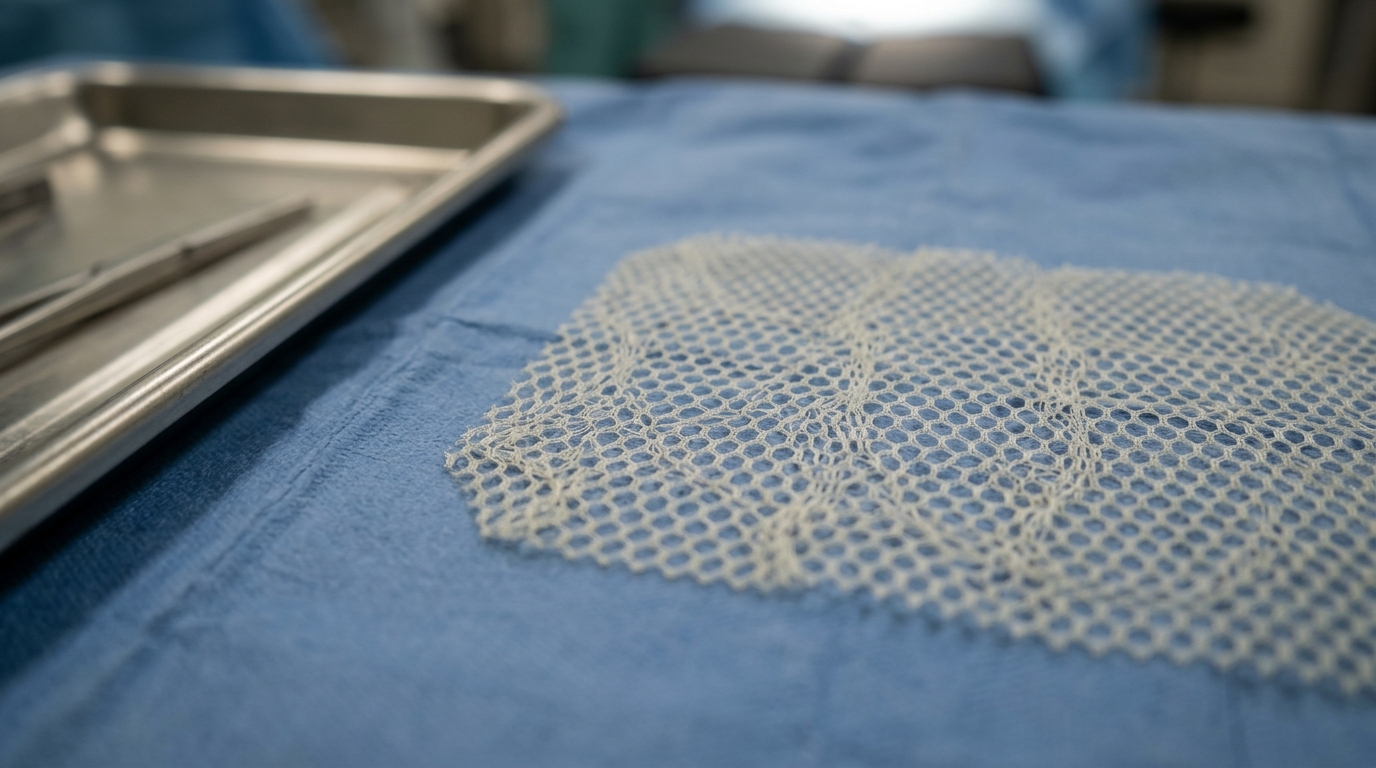
Prophylactic mesh reinforcement significantly reduces the incidence of incisional hernia following midline laparotomy compared with conventional suture-only closure, according to a systematic review and network meta-analysis of randomized controlled trials. Researchers Timothée Girardin and Marc-Olivier Sauvain from the Department of General Surgery at Réseau Hospitalier Neuchâtelois in Switzerland analyzed findings from 27 randomized controlled trials encompassing 4,327 surgical patients. Midline laparotomy incisions are widely utilized for abdominal access in diverse surgical specialties, but they carry a well-documented risk of incisional hernia, which ranges from 5 percent to 20 percent after standard laparotomy and can reach up to 30 percent in high-risk patient populations. By synthesizing both direct and indirect clinical evidence across multiple surgical planes, the investigation aimed to clarify which anatomical position achieves the most favorable balance between effective structural reinforcement and postoperative tissue morbidity.
The development of an incisional hernia represents a major clinical and financial burden following abdominal operations, often requiring complex management ranging from watchful waiting to surgical fascial repair reinforced with prosthetic material. Historical healthcare economic estimates cited by the investigators placed the direct cost of incisional hernia repair at approximately 15,899 dollars per case in 2006. While conventional closure has relied on primary suture approximations, clinical trials such as the long-term follow-up of the STITCH-it study revealed that even small-bite suture techniques left 34 percent of patients with an incisional hernia. Consequently, surgeons have increasingly investigated prophylactic mesh augmentation, beginning in open abdominal aortic aneurysm interventions before expanding into bariatric, colorectal, and upper gastrointestinal procedures. However, the optimal anatomical plane for mesh placement—spanning onlay, retromuscular, preperitoneal, intraperitoneal, and inlay positions—has remained unresolved due to conflicting data regarding localized tissue complications.
To rigorously evaluate the relative performance of each placement technique, the authors conducted a comprehensive literature search across the PubMed, Embase, and Cochrane databases without publication date restrictions, adhering to the PRISMA reporting guidelines and a registered PROSPERO protocol. The inclusion criteria were strictly restricted to randomized controlled trials comparing prophylactic mesh placement against suture-only closure in patients undergoing midline laparotomy. In total, the study evaluated 27 randomized controlled trials, comprising 23 primary index publications and 4 extended follow-up reports. Twenty-four trials implemented a two-arm design, while 3 trials utilized three-arm comparative designs. Methodological quality was evaluated using the Cochrane Risk of Bias 2 tool, which determined that 15 percent of the included trials exhibited a low risk of bias, 74 percent raised some concerns, and 11 percent were assessed as carrying a high risk of bias.
The cumulative study population incorporated 4,327 patients monitored over a median follow-up interval of 24 months, with 1,891 patients allocated to suture-only fascial closure and 2,436 patients receiving prophylactic mesh reinforcement. The clinical indications represented a broad spectrum of abdominal operations, including vascular surgery in 19 percent, upper gastrointestinal or bariatric surgery in 15 percent, colorectal operations in 4 percent, and mixed surgical cohorts in 63 percent of the analyzed trials. The operative settings were predominantly elective, accounting for 74 percent of cases, alongside 15 percent emergency procedures and 11 percent mixed cohorts. Among control patients receiving suture-only closures, continuous large-bite sutures predominated at 79 percent, continuous small-bite techniques represented 14 percent, and interrupted sutures accounted for 7 percent. Suture materials were slowly absorbable in 72 percent, non-absorbable in 20 percent, and quickly absorbable in 8 percent of cohorts.
Among participants allocated to mesh augmentation, the anatomical planes selected were onlay in 38 percent, retromuscular or preperitoneal in 37 percent, intraperitoneal in 18 percent, and inlay-strip placement in 7 percent. The inlay-strip method was specifically characterized by the interposition of a narrow prosthetic strip between the bilateral fascial edges, which were closed together. Across the intervention arms, non-absorbable meshes were deployed in 77 percent of cohorts, while absorbable meshes were used in 23 percent. Statistical evaluations were performed in R utilizing the meta and netmeta packages. Random-effects pairwise meta-analyses and frequentist network meta-analyses were calculated using risk ratios and 95 percent confidence intervals, while intervention ranking was executed using P-scores. To preserve network connectivity and statistical power in the primary network model, retromuscular and preperitoneal placements were initially synthesized into a unified posterior-plane node.
Conventional pairwise meta-analysis of 22 randomized trials evaluating the primary outcome demonstrated that prophylactic mesh reinforcement produced an overall statistically significant reduction in incisional hernia compared with suture-only closure, yielding a risk ratio of 0.41 with a 95 percent confidence interval of 0.27 to 0.62. However, substantial statistical heterogeneity was detected across these pairwise trials, with an I-squared value of 69.5 percent. In the overall frequentist network meta-analysis, tests revealed no evidence of global inconsistency, with a p-value of 0.245, nor was any local inconsistency detected. When evaluated against suture-only closure, onlay mesh placement achieved the greatest relative reduction in hernia risk, generating a risk ratio of 0.27 with a 95 percent confidence interval of 0.17 to 0.45. Retromuscular or preperitoneal placement also conferred a statistically significant risk reduction, producing a risk ratio of 0.42 with a 95 percent confidence interval of 0.27 to 0.67.
In contrast to onlay and posterior-plane reinforcements, intraperitoneal mesh placement and inlay-strip techniques did not demonstrate statistically significant advantages over suture-only closure in the network model. Intraperitoneal mesh yielded a risk ratio of 0.64 with a 95 percent confidence interval of 0.36 to 1.13, while inlay-strip reinforcement resulted in a risk ratio of 1.18 with a 95 percent confidence interval of 0.47 to 2.96. Treatment hierarchy calculations based on P-scores ranked onlay placement highest for incisional hernia prevention at 0.976, followed by retromuscular or preperitoneal reinforcement at 0.729. A prespecified sensitivity analysis separating the retromuscular and preperitoneal planes confirmed that both positions independently retained significant protective effects against incisional hernia formation. Subgroup evaluations demonstrated that onlay and retromuscular or preperitoneal placements sustained significant efficacy across both elective operations and emergency surgical procedures.
A critical consideration surrounding prophylactic abdominal wall implants is whether foreign material introduces elevated risks of wound-related complications. In the analysis of surgical site infection across 21 randomized trials, pairwise meta-analysis showed no statistically significant increase in infection risk associated with mesh augmentation compared with suture-only closure, demonstrating a risk ratio of 1.23 with a 95 percent confidence interval of 0.87 to 1.72 and moderate heterogeneity. In the network meta-analysis, no specific anatomical mesh plane differed significantly from suture-only closure regarding surgical site infection risk, with ranking probabilities indicating intraperitoneal mesh had a P-score of 0.780, suture-only had 0.690, retromuscular or preperitoneal had 0.539, and onlay mesh scored 0.295. Subgroup assessments across differing surgical settings and mesh compositions consistently demonstrated neutral risks for surgical site infection.
Postoperative wound morbidity was further characterized through the incidence of surgical site occurrences, seromas, and hematomas. For surgical site occurrences analyzed across 22 trials, pairwise meta-analysis demonstrated an overall elevated risk with mesh placement, producing a risk ratio of 1.38 with a 95 percent confidence interval of 1.06 to 1.79. In the network analysis, onlay mesh placement was the sole configuration significantly linked to an increased risk of surgical site occurrences compared with suture-only closure, showing a risk ratio of 1.46 with a 95 percent confidence interval of 1.03 to 2.06. However, significant global inconsistency was present in the surgical site occurrence network model, with a p-value of 0.012, reflecting divergent reporting criteria across trials. Pairwise evaluation of 18 trials revealed an increased risk of seroma formation after mesh reinforcement, with a risk ratio of 2.09 and an I-squared value of 0.0 percent. The network meta-analysis confirmed that onlay mesh significantly heightened seroma risk, generating a risk ratio of 2.53 with a 95 percent confidence interval of 1.70 to 3.78, whereas retromuscular or preperitoneal placement did not.
When assessing hematoma rates across 12 randomized trials, pairwise meta-analysis indicated an overall increase associated with mesh reinforcement, showing a risk ratio of 1.69 with a 95 percent confidence interval of 1.05 to 2.71 and zero heterogeneity. However, within the multi-arm network meta-analysis, no individual mesh placement technique demonstrated a statistically significant elevation in hematoma risk compared with suture-only repair. Although mortality was initially designated as a secondary outcome in the study protocol, the authors noted that reporting was inconsistent across the included trials and did not provide sufficient data for meaningful quantitative statistical analysis. Overall, the morbidity profile highlighted that while onlay mesh delivered substantial mechanical protection against hernia formation, it did so at the expense of higher local wound morbidity, primarily driven by subcutaneous seroma formation following extensive tissue dissection.
The study authors highlighted several methodological limitations that necessitate careful interpretation of the network estimates. Substantial clinical and methodological heterogeneity existed across the literature, including variable surgical indications, differing baseline hernia risks, varied mesh materials, and inconsistent follow-up durations. Moreover, 79 percent of suture closures in the control groups utilized continuous large-bite techniques, which conflict with contemporary clinical guidelines recommending small-bite closure and may have artificially elevated control hernia rates, potentially magnifying the apparent relative benefit of prophylactic mesh. The network geometry was largely driven by trials comparing mesh to suture-only closure, with only two studies providing direct head-to-head evidence between onlay and retromuscular or preperitoneal placements. Consequently, the authors concluded that while onlay mesh ranks high statistically and offers technical ease without compromising the retromuscular plane, definitive claims of clinical superiority remain unsupported until high-quality direct trials are conducted.
Subject of Research: Prophylactic mesh reinforcement for incisional hernia prevention after midline laparotomy
Article Title: Prophylactic mesh augmentation in midline laparotomy in elective or emergency settings: a systematic review and network meta-analysis of randomized trials
Article References: Girardin, T., & Sauvain, M.-O. (2026). Prophylactic mesh augmentation in midline laparotomy in elective or emergency settings: a systematic review and network meta-analysis of randomized trials. Journal of Abdominal Wall Surgery, 5, Article 17385. https://doi.org/10.3389/jaws.2026.17385
Image Credits: AI Generated
Keywords: incisional hernia, midline laparotomy, prophylactic mesh, network meta-analysis, abdominal surgery, surgical site infection, surgical site occurrence, wound morbidity, seroma, general surgery, Prophylactic, mesh
News Source: Ophelia Keating. (November 6, 2026). Preventive Mesh Reduces Hernias After Laparotomy but Raises Wound Morbidity. Scienmag.