A comprehensive toxicological investigation in adult zebrafish has revealed that the physical shape of polylactic acid microplastics dictates the severity of intestinal injury, metabolic disruption, and neurobehavioral changes during co-exposure with the antibiotic azithromycin. Polylactic acid has experienced rapid industrial adoption as an ostensibly sustainable alternative to conventional petroleum polymers, with market forecasts projecting a forty-two percent global market share by 2029. However, its environmental safety remains contested because incomplete degradation yields microscopic debris detected in remote environments, including Arctic sea ice and the high-altitude Qinghai-Tibet Plateau. Unlike persistent conventional polymers, polylactic acid releases lactic acid upon breakdown, establishing unique chemical conditions that influence microbial succession and favor specific taxa. When these bioplastic fragments encounter ubiquitous pharmaceuticals like azithromycin in aquatic ecosystems, they generate complex composite pollution. The study demonstrates that while the antibiotic dictates the overall direction of toxicological impact, particle geometry governs the intensity, histological injury, and metabolic outcomes of the exposure.
The interaction between microplastics and pharmaceuticals represents a major ecological concern, as plastic particles frequently act as transport vectors for persistent aquatic contaminants. Azithromycin, a macrolide antibiotic with pseudo-persistent behavior in aquatic systems, saw substantial consumption increases during recent years, driving wastewater plant concentrations upward, such as sixteen-fold surges documented in municipal facilities. Pristine polylactic acid exhibits an established adsorption capacity of 1.28 milligrams per gram for azithromycin, and ingested particles can desorb and release up to 62.7 percent of their antibiotic cargo inside the digestive tract. To assess how physical shape modulates this composite risk, researchers extracted polylactic acid microplastics directly from commercial milk tea cup sealing films. Four distinct morphologies—films, fibers, particles, and spheres—were prepared to mirror shapes commonly found in aquatic ecosystems. By pairing these geometries with realistic antibiotic concentrations in a vertebrate model, the study resolved critical questions regarding gut barrier health, the microbiota-metabolite axis, and behavioral responses.
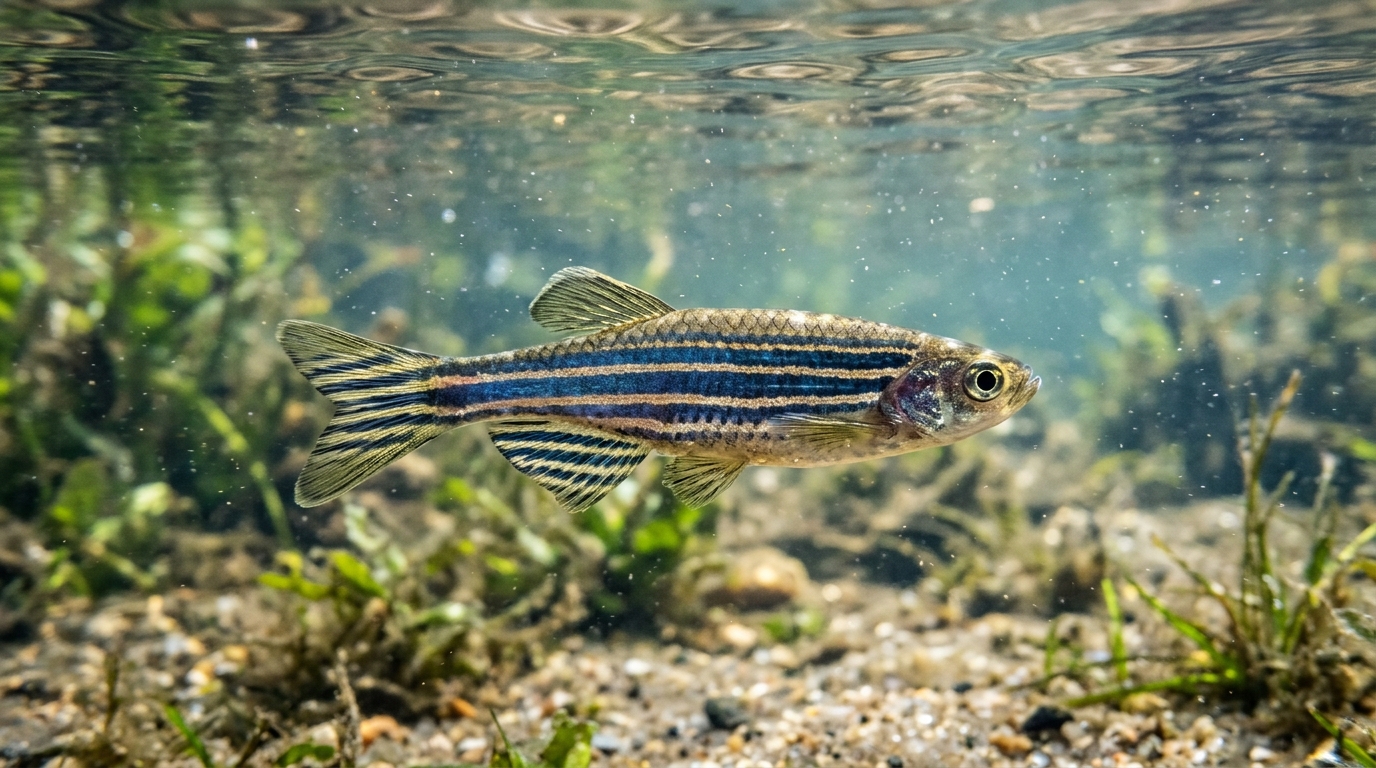
The study evaluated healthy, three-month-old adult zebrafish maintained under controlled laboratory conditions with water temperature held at 21.17 degrees Celsius and pH at 8.30 under a fourteen-hour light cycle. Following a two-week acclimation period in aerated, dechlorinated water with twice-daily brine shrimp feedings, fish were assigned to tanks containing one milligram per liter of microplastics alongside one or ten milligrams per liter of azithromycin for twenty-one days, using three independent replicates of thirty fish per treatment. X-ray diffraction confirmed the crystalline structure of the prepared bioplastics. Dimensional measurements confirmed that film fragments averaged 172.57 micrometers in length and 17.44 micrometers in width, with a specific surface area of 3.06 square meters per gram. Fibers averaged 332.18 micrometers in length with a surface area of 4.66 square meters per gram. Granular particles possessed an average diameter of 119.64 micrometers and a surface area of 4.50 square meters per gram, while spheres measured 78.44 micrometers across with a surface area of 3.78 square meters per gram.
Biochemical assays of intestinal homogenates revealed sharp, shape-dependent shifts in intestinal protein metabolism, oxidative stress markers, and digestive enzyme activities. Total protein content, which reflects physiological stress and protein turnover, increased across all groups exposed to ten milligrams per liter of azithromycin, led by particle microplastics, followed by films, spheres, and fibers. All ten-milligram groups exhibited higher protein levels than their corresponding one-milligram treatments. In contrast, high antibiotic co-exposure suppressed intestinal antioxidant defense and digestive capacity. Superoxide dismutase and glutathione levels fell significantly below control values across all ten-milligram groups. Spherical particles caused the strongest suppression of superoxide dismutase activity, whereas irregular particles caused the greatest depletion of glutathione. In parallel, intestinal amylase activity, an essential glycosyl hydrolase that mediates digestive function, declined markedly under all ten-milligram co-exposures, with the irregular particle cohort experiencing the most profound loss in digestive capacity.
Open field behavioral assays showed that twenty-one days of co-exposure substantially altered zebrafish locomotion and exploration. While individual polylactic acid exposure typically suppresses movement and provokes anxiety-like freezing, co-exposure with azithromycin induced behavioral hyperactivity and reduced anxiety-like avoidance across all shapes. Exposed fish exhibited increased total swimming distance, elevated velocity, expanded time and distance in the tank center, and decreased immobility. The irregular particle group co-exposed to ten milligrams per liter of antibiotic displayed the most pronounced hyperactivity, recording the greatest swimming distance, highest speed, and most frequent center entries. The greatest reduction in immobility occurred in the fiber group, followed by particles, films, and spheres. Analysis of velocity distributions showed that fish exposed to particles and spheres spent eleven percent and eight percent less time moving below five centimeters per second, respectively, shifting their activity into higher velocity brackets between five and ten centimeters per second.
Histopathological analysis using hematoxylin and eosin staining uncovered contrasting structural damage across the four microplastic geometries. Exposure to film, fiber, and spherical microplastics at ten milligrams per liter of antibiotic caused significant shortening of intestinal villi, whereas irregular particles caused slight villus elongation. Goblet cell numbers, which maintain mucosal barrier integrity, dropped across all co-exposure groups, with the greatest loss in the sphere group, followed by particles, films, and fibers. Examination of bowel wall thickness revealed mucosal thickening in the film, fiber, and particle cohorts, peaking in the particle group, likely reflecting compensatory hyperplasia or inflammatory edema. In contrast, spherical particles uniquely caused mucosal thinning. As a result, spherical microplastics induced severe structural atrophy and barrier compromise, while irregular particles produced a complex response characterized by compensatory tissue expansion alongside marked epithelial injury.
High-throughput sequencing of the bacterial 16S ribosomal RNA gene from fecal samples generated 1,059,224 high-quality reads averaging 418 base pairs, detailing the intestinal microbiome across 3,596 operational taxonomic units. Although sequencing coverage exceeded 0.998 across samples, one-way analysis of variance indicated that alpha diversity and richness indices showed no statistically significant differences between treatments and controls. Nonetheless, principal coordinate analysis demonstrated distinct community separation along the first axis. Phylum-level analyses revealed consistent taxonomic shifts across all co-exposures, dominated by increases in Pseudomonadota and Chlamydiota alongside reductions in Bacteroidota, Fusobacteriota, Bacillota, and Patescibacteria. Irregular particles caused the largest disruption, producing a 32.94 percent increase in Pseudomonadota and the greatest suppression of Bacteroidota. Depletion of Fusobacteriota, which mediates energy metabolism and digestion, occurred in all treatments, while Patescibacteria consistently declined by approximately 1.7 percent, demonstrating antibiotic-driven selection.
Genus-level profiling highlighted distinct microbial perturbation patterns governed by particle geometry. Relative abundances of Gemmobacter, Lysobacter, Taibaiella, Flavihumibacter, and Bosea expanded, whereas Flavobacterium, Acinetobacter, Cetobacterium, and Aeromonas decreased across all co-exposure groups. Irregular particles stimulated the highest increase in Gemmobacter at 23.45 percent, while spherical microplastics drove the largest increases in Lysobacter and Taibaiella alongside a 38.83 percent decline in Flavobacterium. Cellvibrio expanded exclusively in the film group, while Pseudomonas increased only in the fiber group. Functional predictions through FAPROTAX revealed that twenty-two of the top thirty predicted microbial functions were suppressed, including energy pathways like chemoheterotrophy and fermentation. Spherical particles caused the strongest suppression of chemoheterotrophy, while irregular particles most severely inhibited fermentation. Predicted plastic-degrading functions were broadly suppressed, indicating that antibiotic exposure hindered plastic-degrading microorganisms. Conversely, ureolysis was enhanced across all groups, with film and particle exposures exhibiting the highest functional levels.
Untargeted metabolomic analysis using liquid chromatography-mass spectrometry annotated 804 verified metabolites and confirmed distinct metabolic reprogramming. Principal coordinate analysis demonstrated clear separation between control fish and all co-exposure groups. Total metabolite counts increased across all treatments, with film exposures producing 205 differential metabolites and irregular particles uniquely generating forty-two novel compounds. Azithromycin and the pro-inflammatory, pro-fibrotic marker N-(8-amino-1-carboxyoctyl)-alanyl-proline rose across all groups, peaking in particle-exposed fish. Conversely, anti-inflammatory docosahexaenoic acid dropped across all treatments, reaching its lowest level under spherical microplastic exposure. Film and sphere microplastics uniquely triggered elevated concentrations of oleamide, hexadecanamide, and sphinganine, while dimethylsphingosine increased only in film exposures. Pathway enrichment revealed shape-dependent metabolic reprogramming: film and particle exposures prominently disrupted fructose and mannose metabolism, fiber particles altered cysteine and methionine metabolism, and spherical microplastics primarily perturbed glycolysis and gluconeogenesis.
Multi-omics correlation analyses established that the gut microbiota-metabolite axis mediates the toxicological effects of plastic shape on tissue pathology and behavior. Pseudomonadota, which utilize efflux pumps to expel azithromycin, gained a competitive advantage under antibiotic pressure and correlated positively with pro-fibrotic metabolites. In contrast, beneficial Bacteroidota and Bacillota correlated positively with anti-inflammatory docosahexaenoic acid and negatively with locomotor hyperactivity. Depletion of these beneficial short-chain fatty acid producers weakened neuroprotective signaling, while Gemmobacter proliferation correlated directly with reduced immobility, linking gut dysbiosis to behavioral hyperactivity. The authors concluded that particle shape acts as a physical regulatory switch modulating microbial competition, intestinal inflammation, and systemic homeostasis. Consequently, environmental risk assessments and wastewater management strategies for biodegradable plastics must evaluate particle morphology alongside chemical concentration, recognizing that microplastic shape fundamentally governs composite ecological toxicity in aquatic organisms.
Subject of Research: Shape-dependent intestinal toxicity and gut microbiota disruption in zebrafish co-exposed to polylactic acid microplastics and azithromycin
Article Title: Shape-dependent intestinal toxicity of bioplastic PLA and azithromycin co-exposure in zebrafish driven by the gut microbiota-metabolite axis: A case study of bubble tea seal film
Article References: Sha, H., Li, X., Zhang, L., Gao, X., Li, Q., Song, J., Hu, Y., Song, Z., & Lin, Y. (2026). Shape-dependent intestinal toxicity of bioplastic PLA and azithromycin co-exposure in zebrafish driven by the gut microbiota-metabolite axis: A case study of bubble tea seal film. Ecological Processes, 15(1), Article 102. https://doi.org/10.1186/s13717-026-00749-7
Image Credits: AI Generated
DOI: 10.1186/s13717-026-00749-7
Keywords: polylactic acid, microplastics, azithromycin, zebrafish, intestinal toxicity, gut microbiota, metabolomics, locomotor behavior, Shape-dependent, intestinal, toxicity, bioplastic
News Source: Drew Townsend. (November 6, 2026). Microplastic Shape Controls Intestinal Toxicity and Hyperactivity in Zebrafish Antibiotic Co-Exposure. Scienmag.