A total of 266 dengue cases with no deaths were reported in Ningbo, China, between 2017 and 2024, confirming that dengue remains non-endemic in the city and is driven primarily by imported infections rather than sustained local transmission. In a study evaluating routine case reports alongside mosquito surveillance data, researchers analyzed the epidemiological characteristics and transmission dynamics spanning the periods before, during, and after the implementation of COVID-19 pandemic interventions. Ningbo had previously experienced a local dengue outbreak in 2018 and 2019, yet empirical evidence examining dengue epidemiology and transmissibility across subsequent intervention phases had remained limited.
The origins of dengue infections in Ningbo shifted markedly across the distinct intervention phases. Prior to the COVID-19 pandemic interventions, overseas-imported cases constituted 51.19 percent of all reported infections. During the period of active pandemic interventions, surveillance recorded no dengue cases whatsoever. After the relaxation of pandemic interventions, domestically imported cases predominated, accounting for 73.47 percent of reported infections. Although an overall rebound in dengue incidence occurred following the lifting of public health and social measures, researchers identified no statistically significant incidence differences in the age group of 14 years and younger, nor within Beilun District, Ninghai County, or Xiangshan County.
Throughout the seven-year observation window, the overall dengue incidence reached 2.82 cases per 100,000 persons across Ningbo. Demographic records showed that the median age of infected individuals was 38.50 years, with an interquartile range of 31.25 to 54.00 years. Occupationally, 57.52 percent of the cases occurred among residents who were unemployed, retired, or working within commercial services. While dengue incidence did not vary significantly by sex, significant differences emerged across age categories. Incidence was significantly higher among individuals aged 15 to 59 years, at 3.18 per 100,000 persons, and those aged 60 years and older, at 3.01 per 100,000 persons, compared to individuals aged 14 years and younger, who exhibited an incidence of 0.45 per 100,000 persons.
Surveillance indicators and clinical timelines also changed substantially after the pandemic interventions. The interval from symptom onset to diagnosis shortened from an average of 4.46 days before interventions to 2.67 days post-interventions. Concurrently, viral typing expanded across the city, rising from 34.59 percent of cases before interventions to 63.27 percent after interventions. Among the typed specimens, 83.70 percent were identified as dengue virus-1 infections.
Dengue cases were documented across all administrative districts of Ningbo, though local burden and notification rates exhibited substantial geographic heterogeneity. Haishu District and Yinzhou District registered the highest proportions of total reported cases, contributing 27.07 percent and 24.44 percent, respectively. When evaluated as population-adjusted incidence rates, Haishu District and Jiangbei District recorded the highest disease burdens, at 6.90 and 4.93 cases per 100,000 persons, respectively.
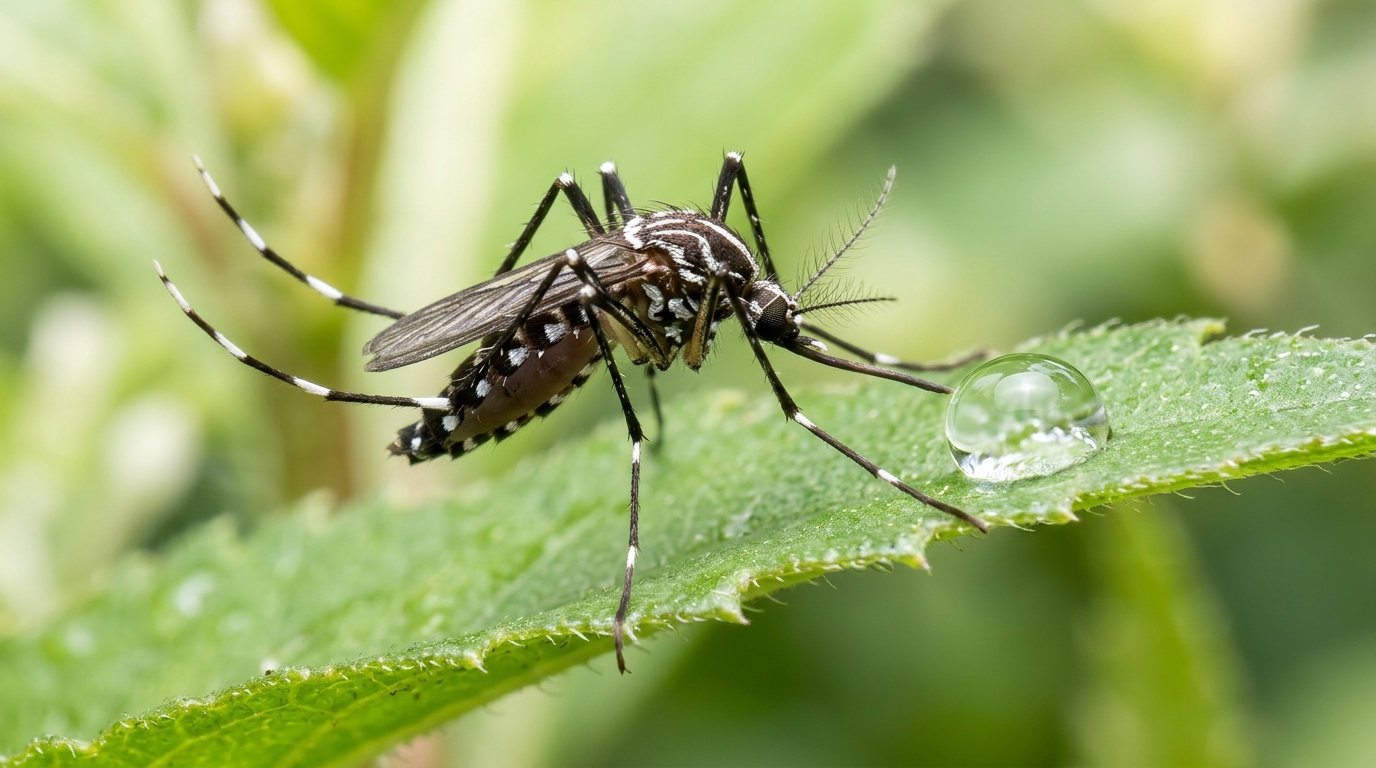
Vector surveillance established that Aedes albopictus was the sole mosquito vector species identified across Ningbo. The overall mean Breteau Index was measured at 16.07, with a standard deviation of 8.04. Although the mean Breteau Index decreased across successive phases of the study period, vector density rebounded specifically within Jiangbei, Zhenhai, and Haishu districts. In addition, seasonal surveillance demonstrated that the mean Breteau Index was significantly higher during the summer months than in other seasons of the year (p < 0.05).
To evaluate transmission dynamics across the municipal population, investigators formulated a mathematical model that showed strong agreement with the surveillance data, yielding an R-squared value above 0.95. Across the entire 2017 to 2024 timeframe, the median basic reproduction number was 0.00, with an interquartile range of 0.00 to 0.71, reflecting the complete absence of local transmission across most years. During outbreak years, however, the median basic reproduction number reached 3.46 (interquartile range = 2.98 to 3.95), which was significantly higher than the median of 0.00 (interquartile range = 0.00 to 0.00) observed in years without local transmission (p < 0.001). The authors concluded that while diagnostic delays shortened and overall vector densities declined, post-intervention incidence rebounds and district-level heterogeneity indicate persistent outbreak potential, making sustained surveillance, rapid diagnosis, and district-tailored vector control critical to preventing the re-establishment of local dengue transmission.
Subject of Research: Dengue epidemiology and transmission dynamics in Ningbo, China
Article Title: Epidemiological characteristics and transmission dynamics of dengue in Ningbo City, China before, during, and after the COVID-19 pandemic interventions
Article References: Chu, Y., Zhao, Y., Abudunaibi, B., Wang, Y., Zhang, Y., Lei, S., Mao, Y., He, T., Chen, T., & Chen, Y. (2026). Epidemiological characteristics and transmission dynamics of dengue in Ningbo City, China before, during, and after the COVID-19 pandemic interventions. PLOS Neglected Tropical Diseases, 20(10), e0014813. https://doi.org/10.1371/journal.pntd.0014813
Image Credits: AI Generated
DOI: 10.1371/journal.pntd.0014813
Keywords: Dengue, Ningbo, Epidemiology, Aedes albopictus, Transmission dynamics, Basic reproduction number, Vector surveillance, COVID-19 interventions, Epidemiological, characteristics, transmission, dynamics
News Source: Kristina Jarvis. (November 6, 2026). Study Tracks Ningbo Dengue Transmission Dynamics Across Pandemic Interventions. Scienmag.