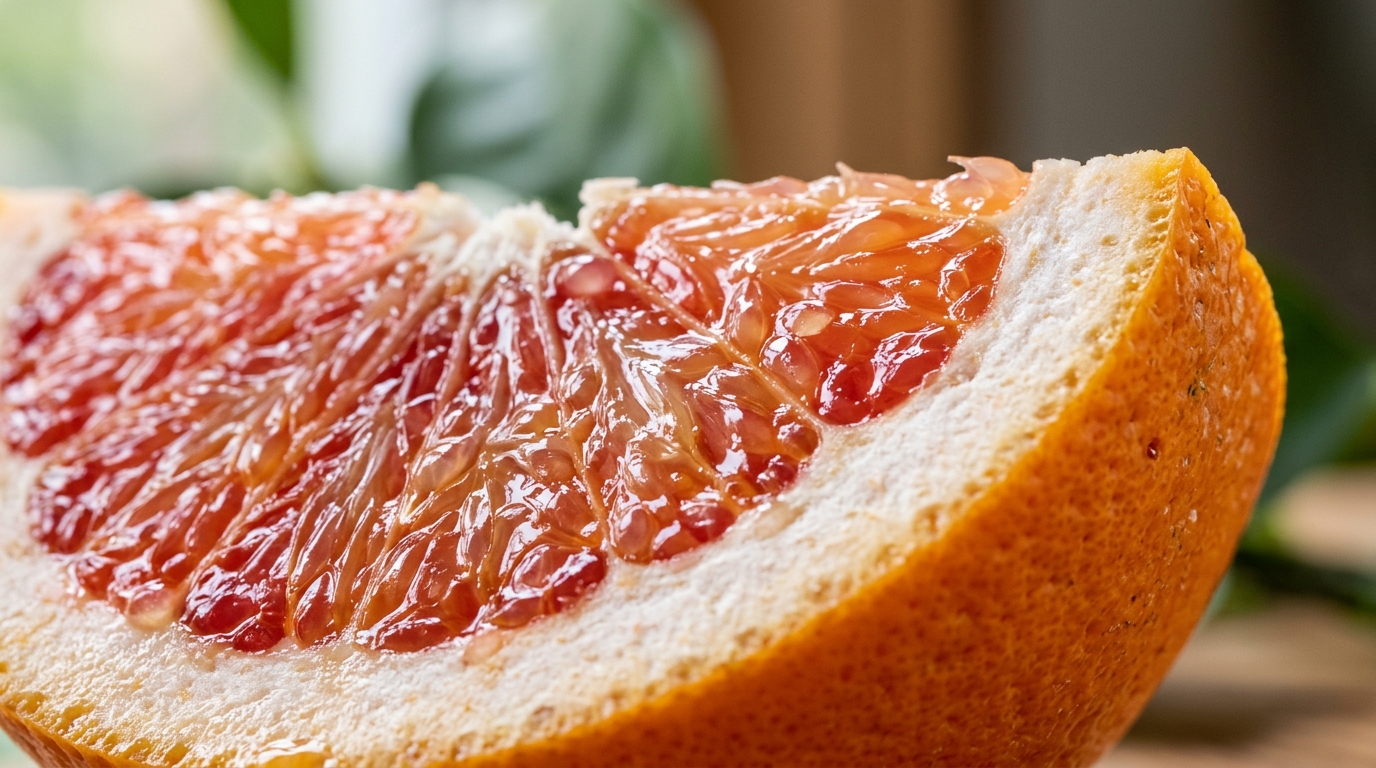
Researchers have engineered a multi-pathway synergistic formulation that achieves a 92 percent reduction in the perceived bitterness of neohesperidin, an abundant citrus-derived bioactive compound whose severe bitterness has long restricted its commercial application in functional foods. Combining physical encapsulation, taste receptor competition, and sensory interference, the newly optimized ternary mixture pairs the high-intensity sweetener aspartame, the cyclic oligosaccharide beta-cyclodextrin, and the bitter receptor inhibitor adenosine monophosphate. Published in Food, Nutrition and Health, the laboratory investigation demonstrates that coordinating three distinct physiological mechanisms overcomes the intrinsic efficacy ceilings that restrict individual masking agents, which achieved only approximately 60 percent suppression when applied alone without introducing disruptive off-flavours. The resulting ternary system produced a standardized European distance of 3.46 during electronic tongue characterization, demonstrating that multi-target compounding provides an efficient, scalable technical route for transforming bitter botanical ingredients into palatable nutritional products.
Neohesperidin is a naturally occurring dihydroflavonol glycoside with the chemical formula C28H34O15, found in high concentrations within the peels and rinds of citrus fruits. Extensive physiological research has highlighted the molecule for its diverse biological activities, including significant antioxidant properties, anti-inflammatory mechanisms, metabolic regulation, anti-tumour potential, and neuroprotective capabilities. Despite these therapeutic and nutritional attributes, neohesperidin exhibits extraordinarily low aqueous solubility and an intense, lingering bitter taste that sharply curtails its use in commercial foods and beverages. At a molecular level, this pronounced bitterness is triggered when neohesperidin binds directly to one or more specialized bitter taste receptors within the human TAS2R family located on oral taste receptor cells. While its structural analogue neohesperidin dihydrochalcone is widely valued as an intense artificial sweetener, native neohesperidin remains strongly bitter, making taste mitigation essential for high-value utilization.
Bitterness represents one of the primary human taste modalities, acting biologically as an evolutionary warning mechanism against dietary toxins, alkaloids, polyphenols, and bitter peptides. However, this same sensitivity causes consumers to reject functional foods fortified with beneficial botanical extracts. Traditional food processing approaches have relied on single-target mitigation strategies, primarily categorized into physical encapsulation, sensory taste masking, and competitive receptor inhibition. Single-substance interventions rarely achieve adequate debittering on their own without using excessive concentrations that impart secondary defects. Recognizing these barriers, the authors hypothesized that systematically combining three complementary mechanisms—trapping bitter molecules in host cavities, blocking bitter taste receptors on the tongue, and overriding residual neural signals with sweetness—would produce robust synergistic suppression at lower individual dosages.
To build an optimal debittering formulation, the research team designed a multi-step screening protocol to assess ten candidate inhibitor compounds across all three mechanistic categories. Testing was performed against standardized stock solutions of neohesperidin prepared at 100.0 micrograms per milliliter (equivalent to 164 micromoles per liter or 0.164 micromoles per milliliter) in ultrapure water, dissolved via gentle heating to 40 degrees Celsius for 30 minutes with continuous stirring before cooling. Sensory trials were conducted by a trained human panel comprising ten experienced evaluators (five women and five men aged 22 to 35 years) who had demonstrated consistent bitterness discrimination across graded quinine hydrochloride standards. Evaluations took place inside partitioned sensory booths illuminated by red lighting to eliminate any visual bias. Evaluators analyzed 10-milliliter aliquots containing exactly 1.64 micromoles of neohesperidin using an established sip-and-spit protocol, scoring bitterness on an integer linear scale from 0 to 10, interspersed with thorough 60-second oral water rinses to prevent sensory carryover.
To complement subjective human perceptions with objective analytical measurements, the researchers conducted parallel taste profile evaluations using an alpha-ASTREE electronic tongue system. Each experimental sample solution was prepared in 80-milliliter volumes and evaluated across six consecutive analytical replicates, with the final four stable sensor readings extracted for multivariate statistical modeling. Principal component analysis was carried out to capture the fundamental variance of the chemical response matrix, consistently explaining greater than 97 to 99 percent of the total cumulative variance across the first two principal components. Bitter mitigation performance was quantitatively benchmarked by computing the standardized Euclidean distance (SED) between each treated sample and the baseline unmasked neohesperidin stock solution. Larger SED values directly indicated greater divergence from the unpalatable bitter profile, establishing a robust objective metric that aligned closely with the human panel ratings.
Initial screening focused on six representative flavour modifiers and sweeteners: zinc lactate, sucralose, neohesperidin dihydrochalcone, aspartame, acesulfame potassium, and neotame. As concentrations increased, bitterness ratings decreased across all modifiers, but qualitative differences emerged. Zinc lactate achieved a maximum bitterness reduction of 72 percent, but concentrations at or above 40.0 micrograms per milliliter provoked severe oral astringency characterized by a dry, puckering sensation that compromised palatability. Sucralose reached complete bitterness masking at 60.0 micrograms per milliliter and exhibited an SED of 2.99 at 2.0 micrograms per milliliter, while neohesperidin dihydrochalcone achieved an 88 percent correction at 15.0 micrograms per milliliter but exhibited slow sweetness onset, poor water solubility, and uneven dispersion. Aspartame emerged as the superior masking candidate, achieving full 100 percent suppression at 120.0 micrograms per milliliter with rapid onset, prolonged aftertaste, clean sensory profile, and an SED of 3.55 at 20.0 micrograms per milliliter.
For the physical shielding mechanism, the researchers evaluated beta-cyclodextrin, a cyclic heptasaccharide recognized for its stable structure, hydrophilic exterior, and central cone-shaped hydrophobic cavity capable of forming non-covalent inclusion complexes. Evaluated across concentrations spanning 5.0 to 30.0 micrograms per milliliter, beta-cyclodextrin exhibited minimal debittering below 10.0 micrograms per milliliter, but reached 100 percent sensory bitterness elimination at 30.0 micrograms per milliliter, with practical sensory elimination observed at 25.0 micrograms per milliliter. Electronic tongue measurements verified this concentration-dependent trend, yielding an SED of 3.01 at 25.0 micrograms per milliliter and 2.96 at 30.0 micrograms per milliliter, while principal component analysis accounted for 97.53 percent of variance. Stoichiometric calculations showed that at 25.0 micrograms per milliliter beta-cyclodextrin, the molar ratio of cyclodextrin to neohesperidin was approximately 1 to 7.5, confirming that physical inclusion of the aromatic ring within the hydrophobic core physically impedes neohesperidin molecules from contacting TAS2R receptor pockets.
The screening of receptor-targeted antagonists investigated three candidate compounds: neotame, gamma-aminobutyric acid, and adenosine monophosphate. While neotame achieved complete suppression at higher doses, it induced astringency beginning at 20.0 micrograms per milliliter. Gamma-aminobutyric acid demonstrated weak, dose-independent suppression that plateaued at 48 percent with flat SED values between 2.74 and 2.88. In contrast, adenosine monophosphate achieved a peak bitterness suppression rate of 60 percent at concentrations below 60.0 micrograms per milliliter, alongside favourable SED readings of 3.04 at 20.0 micrograms per milliliter and 2.94 at 120.0 micrograms per milliliter. Principal component analysis confirmed comprehensive information recovery, capturing over 99 percent of variance. At concentrations exceeding 60.0 micrograms per milliliter, adenosine monophosphate introduced minor secondary bitterness attributed to oral chemical reactions. Because it effectively interferes with TAS2R binding sites and suppresses downstream G protein-coupled signaling pathways without persistent unpleasant notes, adenosine monophosphate was selected as the optimal competitive receptor inhibitor.
Building on these single-compound trials, the team engineered a ternary formulation combining aspartame, beta-cyclodextrin, and adenosine monophosphate. Single-factor experiments systematically held two ingredients constant while varying the third, identifying critical concentration thresholds. Holding aspartame at 40.0 micrograms per milliliter and beta-cyclodextrin at 15.0 micrograms per milliliter, bitterness reduction peaked when adenosine monophosphate reached 60.0 micrograms per milliliter before dropping at higher levels. Fixing aspartame and adenosine monophosphate revealed an optimum beta-cyclodextrin concentration of 10.0 micrograms per milliliter, reflecting the transition from incomplete inclusion to carrier saturation. Progressively increasing aspartame from 20.0 to 80.0 micrograms per milliliter steadily elevated suppression through rapid sweetness release. A formal three-factor, three-level orthogonal design (L9) identified the optimal mass ratio as 8:1:6, comprising 80.0 micrograms per milliliter aspartame (0.20 micromoles per milliliter), 10.0 micrograms per milliliter beta-cyclodextrin (0.009 micromoles per milliliter), and 60.0 micrograms per milliliter adenosine monophosphate (0.17 micromoles per milliliter).
Under this optimal formulation, the ternary system achieved an overall bitterness suppression rate of 92 percent in human sensory tests and an SED value of 3.46 on the electronic tongue, exceeding individual component baselines by more than 50 percent. Mechanistic modeling indicates that at this ratio, the molar proportion between beta-cyclodextrin and neohesperidin is approximately 1 to 18.2, demonstrating that the cyclodextrin sequesters only a minor fraction of the bitter molecules. The remaining neohesperidin is mitigated because adenosine monophosphate competitively blocks unoccupied TAS2R binding sites, while aspartame delivers an immediate sweet gustatory signal that drives central neural interference. By engaging physical shielding, competitive receptor antagonism, and central taste confusion simultaneously, the composite strategy successfully neutralizes bitterness at modest component dosages. The authors note that future work must assess formulation stability within complex food matrices and monitor potential lingering aftertaste attributes during commercial product development.
Subject of Research: Synergistic multi-mechanism bitterness suppression strategy for citrus neohesperidin
Article Title: Synergistic bitterness suppression strategy of neohesperidin: a study on the synergistic effects of physical sequestration, taste interference, and receptor competition
Article References: Lv, J., Guo, W., & Wang, L. (2026). Synergistic bitterness suppression strategy of neohesperidin: a study on the synergistic effects of physical sequestration, taste interference, and receptor competition. Food, Nutrition and Health, 3(1), Article 20. https://doi.org/10.1007/s44403-026-00065-0
Image Credits: AI Generated
DOI: 10.1007/s44403-026-00065-0
Keywords: neohesperidin, bitterness suppression, taste masking, electronic tongue, beta-cyclodextrin, aspartame, adenosine monophosphate, flavor chemistry, food science, TAS2R receptors, Synergistic, bitterness
News Source: Alan Morgan. (November 6, 2026). Triple-Action Molecular Formulation Suppresses Intense Citrus Bitterness by 92 Percent. Scienmag.