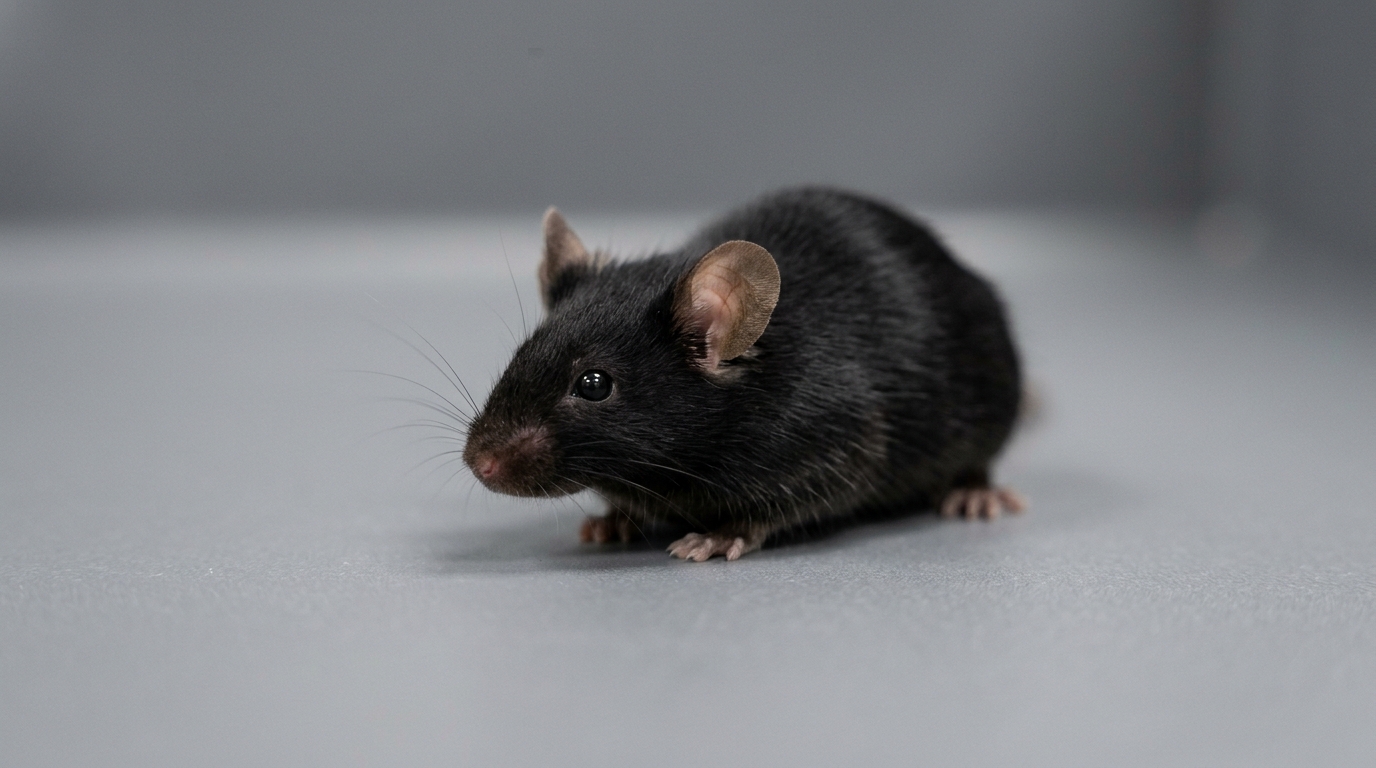
Psilocybin acutely made mice more anxious and less fearful, but a large multi-laboratory collaboration found no reliable evidence that a single dose produced any of the long-lasting antidepressant-like, anxiolytic or fear-extinction effects often reported in preclinical studies. The findings, published in Nature Neuroscience, come from five laboratories across three California institutions that ran identical experiments on roughly 200 male and female mice per experiment, making this one of the most rigorous tests to date of how reproducible psychedelic research in animals really is.
The collaboration, which the researchers call Psy-BAANC, included teams at Stanford, two groups at the University of California, Berkeley, and two groups at the University of California, San Francisco. At the outset, the labs harmonized core parameters: the drug dose, the mouse strain, the sexes tested and the primary behavioral protocols. They standardized best practices such as a minimum one-week acclimation to the animal facility and at least one hour of habituation to the testing room. Crucially, they deliberately allowed secondary factors to vary between labs, including light-dark cycles, apparatus and transport procedures, so that any effect they confirmed would be robust under realistic laboratory conditions rather than dependent on one lab’s idiosyncratic setup.
Dose selection was central to the design. The team chose 2 milligrams per kilogram of body weight, injected intraperitoneally, because this dose reliably triggers head twitch responses in mice, a widely used behavioral correlate of hallucinogenic activity; it is low enough to avoid gross motor impairment; it falls within the range used in other preclinical studies; and it produces receptor occupancy in mice comparable to potentially therapeutic doses in humans. After verifying the concentration and stability of the drug preparation with liquid chromatography and high-resolution mass spectrometry, every lab confirmed that psilocybin significantly increased head twitches during the 20 minutes after injection. Female mice generally showed more head twitches than males, and the effect was most prominent in the first 10 minutes.
The first robust acute finding concerned anxiety. In the open field test, run within the first 30 minutes after injection, all five labs found that psilocybin-treated mice spent significantly less time in the center of the arena, and pooling the data confirmed the effect. In the elevated plus maze, tested 10 minutes after injection, three of five labs individually detected reduced open-arm exploration, and the pooled analysis again showed a significant anxiogenic effect. The two labs with the lowest baseline open-arm exploration could not detect the effect individually, but supplementary measures from those labs still pointed the same way. Consistent differences in locomotor activity were absent at this time point, so reduced movement could not explain the avoidance behavior. The authors note that this acute anxiogenic effect is consistent with human reports of psilocybin generating acute anxiety.
A second strikingly consistent acute effect was a reduction in fear expression. In a cued fear conditioning experiment, psilocybin given about five minutes before fear memory retrieval caused a robust decrease in freezing during retrieval in every single lab. Importantly, freezing to the first cue remained high in both saline and psilocybin groups 24 hours later, indicating that the drug did not impair fear memory retrieval or reconsolidation itself but instead acutely suppressed the expression of fear. The researchers suggest that if this effect translates to humans, it could point to a potential use for psilocybin in suppressing fear responses during exposure therapy for post-traumatic stress disorder, though they stress that future mechanistic work is needed first.
The persistent results were a different story. When the same anxiety assays were repeated 24 hours after drug administration, no lab detected a lasting effect on center time in the open field, and pooled data showed nothing. In the elevated plus maze, four of five labs saw no persistent effect and one observed only a modest anxiolytic effect, with pooled analyses providing no evidence of anxiolysis. Psilocybin also acutely reduced exploration of novel objects in the pooled data, but 24 hours later four labs found no effect, one found a slight increase, and pooling revealed nothing. Social preference, measured in a three-chamber social interaction test, was unchanged by psilocybin both acutely and at 24 hours, with one isolated positive finding unsupported by supplementary behavioral measures.
Depression-related assays were equally unyielding. In the tail suspension test performed 24 hours after injection in unstressed mice, no lab observed any effect of psilocybin, and pooled and z-scored data confirmed the null result. The team then tried a repeated forced swim protocol, in which mice swim on the day before and the day after drug administration, a design previously reported to reveal antidepressant-like effects of psychedelics. Even the baseline increase in immobility between the two swims was only partially replicable, appearing in just two of five labs. Only one lab saw a psilocybin effect on day 3 immobility; the other four and the pooled data showed none. Repeating the protocol with the tail suspension test produced a replicable increase in immobility from day 1 to day 3 in all five labs, but again no lab and no pooled analysis detected any antidepressant-like effect of the drug.
To rule out the possibility that the null results reflected insufficient stress, the researchers used a chronic corticosterone protocol, delivering the hormone in drinking water for 21 days to induce depression-like behaviors before administering psilocybin. Corticosterone modestly altered behavior in most labs, but psilocybin produced no detectable persistent anxiolytic effect one day after administration and even showed isolated anxiogenic-like effects in single labs. In the sucrose preference test, psilocybin increased preference in only two of five labs; the authors interpret the pooled significance cautiously because the apparent effect seemed driven by reduced water consumption rather than increased sucrose intake. In the forced swim test, psilocybin’s effects were inconsistent across labs and absent in pooled analyses. Similarly, psilocybin given before or after fear memory retrieval produced no persistent enhancement of fear extinction in any lab except one small effect in a single lab, and it did not reopen the critical period for social reward learning in adult mice, a phenomenon previously reported at a much lower dose of 0.3 milligrams per kilogram.
Why did isolated positive results appear at all? The researchers ran simulations to estimate how often a significant effect would replicate given the effect sizes they observed. Persistent effects with small effect sizes had low replication probabilities that never exceeded 60 percent even with 40 mice per group, whereas the robust acute effects replicated far more reliably. With a significance threshold of 0.05, roughly 5 percent of independent experiments are expected to be false positives, and in nearly 100 independent behavioral experiments the team encountered six singular, nonreplicable positive results. Statistical models of dozens of methodological variables, including housing, handling and apparatus details, found no significant interactions between these factors and psilocybin’s effects, and labs that were more similar in methods were not more similar in behavioral outcomes. The authors conclude that the nonreplicable persistent effects most likely reflect a small or nonexistent true effect at this dose rather than methodological differences between labs.
The authors are careful about scope. Different doses, behavioral assays, disease models or longer time points might yet yield different outcomes, and factors unique to the human psychedelic experience cannot be modeled in mice. Standard tests such as the forced swim and tail suspension assays also have limited predictive validity for novel antidepressants. Still, the message is pointed: psilocybin does not always induce profound, long-lasting behavioral changes in commonly used mouse assays, and results from any individual laboratory should be interpreted with caution. By showing which effects survive replication across five independent labs and which do not, the collaboration offers the field a clearer map of where psychedelic research stands on solid ground and where single-lab findings may be fragile.
Subject of Research: Reproducibility of acute and persistent behavioral effects of psilocybin in mice across five laboratories
Article Title: A multi-institutional investigation of psilocybin’s effects on mouse behavior
Article References: Lu, O. D., White, K., Raymond, K. B., Liu, C., Klein, A. S., Green, N., Vaillancourt, S., Gallagher, A. J., Shindy, L., Li, A., Wallquist, K. E., Li, R., Zou, M., Casey, A. B., Perez, N., Asim, M., Metanat, S., Logas, K. R., Chhaya, V., … Malenka, R. C. (2026). A multi-institutional investigation of psilocybin’s effects on mouse behavior. Nature Neuroscience. https://doi.org/10.1038/s41593-026-02500-z
Image Credits: AI Generated
DOI: 10.1038/s41593-026-02500-z
Keywords: psilocybin, psychedelics, mouse behavior, reproducibility, multi-laboratory collaboration, anxiety-like behavior, fear extinction, antidepressant assays, head twitch response, social reward learning, corticosterone, Nature Neuroscience
News Source: Ophelia Keating. (November 5, 2026). Psilocybin’s lasting mood benefits fail a five-lab mouse test. Scienmag.