• HOME
  • NEWS
  • EXPLORE
    • CAREER
      • Companies
      • Jobs
    • EVENTS
    • iGEM
      • News
      • Team
    • PHOTOS
    • VIDEO
    • WIKI
  • BLOG
  • COMMUNITY
    • FACEBOOK
    • INSTAGRAM
    • TWITTER
Saturday, November 7, 2026
BIOENGINEER.ORG
No Result
View All Result
  • Login
  • HOME
  • NEWS
  • EXPLORE
    • CAREER
      • Companies
      • Jobs
        • Lecturer
        • PhD Studentship
        • Postdoc
        • Research Assistant
    • EVENTS
    • iGEM
      • News
      • Team
    • PHOTOS
    • VIDEO
    • WIKI
  • BLOG
  • COMMUNITY
    • FACEBOOK
    • INSTAGRAM
    • TWITTER
No Result
View All Result
Bioengineer.org
No Result
View All Result
Home NEWS Science News Agriculture

Machine learning reads pollen images to identify honey sources in minutes

by
November 5, 2026
in Agriculture
Reading Time: 2 mins read
0
Machine learning reads pollen images to identify honey sources in minutes

Machine learning reads pollen images to identify honey sources in minutes

Share on FacebookShare on TwitterShare on LinkedinShare on RedditShare on Telegram

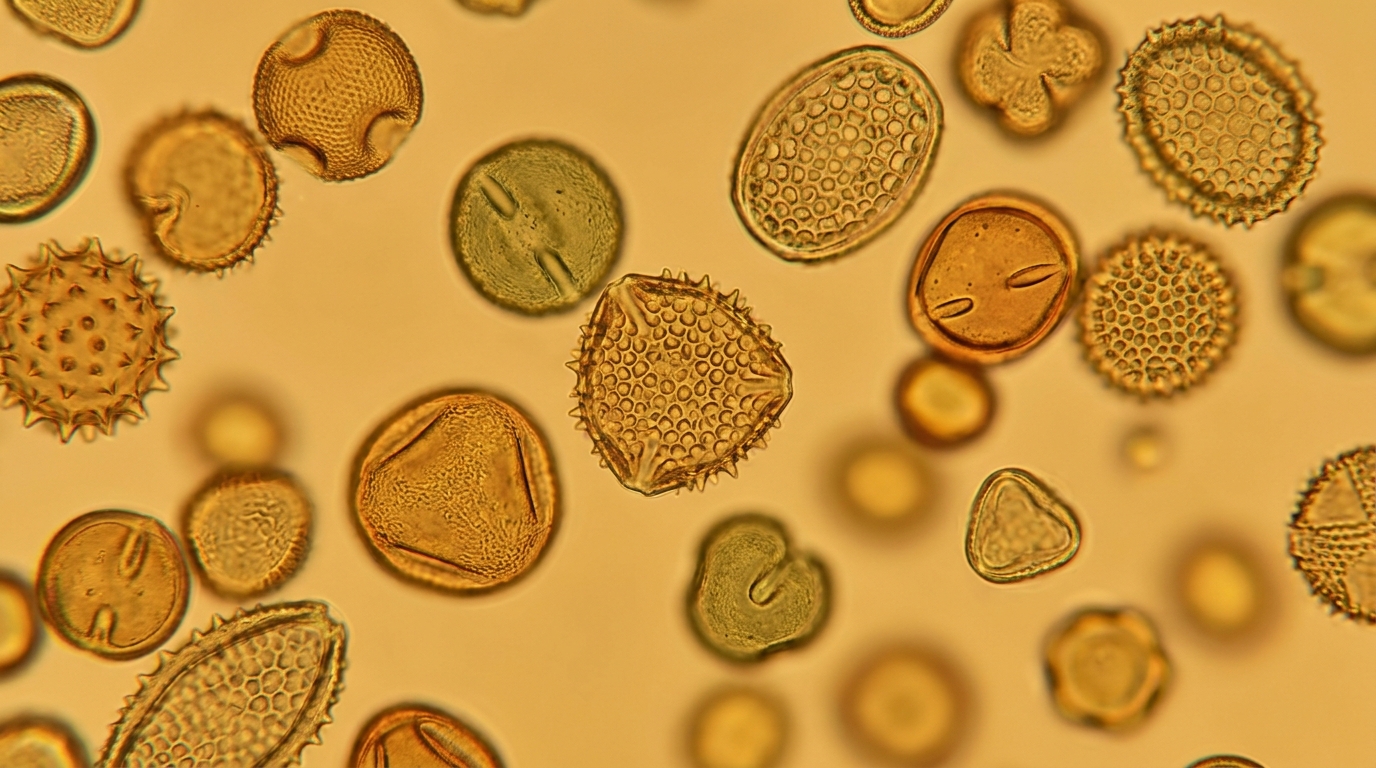
A research team now reports that pollen grains can be identified with a faster, more automated approach: multispectral imaging flow cytometry combined with machine learning. Tested on real honeys, the method produced pollen identification results comparable to traditional microscopic analysis while allowing three times more pollen to be evaluated and requiring a maximum measurement time of ten minutes.

The study, published in npj Science of Food, addresses melissopalynology, the identification of pollen from honey. Pollen identification carries great economic and consumer relevance. Traditional microscopy, however, is time-consuming and dependent on expert knowledge, which limits high-throughput analyses. The researchers therefore tested whether pollen images generated with multispectral imaging flow cytometry, classified by machine learning, could serve as a fast and reproducible method for identifying pollen in honey.

The machine learning relied on convolutional neural networks and random forest classifiers. The team examined how classification is affected by images from different matrices, comparing anther samples with actual honey samples. They also compared the imaging flow cytometry results with traditional microscopic analysis and used human-interpretable image features to better explain what the models were doing.

Six common target pollen types in honey formed the focus: Brassica, Castanea, Centaurea, Helianthus, Phacelia and Tilia type.

The best performance came from a classifier trained with a combination of anther and honey images in both brightfield and fluorescence channels. This combined model provided the best predictions for a test set of 13 monofloral and 10 polyfloral honeys.

The automated approach yielded results comparable to microscopy, meaning the classifications agreed with the expert-based method on the honeys tested.

The authors conclude that the method demonstrates high potential as a powerful screening tool in melissopalynology. The study focused on six target pollen types and 23 honeys, so broader validation across more pollen types and honey origins remains a natural next step.

Subject of Research: Using multispectral imaging flow cytometry and machine learning to identify pollen in honey as a fast alternative to traditional microscopy.

Article Title: Profiling of pollen in honey using multispectral imaging flow cytometry

Article References: Walther, F., Hofmann, M., Janke, M., Erler, S., Friedrich, E., Treder, M., Rakosy, D., Harpole, W. S., Mäder, P., Berdún, A., Hornick, T., & Dunker, S. (2026). Profiling of pollen in honey using multispectral imaging flow cytometry. npj Science of Food, 10(1), Article 337. https://doi.org/10.1038/s41538-026-01188-6

Image Credits: AI Generated

DOI: 10.1038/s41538-026-01188-6

Keywords: honey, pollen, melissopalynology, multispectral imaging flow cytometry, machine learning, convolutional neural networks, random forest, monofloral honey, brightfield imaging, fluorescence, food authentication, npj Science of Food

News Source: Teresa Odom. (November 5, 2026). Machine learning reads pollen images to identify honey sources in minutes. Scienmag.


Tags: brightfield imagingconvolutional neural networksfluorescencefood authenticationhoneyMachine Learningmelissopalynologymonofloral honeymultispectral imaging flow cytometrynpj Science of FoodpollenRandom Forest
Share12Tweet7Share2ShareShareShare1

Related Posts

Cash Income Shortages Drive Meal Deprivation in Senegalese Households

Cash Income Shortages Drive Meal Deprivation in Senegalese Households

November 6, 2026
Smart Green Packaging Extends Food Shelf Life and Tracks Real-Time Freshness

Smart Green Packaging Extends Food Shelf Life and Tracks Real-Time Freshness

November 6, 2026

How Agentic Artificial Intelligence Is Reshaping Agricultural Research and Farming Operations

November 6, 2026

Vitamin C Boosts Blood Health and Immunity in Captive Mullet Broodstock

November 6, 2026

POPULAR NEWS

  • Multitask Cambrian Model Improves Protein Melting Temperature Prediction

    Multitask Cambrian Model Improves Protein Melting Temperature Prediction

    29 shares
    Share 12 Tweet 7
  • Vasopressors Exert Divergent Immunomodulatory Effects Across a Spectrum in Septic Shock

    29 shares
    Share 12 Tweet 7
  • Study Identifies Key Drivers Shaping Salmonid Gill Microbiomes in Aquaculture

    29 shares
    Share 12 Tweet 7
  • Chinese Cancer Association issues unified guideline for tumor-related lung injury care

    29 shares
    Share 12 Tweet 7

About

We bring you the latest biotechnology news from best research centers and universities around the world. Check our website.

Follow us

Recent News

Multitask Cambrian Model Improves Protein Melting Temperature Prediction

Vasopressors Exert Divergent Immunomodulatory Effects Across a Spectrum in Septic Shock

Study Identifies Key Drivers Shaping Salmonid Gill Microbiomes in Aquaculture

Subscribe to Blog via Email

Enter your email address to subscribe to this blog and receive notifications of new posts by email.

Join 86 other subscribers
  • Contact Us

Bioengineer.org © Copyright 2023 All Rights Reserved.

Welcome Back!

Login to your account below

Forgotten Password?

Retrieve your password

Please enter your username or email address to reset your password.

Log In
No Result
View All Result
  • Homepages
    • Home Page 1
    • Home Page 2
  • News
  • National
  • Business
  • Health
  • Lifestyle
  • Science

Bioengineer.org © Copyright 2023 All Rights Reserved.