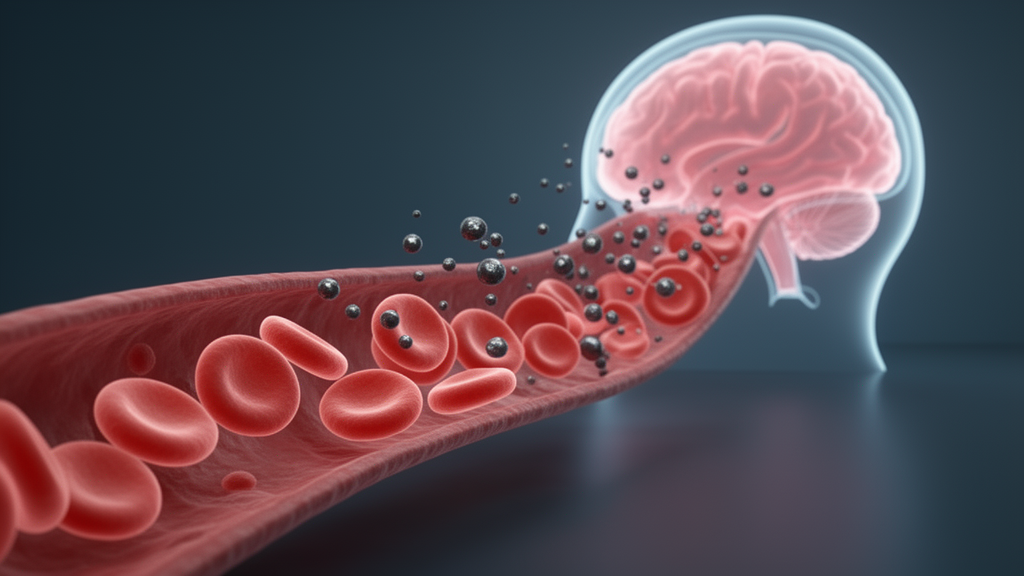
Children with iron deficiency carry measurably more lead in their blood, and both conditions appear linked to behavioural difficulties and weaker school performance, according to a cross-sectional study of 120 Egyptian children published in the Egyptian Pediatric Association Gazette. The research, conducted at Benha University Hospitals between July 2023 and June 2024, compared 60 children with anemia against 60 non-anemic children aged 4 to 10 years, all recruited from a pediatric hematology outpatient clinic serving urban and rural communities in the Delta region.
The team, led by Samar M. Elbahy of Benha University, measured blood lead levels using inductively coupled plasma-mass spectrometry and assessed iron status through serum iron, total iron-binding capacity, transferrin saturation and serum ferritin. Anemia was defined by the World Health Organization criterion of hemoglobin below 11 g/dL, while iron deficiency was classified as a serum ferritin below 20 µg/L. Blood lead levels were interpreted against the current Centers for Disease Control and Prevention reference value of 3.5 µg/dL, the threshold identifying children whose exposure exceeds that of most children.
The results showed a striking gap between the groups. Children with anemia had an average blood lead level of 4.3 ± 0.8 µg/dL, compared with 2.3 ± 0.6 µg/dL in non-anemic children, a difference that was statistically significant. The contrast was even sharper when the analysis focused on iron status rather than anemia alone: children with iron deficiency averaged 5.1 ± 1.1 µg/dL, versus 2.1 ± 0.4 µg/dL in iron-sufficient children. Blood lead also correlated negatively with hemoglobin (r = -0.788) and with serum ferritin (r = -0.338), meaning that as iron markers fell, lead concentrations tended to rise.
Behavioural assessment relied on the Conners’ Parent Rating Scale-Revised, an 80-item parent-report questionnaire covering inattention, hyperactivity and impulsivity, learning problems, executive functioning, aggression and peer relations. The Arabic version of the scale had been validated in previous research, and both parents completed it where possible, with the mean score used for each child. Children with iron deficiency, severe anemia, elevated blood lead and poor school performance all recorded significantly higher Conners’ scores. Blood lead correlated positively with the total Conners’ score (r = 0.501), and subscale analysis showed that cognitive problems and inattention, hyperactivity, anxious and shy behaviour, and the DSM-IV inattentive subscale each correlated positively with blood lead concentrations.
Multivariate regression analysis identified low socioeconomic status, anemia and low serum ferritin as the variables independently associated with high blood lead levels. High blood lead and low serum ferritin were, in turn, independently associated with high Conners’ scores. When the researchers turned to school achievement, graded from the previous year’s marks and grouped into poor versus satisfactory performance, high blood lead was associated with roughly a 50 percent increase in the odds of poor achievement (odds ratio 1.5, 95 percent confidence interval 1.1 to 1.83), and a high Conners’ score with a smaller increase (odds ratio 1.2, 95 percent confidence interval 1.1 to 1.4).
The physiological explanation the authors discuss centres on a shared absorption pathway. Iron and lead are both taken up through the divalent metal transporter 1 in the gastrointestinal tract. When iron is scarce, the body upregulates this transporter to maximise iron absorption, an adaptation that inadvertently increases lead uptake as well. Lead, for its part, inhibits the sulfhydryl-dependent enzymes involved in heme production, so high blood lead can depress hemoglobin synthesis and iron levels. The authors describe this as a two-edged connection, a potential vicious cycle in which worsening iron status drives greater lead absorption, which then further undermines iron status. Prior intervention research they cite suggests that iron replacement in children with iron deficiency anemia can reduce blood lead levels.
The findings align with a broader literature. A meta-analysis by Farkhondeh and colleagues covering 12 studies found blood lead significantly higher among children with iron deficiency anemia, with a pooled odds ratio of 2.75 for elevated lead exposure. A systematic review of 58 studies reported a statistically significant adverse association between blood lead and iron status indicators. A longitudinal study by Wright and colleagues following 1,275 children across two consecutive visits linked iron deficiency to subsequent lead toxicity, and a recent study of children aged 1 to 6 found that blood lead levels of 5 µg/dL or more were substantially associated with both iron deficiency and anemia. Previous Egyptian research had documented a heavy burden of lead exposure, with elevated levels of 10 µg/dL or more reaching 63 to 79 percent in some cohorts, and higher means in industrial areas such as Helwan than in urban residential districts like Dokki.
The authors are careful to state the limits of what this design can show. Because the study is cross-sectional, with a single-point measurement of both the iron profile and blood lead, it cannot confirm causal relationships, and it cannot fully exclude prior anemia in the non-anemic group or prior iron deficiency in the iron-sufficient group. Recruitment at a single center and a sample size powered only for the association between blood lead and iron status mean the behavioural and school-performance findings should be read as exploratory. The authors also note that no clear evidence yet exists for a synergistic or additive effect of combined iron deficiency and elevated lead on children’s cognition and behaviour, partly because so few studies have examined the combined impact.
Within those constraints, the study suggests a practical direction: screening vulnerable children for both iron deficiency and blood lead, and ensuring adequate iron intake in children exposed to high environmental lead, a strategy the Centers for Disease Control and Prevention describes as a complementary secondary-prevention measure rather than a substitute for removing lead from the environment. The authors call for multi-center, longitudinal and interventional studies to test whether iron supplementation in iron-deficient children can lower blood lead, improve behaviour and enhance school achievement. They also outline preventive measures ranging from testing household dust, paint, cookware and drinking water to parental education on hand washing, washing produce, cleaning toys and avoiding unsafe cookware. Whether correcting iron deficiency truly improves outcomes, they conclude, remains a question for future research.
Subject of Research: Associations between blood lead levels, iron deficiency and behavioural and school outcomes in Egyptian children
Article Title: Associations between blood lead concentrations, body iron status and behavioural outcomes in children
Article References: Elbahy, S. M., Elgendy, S. A., Abd-Elhay, O. M., Abd-ELGawad, E. R., & Ebrahim, F. E. E. (2026). Associations between blood lead concentrations, body iron status and behavioural outcomes in children. Egyptian Pediatric Association Gazette, 74(1), Article 123. https://doi.org/10.1186/s43054-026-00624-2
Image Credits: AI Generated
DOI: 10.1186/s43054-026-00624-2
Keywords: blood lead levels, iron deficiency, anemia, children's behaviour, school performance, Conners' rating scale, cross-sectional study, Egypt, pediatric hematology, environmental lead exposure, serum ferritin, public health screening
News Source: Harold Sullivan. (October 29, 2026). Iron Deficiency Tied to Higher Blood Lead and Behaviour Problems in Children. Scienmag.