Researchers in China have identified a striking pattern of opposing cortical dynamics in patients with disorders of consciousness, using high-density electroencephalography and source-localized microstate analysis.
The team enrolled 17 patients in a vegetative state, also known as unresponsive wakefulness syndrome, and 16 patients in a minimally conscious state.
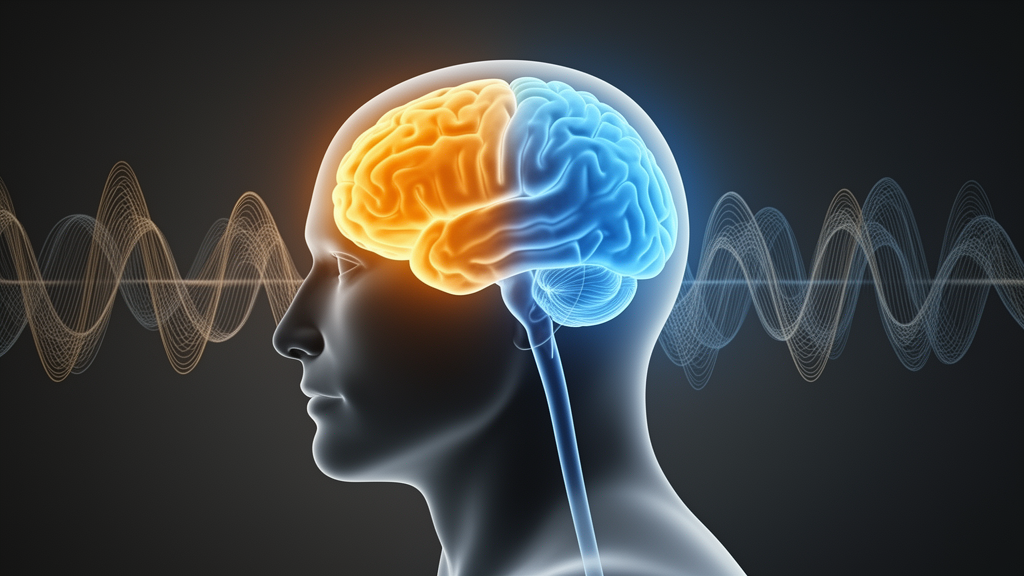
The central finding concerns two microstates with distinct cortical origins. Source microstate 3, localized to the right prefrontal cortex, was enhanced in patients in the vegetative state. Source microstate 4, localized to parieto-occipital-temporal regions, showed higher coverage and occurrence in patients in the minimally conscious state. The authors describe this pattern as a fronto-posterior opponent imbalance: as the clinical picture shifted from vegetative state toward minimally conscious state, the balance of activity swung from a prefrontal-dominated microstate toward a posterior one.
Beyond the group-level contrast, the team tested whether microstate measures could discriminate between the two patient groups. In repeated internal cross-validation within this cohort, the occurrence of microstate 4 distinguished patients in the minimally conscious state from those in the vegetative state with an area under the curve of 0.812, with a 95 percent confidence interval of 0.647 to 0.945. This figure indicates moderate discriminatory performance, though it is important to note that the validation was performed internally within the same cohort of patients rather than in an independent sample.
The study also explored directed information flow between brain regions using Granger causality analysis, which the authors characterize as hypothesis-generating. This analysis nominally implicated stronger information flow from the right middle temporal gyrus to the precuneus in patients in the minimally conscious state. However, the authors are explicit that this connectivity signal did not survive network-level multiplicity correction, meaning it should be treated as a tentative lead for future research rather than an established finding.
The study has several limitations that temper the interpretation of these results. The cohort was modest in size, the cross-validation of the microstate 4 discriminator was internal rather than external, and the connectivity finding was nominally significant only. The Granger causality analysis was framed by the authors as hypothesis-generating, not confirmatory, and the abstract does not report clinical outcomes or diagnostic improvements resulting from the biomarker candidates. The work is published as an original research article in Frontiers in Neuroscience, with the final formatted version forthcoming.
Nevertheless, the opposing dynamics of microstates 3 and 4 offer a potentially useful framework for thinking about disorders of consciousness.
Subject of Research: EEG microstate dynamics in disorders of consciousness
Article Title: Source-resolved electroencephalogram microstates reveal opposing prefrontal-posterior dynamics and a candidate temporal-to-precuneus pathway in disorders of consciousness
Article References: Li, K., Zhang, S., Hu, X., Yan, Z., Wang, J., Jiang, Y., Feng, F., Gao, K., Sun, X., & Yuan, H. (2026). Source-resolved electroencephalogram microstates reveal opposing prefrontal-posterior dynamics and a candidate temporal-to-precuneus pathway in disorders of consciousness. Frontiers in Neuroscience, 20, Article 1995232. https://doi.org/10.3389/fnins.2026.1995232
Image Credits: AI Generated
DOI: 10.3389/fnins.2026.1995232
Keywords: disorders of consciousness, EEG microstates, vegetative state, minimally conscious state, source localization, Granger causality, precuneus, prefrontal cortex, consciousness biomarker, electroencephalography, Source-resolved, electroencephalogram
News Source: Cassandra Pierce. (October 29, 2026). EEG Microstates Reveal Opposing Prefrontal and Posterior Brain Dynamics in Disorders of Consciousness. Scienmag.