Cell suspension cultures of the medicinal plant Scrophularia striata Boiss. can produce markedly more diosmin when treated with an extract of the fungus Piriformospora indica, and the effect is amplified when the process is scaled up from shake flasks to a bioreactor. That is the central finding of a new open access study published in BMC Biotechnology on 21 October 2026 by Sedigheh Ahmadi-Sakha, Mohsen Sharifi and Vahid Niknam.
Diosmin is a flavonoid glycoside valued for its antioxidant, anti-hypertensive, anti-inflammatory and anti-cancer properties, but its natural abundance is limited, which motivates the search for efficient production strategies. The study evaluated the efficacy of P. indica mycelium extract as a biotic elicitor to enhance the biosynthesis of diosmin and other polyphenolic compounds in S. striata cell suspension cultures, while comparing the efficiency of shake-flask and bioreactor systems.
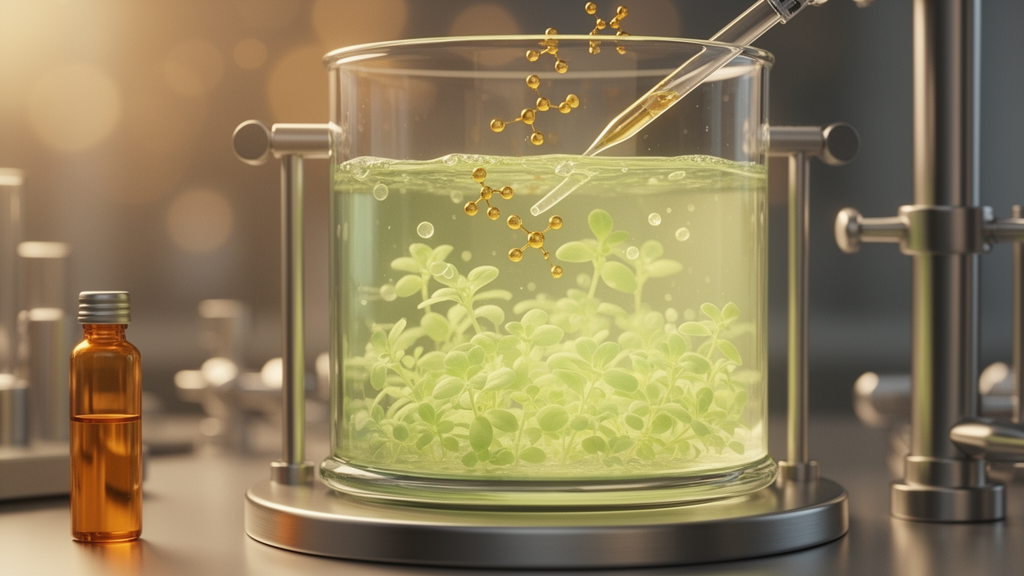
In the experimental design, the researchers applied P. indica mycelium extract at a base concentration of 250 mg per litre, dosed at 0, 0.5, 1 and 2 percent, to 10-day-old cell cultures. The cells were then harvested on the fifteenth day. The optimal concentration identified in these flask experiments was subsequently used for elicitation in a bioreactor to assess how well the production would scale.
The results show that elicitation significantly modulated the metabolic profile of S. striata. In the bioreactor system, the 1 percent (v/v) extract treatment led to a significant 3.03-fold increase in diosmin accumulation compared with the untreated control. This establishes the fungal extract as an effective biotic trigger for the plant’s secondary metabolism under the tested conditions.
The scale-up comparison was even more striking. The diosmin yield in the bioreactor was approximately 77-fold higher than that observed in shake-flask cultures. The authors note that this comparison holds under the specific conditions tested, but the magnitude of the difference suggests that bioreactor cultivation, combined with elicitation, offers a substantially more productive platform for this compound than conventional flask culture.
Diosmin was not the only metabolite to respond. Other flavonoids and stilbenoids, such as resveratrol, also showed increased accumulation following elicitor treatment.
There was, however, a trade-off. A reduction in total biomass was observed in response to the elicitor. Any future process optimisation would need to balance this biomass penalty against the gains in product accumulation.
The authors conclude that P. indica mycelium extract is a potent elicitor for the enrichment of diosmin in S. striata, and that the bioreactor system provided a significantly higher diosmin yield than shake-flask cultures under the tested conditions, suggesting its potential for further development in the production of this high-value compound. As with any early-stage plant cell culture study, the findings are specific to the tested elicitor doses, harvest timing and culture systems, and further work would be needed to translate them into an industrial production process.
Subject of Research: Enhancing diosmin production in Scrophularia striata cell suspension cultures using Piriformospora indica mycelium extract in shake-flask and bioreactor systems.
Article Title: Increasing diosmin production in a suspension culture of Scrophularia striata Boiss. Using fungal extracts in a bioreactor
Article References: Ahmadi-Sakha, S., Sharifi, M., & Niknam, V. (2026). Increasing diosmin production in a suspension culture of Scrophularia striata Boiss. Using fungal extracts in a bioreactor. BMC Biotechnology. https://doi.org/10.1186/s12896-026-01238-7
Image Credits: AI Generated
DOI: 10.1186/s12896-026-01238-7
Keywords: diosmin, Scrophularia striata, Piriformospora indica, biotic elicitor, plant cell suspension culture, bioreactor, flavonoids, resveratrol, polyphenols, secondary metabolism, biomass, Increasing
News Source: Gregory Coleman. (October 28, 2026). Fungal extract boosts diosmin in bioreactor-grown plant cell cultures. Scienmag.