Using an automated radio-frequency identification (RFID) system at the hive entrance, researchers tracked individually tagged foragers of the western honey bee (Apis mellifera) for 24 hours after oral exposure to the carbamate insecticide fenobucarb and the benzimidazole fungicide carbendazim. Across three behavioral endpoints—return rate, first-return time, and the frequency of out-of-hive trips—the two compounds produced no consistent, dose-dependent impairment of homing behavior under the tested conditions.
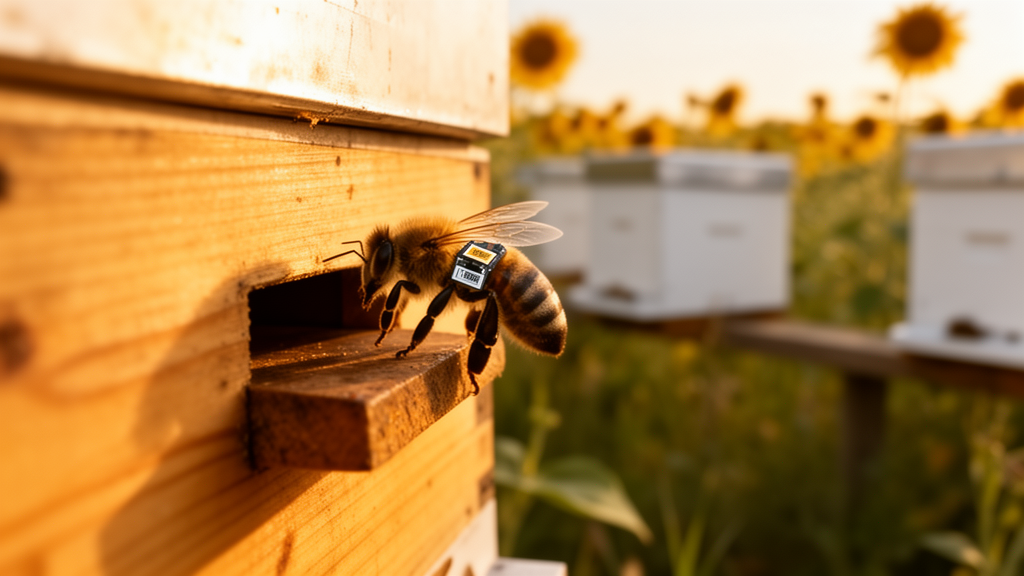
The study protocol was designed with two goals: to refine the experimental workflow for RFID-based behavioral testing and to evaluate short-term sublethal effects of the two pesticides on homing performance. Under the study protocol, forager bees were to be captured at hive entrances, screened for fitness, fitted with RFID chips weighing approximately 5.4 milligrams on the dorsal thorax, orally dosed, and released about one kilometer from the colony. Per the protocol, readers mounted at the hive entrances were set to log each bee's unique identifier and the timestamp of every entry continuously over a 24-hour monitoring window beginning with the first post-release detection.
According to the study protocol, doses were anchored to environmental residue data. The nominal treatment levels were selected on the basis of concentrations of fenobucarb (23.0–114.5 µg/kg) and carbendazim (10.3–563.7 µg/kg) reported in pollen and bee bread samples collected in South Korea, converted to individual oral doses by assuming a daily pollen consumption of 9.6 milligrams per bee. The protocol specified two sublethal doses per compound: 0.00025 and 0.0025 µg/bee for fenobucarb, and 0.005 and 0.05 µg/bee for carbendazim. According to the authors, the lower doses fall within the environmental ranges reported for these pesticides, while the tenfold higher doses were selected to examine potential effects under a conservative high-exposure scenario. The protocol called for test solutions to be prepared fresh in 30% sucrose with a constant 1.0% acetone solvent concentration across all pesticide treatments.
The study protocol included a validation of the platform's sensitivity using a positive-control substance before pesticide testing. Untreated control bees returned at a rate of 70.0% (21 of 30), while bees exposed to the neonicotinoid thiamethoxam at 1.5 ng/bee showed a marked drop, with only 26.67% (8 of 30) returning within 24 hours. This reduction matched the expected positive-control response described in the OECD Guidance Document No. 332, on which the experimental procedures were based with some modifications, confirming that the test system could detect homing impairment when it genuinely occurs.
Against that validated backdrop, the main results were strikingly quiet. Control bees returned at 92.22 ± 2.22% (83 of 90 released) and solvent-control bees at 91.94 ± 3.27% (81 of 88), both exceeding 90% and well above the OECD validity criterion of at least 70%. Fenobucarb at both doses left homing success essentially unchanged, with return rates of 88.52 ± 4.12% (79 of 89) at the low dose and 90.00 ± 3.73% (81 of 90) at the high dose, neither statistically different from the solvent control.
Carbendazim produced one anomalous signal. At the lower dose of 0.005 µg/bee, the return rate fell to 75.71 ± 7.08% (64 of 83 released), a statistically significant reduction compared with the solvent control (P = 0.01). Yet at the higher dose of 0.05 µg/bee, homing success was back to 89.88 ± 1.67% (80 of 89), indistinguishable from controls. The effect was also not accompanied by any change in median return time or in the frequency of out-of-hive trips, and the authors interpret it as a non-monotonic, isolated finding that lacks the biological coherence typically associated with pesticide-induced impairment and that requires independent confirmation.
Return-time distributions overlapped substantially across all groups. Median return times were 33.07 minutes for the control and 47.13 minutes for the solvent control, with broadly overlapping interquartile ranges. Fenobucarb-exposed bees returned with medians of 56.42 and 56.55 minutes at the low and high doses respectively, and carbendazim-exposed bees at 63.25 and 45.36 minutes, showing no dose-dependent pattern. Out-of-hive trip frequency, calculated as the average number of discrete trips per bee after the first entry, with a minimum 10-minute interval used to separate trips, averaged 10.59 in controls and 10.81 in solvent controls, and ranged from 10.23 to 11.91 across all pesticide groups, with no significant differences.
The methodological refinements were central to the study’s reliability. Under the protocol, bees were pre-screened by marking them with fluorescent pigment and releasing them one kilometer away; only those returning within 30 minutes were to be used, to ensure experienced foragers with strong spatial memory. The protocol used vacuum-assisted collection intended to capture roughly 400–500 foragers within 30 minutes with minimal disturbance, with a hose diameter of 1.5 centimeters to reduce handling stress. The protocol specified installing dummy RFID sensors at hive entrances at least a week before testing to habituate the colonies, and running experiments only in flight-friendly weather of 18 to 31 °C without rain. The protocol timed dosing so that bees would be released in mid-afternoon, leaving two to three hours of daylight before sunset.
The reproducibility assessment was designed around three independent experimental runs conducted in May and June, each using a different colony and 180 tagged foragers. Generalized linear mixed-model analysis found no significant effect of experimental run on homing success in either the control group (likelihood ratio test: χ²(1) = 0.000, p = 1.000) or the solvent control group (χ²(1) = 0.652, p = 0.419). Return-time distributions of successful returners also did not differ among runs, and RFID detection performance remained stable throughout the observation period, with no evidence of abnormal intercolony drifting or tag misidentification. The statistical plan specified three replicate cages of 10 bees per run per treatment, giving nine replicate cages per treatment, analyzed with the Kruskal–Wallis test followed by Dunn's multiple-comparison test against the solvent control.
The authors note several limitations. Only short-term effects on experienced adult foragers were evaluated, so developmental, delayed, or cumulative effects from larval or early adult exposure were not assessed. The study focused on homing performance and did not examine resource collection efficiency, floral preferences, or foraging motivation, and colony-level impacts from trophallactic transfer of contaminated food were not investigated. Because the experiments used experienced foragers under favorable foraging conditions, the findings apply within that context. Mechanistically, the authors suggest that carbendazim’s mode of action—disruption of microtubule assembly rather than interference with the neural pathways governing navigation—makes acute homing disruption unlikely at the tested concentrations, while prior evidence indicates that behavioral impairments from acetylcholinesterase-inhibiting carbamates generally arise only when enzyme activity is substantially reduced. Within the conditions of this study, neither fenobucarb nor carbendazim produced consistent adverse effects on homing-related behavior, and the refined RFID platform delivered consistent, high-resolution measurements of sublethal behavioral performance in honey bees.
Subject of Research: RFID-based tracking of sublethal effects of fenobucarb and carbendazim on honey bee homing flight performance
Article Title: RFID-based assessment of sublethal effects of fenobucarb and carbendazim on honey bee homing flight
Article References: Vasamsetti, B. M. K., Chon, K., Kim, J., Kim, B.-S., Yoon, C.-Y., Choi, M., Ahn, H.-Y., Hwang, S., & Park, K.-H. (2026). RFID-based assessment of sublethal effects of fenobucarb and carbendazim on honey bee homing flight. Applied Biological Chemistry, 69(1), Article 76. https://doi.org/10.1186/s13765-026-01145-7
Image Credits: AI Generated
DOI: 10.1186/s13765-026-01145-7
Keywords: honey bees, RFID tracking, fenobucarb, carbendazim, homing behavior, sublethal pesticide effects, Apis mellifera, pesticide risk assessment, forager bees, behavioral toxicology, OECD guidance, hive monitoring
News Source: Drew Townsend. (October 28, 2026). RFID Tracking Shows Fungicide and Insecticide Leave Honey Bee Homing Largely Unimpaired. Scienmag.