Researchers in Ghana and the United Kingdom have launched a curated, open-access database that brings together, for the first time, natural products isolated from organisms collected in Ghana. The resource, called the Ghana Natural Product Database (GhanaNPDB), is described in a data report published in Frontiers in Natural Products on 28 October 2026. Its initial public release, version 1.0, contains 256 unique compounds drawn from peer-reviewed journal articles, academic theses and other institutional scholarly outputs identified through literature searches completed on 31 December 2024, meaning the database reflects publications available up to 2024. The current version is freely accessible at https://np.lib-gh.net.
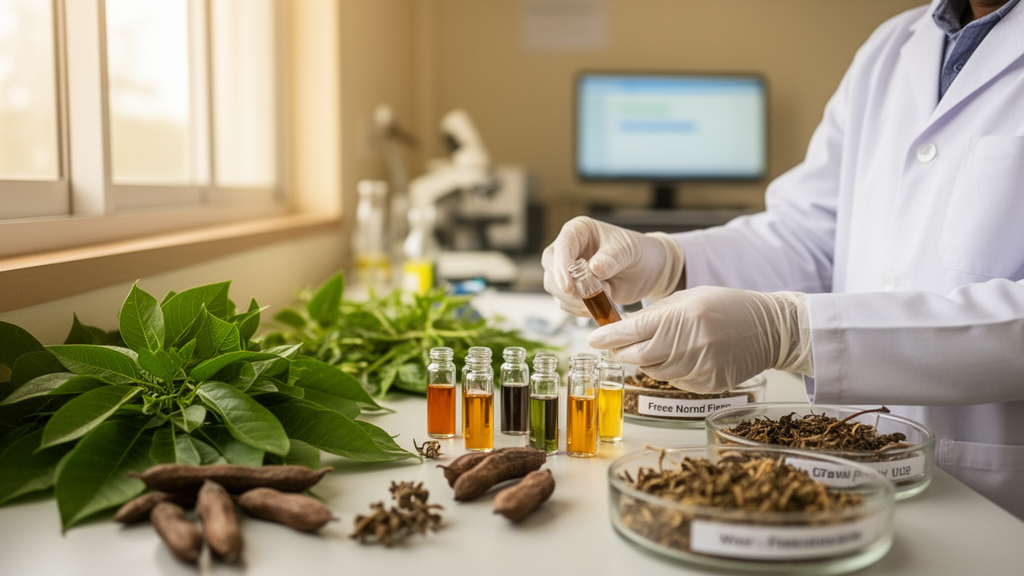
The motivation behind the project is a long-standing accessibility problem. Although natural products have long underpinned drug discovery, providing structurally diverse and biologically active molecules that are not readily accessible through purely synthetic approaches, information on Ghana’s chemical diversity has remained scattered across journal articles, theses, institutional repositories and laboratory records. The authors note that more than half of all approved small-molecule drugs originate from, are inspired by, or are structurally related to natural products, and that such compounds have yielded numerous anti-infective, anticancer, anti-inflammatory and neuroactive agents. Ghana itself is endowed with rich biodiversity spanning tropical rainforests, savannah ecosystems, coastal habitats, freshwater systems and marine environments, all of which support plant species, microorganisms and aquatic invertebrates that represent promising sources of bioactive molecules.
Existing repositories were judged insufficient for the task. Databases such as PubChem, NPAtlas, KNApSAcK, COCONUT, NANPDB and ANPDB have significantly enhanced access to natural product data, but they primarily aggregate compounds across multiple geographic regions and taxonomic sources. According to the authors’ analysis, many Ghana-derived natural products remain underrepresented in these repositories. GhanaNPDB was therefore developed as a centralized and curated knowledge base that consolidates natural product discoveries from Ghana into a single searchable platform, integrating chemical, biological and biodiversity metadata to support natural product discovery, cheminformatics applications and translational research.
Building the collection required a systematic literature search. The team queried bibliographic databases including PubMed, Scopus, Google Scholar, ScienceDirect, ResearchGate and SciFinder, along with institutional repositories, for publications and theses published between 1966 and 2024. Search terms combined keywords such as Ghana, natural products, phytochemistry, microbial metabolites, marine and aquatic invertebrates, isolation, structure elucidation and bioactivity. Records were included only if they described structurally characterized natural products isolated from organisms collected in Ghana and provided clear taxonomic and collection information. Synthetic and semi-synthetic compounds were excluded. Duplicate entries were identified through name searches and verified against the original sources; where duplicates were confirmed, the most complete record was retained as the primary entry, while related publications and any unique findings were cross-referenced to it.
Each compound record is organized into six categories of extracted data: compound names and unique identifiers; physicochemical properties such as molecular formula, molecular weight and structural features; source organism, including genus, species and family names; sample location and collection date; extraction and isolation protocols, encompassing solvents, methodologies, chromatographic procedures and structure elucidation techniques; and biological activity, including IC50, MIC and EC50 values together with assay details such as the target, cell line or test organism. One important caveat is recorded explicitly in the paper: stereochemical configurations were taken as reported in the original sources, and no independent reassignment or experimental verification of stereochemistry was performed during database curation.
The composition of the initial release reflects the breadth of Ghanaian biodiversity. Of the 256 compounds catalogued, 198 (77.4 percent) originate from plants, 50 (19.5 percent) from microorganisms, and 8 (3.1 percent) from aquatic invertebrates. The compounds span diverse natural product classes, including terpenoids, alkaloids, flavonoids, phenolics, polyketides, stilbenes and siderophores. Terpenoids are the most abundant class, with 53 compounds accounting for 24 percent, followed closely by alkaloids with 45 compounds at 21 percent, while flavonoids and phenolics each account for 10 percent, or 22 compounds. The remaining compounds belong to several less represented classes.
Physicochemical descriptor analyses reveal substantial variation across the collection, which the authors say reflects its chemical diversity. Molecular weights range from 62.02 g/mol for fluoroacetylaldehyde to 3600.86 g/mol for the macrocyclic compound legonaridin 1, while log P values range from −4.90 to 18.62, indicating the presence of both highly polar and highly lipophilic compounds. Hydrogen bond donor and acceptor counts range from 0 to 20, indicating a wide spectrum of molecular functionalities. Together, these features enable the database to cover an extensive chemical space relevant to multiple biological targets and ADME-related investigations. The database also contains compounds with diverse reported biological activities, including antibacterial, antifungal, antiparasitic, anti-inflammatory and antiproliferative effects, with quantitative measures such as IC50, MIC and EC50 values linked to detailed assay information. The authors note that the data collectively reveal strong representation in antimicrobial and cytotoxic screening while identifying underexplored targets and pathways that may warrant further investigation.
Representative entries illustrate the range of sources and activities. From Ghanaian plants, the database lists regiafuran A from Chlorophora regia with an antioxidant IC50 of 1.9 μg/mL, erythroivorensin from Erythrophleum ivorense with anti-inflammatory activity, dichapetalin M from Dichapetalum madagascariense with antiproliferative activity (EC50 of 9.9 × 10⁻⁹ against HCT-116 cells), and heudelotol B from Dichapetalum heudelotii with antiproliferative activity (GI50 of 4.67 µM against Burkitt’s lymphoma), alongside molucidin from Morinda lucida with antitrypanosomal activity (IC50 of 1.27 μM). From Ghanaian bacterial biodiversity, accramycin A from Streptomyces sp. MA37 shows antimicrobial activity with an MIC of 3.1–12.5 μg/mL, paenidigyamycin A from Paenibacillus sp. DE2SH shows antileishmanial, antitrypanosomal and antimalarial activity, and digyalipopeptide A from Bacillus sp. DE2B shows antitrypanosomal, antileishmanial and antimicrobial activity. From Ghanaian marine biodiversity, dakaramine from Axinella sp. shows cytotoxic activity with IC50 values of 35.0 μg/mL against Jurkat cells and 26.5 μg/mL against HL60 cells. Full assay details are available in the database itself.
A comparative analysis underscores how much Ghanaian chemistry has been missing from widely used repositories. Only 19 natural products were common to GhanaNPDB, COCONUT and ANPDB, while 82 and 73 compounds were shared between GhanaNPDB and COCONUT and between GhanaNPDB and ANPDB, respectively. These findings, the authors write, indicate the substantial number of Ghana-derived compounds that remain absent from existing databases. The platform itself is a web-based application built on a PostgreSQL database and deployed on a secure Ubuntu 22.04 LTS cloud server, following a three-tier architecture comprising a user interface layer developed with JavaServer Pages, a logic systems layer implemented with Java Servlets that handles request processing, input validation and session management, and a database and storage layer supporting efficient structure-, taxonomy- and metadata-based searches. The portal offers a general keyword search across all data fields, an advanced search using structured parameters such as species name, compound name or chemical class, a Browse section for exploring curated datasets without complex queries, a user guide, a frequently asked questions section, and a Contact section through which users can submit feedback, report corrections and contribute additional data.
The authors are candid about the resource’s limitations. The current version is derived from published reports of natural products isolated from Ghanaian biodiversity and may not capture unpublished studies or compounds reported in difficult-to-access sources. Data contributions submitted through the website require a name, email address, institutional affiliation and a brief description of the proposed data, and submissions undergo initial screening by the database administrator for relevance and adherence to database standards before contributors are given access or instructions to upload data for integration. Future updates are planned to incorporate similarity- and substructure-based search options and machine-learning approaches for literature mining and compound recognition, and the team intends to integrate the database with major natural product repositories such as COCONUT and ANPDB to improve data accessibility, visibility and reuse. To maintain accuracy, GhanaNPDB will be kept current through quarterly reviews and ongoing curation to enable timely incorporation of newly reported compounds and emerging scientific data. The work was carried out by researchers at the University of Ghana, the University of Mines and Technology, Kwame Nkrumah University of Science and Technology, and the Drug Discovery Unit at the University of Dundee, with the corresponding author Richard K. Amewu of the University of Ghana’s Department of Chemistry.
Subject of Research: A curated open-access database of natural products isolated from Ghanaian biodiversity
Article Title: GhanaNPDB: a database of Ghana-derived natural products
Article References: Osei-Safo, D., Kumah, R. T., Anibea, B. Z., Mensah, M., Anom, P., Yeboa-Bonsu, E., Mensah, C. N., Agbodza, H. A., Oppong, A. A., Farrell, S. J., Gilbert, I. H., Ekuadzi, E., & Amewu, R. K. (2026). GhanaNPDB: a database of Ghana-derived natural products. Frontiers in Natural Products, 5, 1961615. https://doi.org/10.3389/fntpr.2026.1961615
Image Credits: AI Generated
DOI: 10.3389/fntpr.2026.1961615
Keywords: GhanaNPDB, natural products, Ghana, biodiversity, drug discovery, cheminformatics, database, phytochemistry, terpenoids, alkaloids, microbial metabolites, marine natural products
News Source: Margaret Porter. (October 28, 2026). New open database catalogues 256 natural products isolated from Ghana’s biodiversity. Scienmag.