


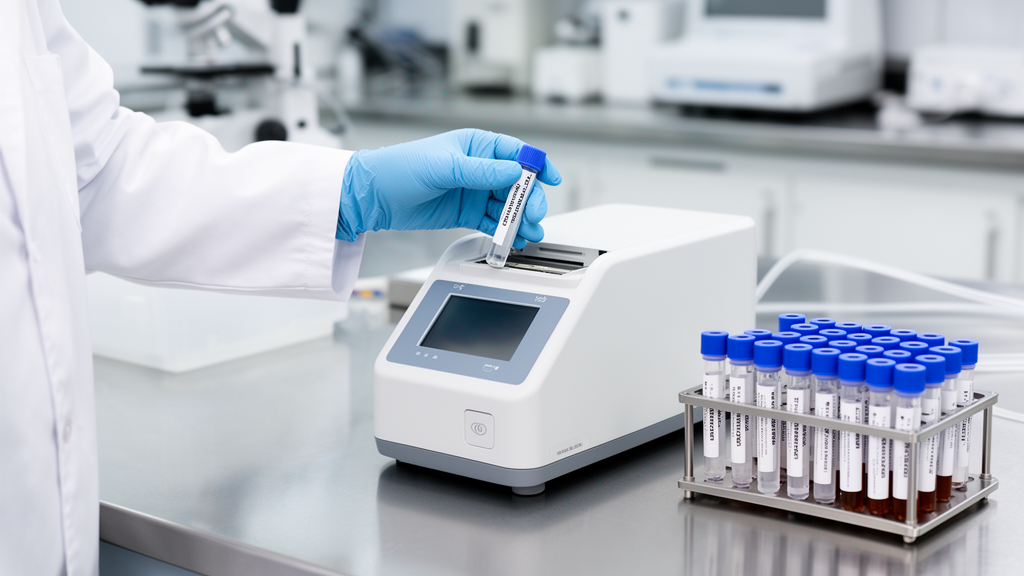
Combining rapid molecular tests on smear-negative bronchoalveolar lavage fluid substantially improved tuberculosis detection compared with any single test, according to a retrospective diagnostic-accuracy study conducted at Hangzhou Red Cross Hospital in China. The analysis, published in BMC Pulmonary Medicine, evaluated four tests already in routine clinical use: TB-DNA, SAT-TB, Xpert MTB/RIF, and mycobacterial culture.
Among 6,560 patients included, 3,849 had pulmonary tuberculosis and 2,711 had alternative pulmonary diagnoses. Sensitivities of TB-DNA, SAT-TB, Xpert, and culture were 48.4%, 38.0%, 52.1%, and 30.7%, respectively. The corresponding areas under the receiver operating characteristic curve were 0.740, 0.689, 0.758, and 0.653. Specificities ranged from 99.6% to 100.0%, meaning positive results were highly reliable across all four tests.
Xpert MTB/RIF showed the highest sensitivity among the four individual tests and, unlike the others, provided concurrent rifampicin-resistance information. Among the 1,002 patients with paired Xpert and phenotypic drug susceptibility testing results, Xpert detected rifampicin resistance with 97.8% sensitivity, 97.0% specificity, and a kappa value of 0.841, indicating strong agreement with phenotypic testing.
Xpert plus TB-DNA achieved 61.4% sensitivity and 99.1% specificity. Adding SAT-TB and culture raised sensitivity by 3.5 percentage points to 64.9%, while specificity fell slightly to 98.9%.
The authors characterised the additional gain beyond Xpert plus TB-DNA as modest. They concluded that the exploratory findings support further evaluation of assay combinations but do not establish an optimal testing strategy, and they called for prospective studies incorporating costs, turnaround time, and effects on patient management.
The study’s retrospective design, single-centre setting, and reliance on a composite reference standard based on final clinical diagnoses are important limitations, and the combination analyses were explicitly exploratory.
Because all tests were run on the same specimen during routine care, the findings reflect real-world laboratory performance rather than idealised research conditions. The authors note that the results, drawn from a Chinese hospital population over five years, require prospective validation before any change to diagnostic algorithms can be recommended.
Subject of Research: Diagnostic accuracy of molecular assays and culture for tuberculosis in smear-negative bronchoalveolar lavage fluid
Article Title: Diagnostic accuracy of three molecular assays and culture in smear-negative bronchoalveolar lavage fluid: a retrospective study using routinely collected clinical data
Article References: Dai, L., Cai, L., & Peng, L. (2026). Diagnostic accuracy of three molecular assays and culture in smear-negative bronchoalveolar lavage fluid: a retrospective study using routinely collected clinical data. BMC Pulmonary Medicine. https://doi.org/10.1186/s12890-026-04916-6
Image Credits: AI Generated
DOI: 10.1186/s12890-026-04916-6
Keywords: tuberculosis, Xpert MTB/RIF, bronchoalveolar lavage fluid, diagnostic accuracy, TB-DNA, SAT-TB, mycobacterial culture, rifampicin resistance, smear-negative, retrospective study, composite reference standard, Diagnostic
News Source: Ophelia Keating. (October 28, 2026). Xpert leads molecular TB tests in smear-negative lavage fluid, retrospective study finds. Scienmag.



