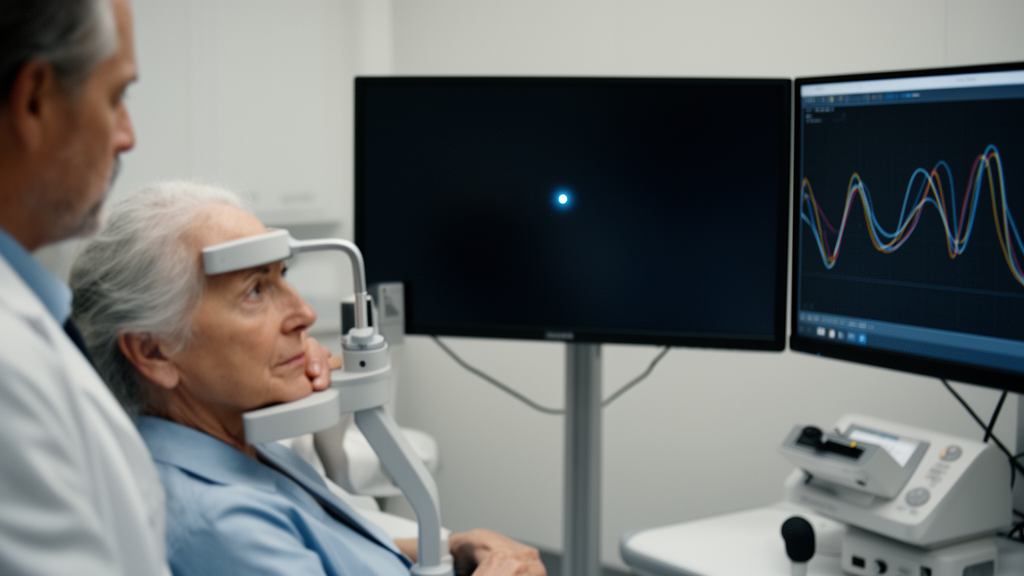
People with cerebral small vessel disease often show early cognitive problems that are subtle and easy to miss. A new study suggests that a simple eye movement measure, the anti-saccade uncorrected error rate, may be associated with cognitive impairment in these patients, offering a potential behavioral marker linked to disease severity.
The research, published in BMC Neurology, was a prospective study of patients with cerebral small vessel disease. Among 135 total patients, the investigators compared 76 individuals with cognitive impairment to 59 without cognitive impairment, examining whether eye movement features, particularly anti-saccade parameters, were associated with cognitive performance.
The two patient groups differed significantly in age, history of acute cerebrovascular disease, years of education, and scores on measures of daily functioning and mood, as well as in several anti-saccade parameters, including accuracy, correction rate, mean correction completion time, maximum rightward amplitude, and uncorrected error rate.
Binary logistic regression identified three independent risk factors for cognitive impairment in cerebral small vessel disease: a higher anti-saccade uncorrected error rate, older age, and a history of acute cerebrovascular disease.
Receiver operating characteristic analysis indicated that the uncorrected error rate had moderate discriminative value for cognitive impairment in this population, with the area under the curve rising to 0.749 after adjustment for covariates. An AUC of this size suggests the measure alone is informative but not definitive as a screening tool.
Spearman’s correlation analysis showed that the uncorrected error rate was negatively correlated with overall cognitive level, particularly with visuospatial and executive function and with abstraction. In other words, patients who made more uncorrected errors tended to score lower on these cognitive domains.
The authors conclude that the anti-saccade uncorrected error rate may be associated with cognitive decline in patients with cerebral small vessel disease. They caution that larger, more comprehensive studies are needed to validate these results and to clarify the underlying pathophysiological mechanisms.
Subject of Research: The association between anti-saccade uncorrected error rate and cognitive impairment in cerebral small vessel disease
Article Title: Anti-saccade uncorrected error rate and its association with cognitive impairment in cerebral small vessel disease
Article References: Xu, X., Zhang, K., Wang, L., Wang, Y., Zhang, H., Zheng, Y., Jia, C., Xia, L., Li, N., & Chen, Z. (2026). Anti-saccade uncorrected error rate and its association with cognitive impairment in cerebral small vessel disease. BMC Neurology. https://doi.org/10.1186/s12883-026-05570-5
Image Credits: AI Generated
DOI: 10.1186/s12883-026-05570-5
Keywords: cerebral small vessel disease, cognitive impairment, anti-saccade task, uncorrected error rate, eye movements, executive function, ROC analysis, logistic regression, BMC Neurology, behavioral marker, Anti-saccade, uncorrected
News Source: Ophelia Keating. (October 28, 2026). Eye movement test may flag cognitive impairment in small vessel disease. Scienmag.