


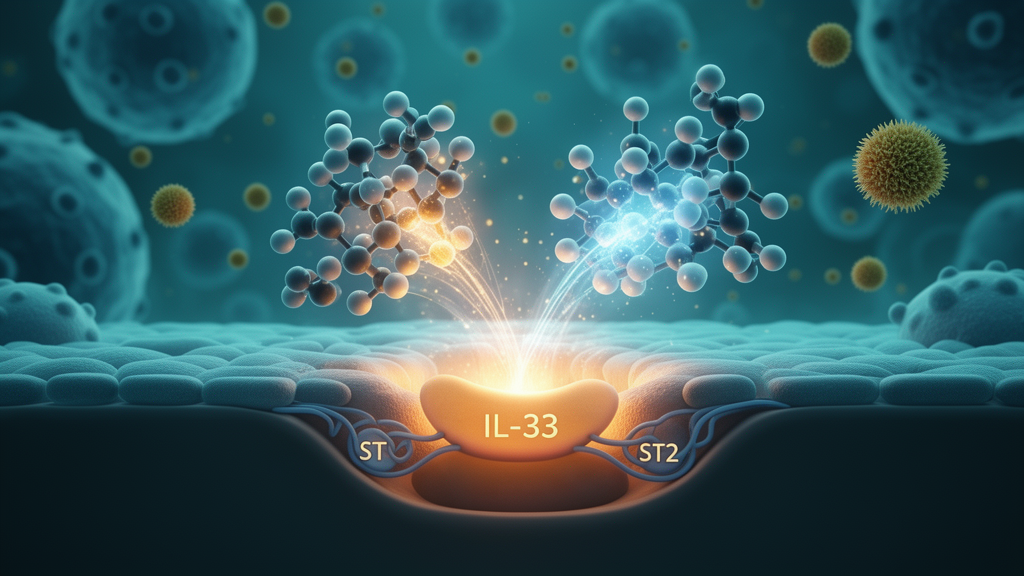
Patients with allergic rhinitis show elevated blood levels of IL-33, ST2, TNF-α and IL-6, and the concentrations of these four markers rise in step with symptom severity, according to a single-centre cross-sectional study conducted at a hospital in Chengdu, China. The findings, published as an open-access research article in Allergy, Asthma & Clinical Immunology, add to evidence that the IL-33/ST2 signalling axis is active in allergic airway disease.
The study was a prospective, cross-sectional observational investigation carried out between February and June 2025. Researchers from the Third Affiliated Hospital of Chengdu University of Traditional Chinese Medicine recruited 81 participants diagnosed with allergic rhinitis from the hospital’s Otolaryngology and Pulmonology Departments. As a comparison group, 85 healthy controls were selected from the same hospital’s Physical Examination Center, giving a total of 166 participants in the analysis.
To test whether these molecules are measurable correlates of the disease, the team quantified serum concentrations of IL-33, ST2, TNF-α and IL-6 using ELISA in both patients and controls. They then used Spearman’s rank correlation analysis to examine relationships between the pathway components, cytokine expression and clinical symptom severity scores.
The results showed statistically significant elevations of all four markers in the allergic rhinitis group compared with the healthy controls, with each measured level substantially higher than the corresponding value in healthy subjects at the P < 0.05 threshold. Positive correlations were also found between these biomarkers and symptom severity, meaning that patients reporting more severe symptoms tended to have higher serum concentrations of the measured proteins.
The authors conclude that aberrant activation of the IL-33/ST2 pathway, together with elevated TNF-α and IL-6 levels, is closely associated with the pathogenesis and progression of allergic rhinitis.
Several limitations of the study design should be kept in view when interpreting the findings. As a cross-sectional comparison of patients and controls at a single centre, the study can document associations between biomarker levels and symptom severity but cannot establish that IL-33/ST2 activation causes allergic rhinitis or its progression. The sample of 81 patients was drawn from one hospital in Sichuan, so the generalisability of the measured concentrations to other populations remains to be tested.
The correlation analysis is also a statistical association rather than a demonstration of a predictive or causal relationship, and serum cytokine levels can be influenced by factors such as recent allergen exposure, infections and comorbid conditions that the published abstract does not detail. The article was shared early as a peer-reviewed, accepted manuscript carrying a permanent DOI, and the authors note that this version is subject to further edits before the final Version of Record replaces it.
Even with those caveats, the study contributes a quantified, paired dataset linking a specific innate immune signalling pathway to both disease status and symptom burden in allergic rhinitis. If the biomarker-severity correlations hold up in larger and more diverse cohorts, serum IL-33, ST2, TNF-α and IL-6 could eventually complement symptom-based assessment tools, and the IL-33/ST2 axis may become a focus for interventional research in allergic airway inflammation.
Subject of Research: Serum IL-33/ST2 pathway biomarkers and inflammatory cytokines in allergic rhinitis patients compared with healthy controls
Article Title: Association between the IL-33/ST2 pathway and downstream inflammatory factors in the context of allergic rhinitis
Article References: Lin, Y., Wang, Y., Guo, Z., Xiao, L., Yang, J., Liu, Y., & Wu, M. (2026). Association between the IL-33/ST2 pathway and downstream inflammatory factors in the context of allergic rhinitis. Allergy, Asthma & Clinical Immunology. https://doi.org/10.1186/s13223-026-01065-7
Image Credits: AI Generated
DOI: 10.1186/s13223-026-01065-7
Keywords: allergic rhinitis, IL-33, ST2, TNF-alpha, IL-6, biomarkers, cross-sectional study, ELISA, Spearman correlation, allergy, inflammation, Chengdu
News Source: Ophelia Keating. (October 28, 2026). IL-33/ST2 pathway linked to allergic rhinitis severity in Chinese cross-sectional study. Scienmag.



