When the world moved from incandescent light bulbs to LEDs, the payoff was immediate: far less energy consumed to produce the same amount of light, longer lifetimes and less wasted heat. Engineers at the University of Delaware now argue that a comparable leap is needed for another energy-hungry task, and they have taken a major step toward delivering it. A team led by inventor Yushan Yan has shown that carbon dioxide can be pulled directly from ambient air at room temperature using a battery-style electrochemical system that consumes roughly 50 percent less energy than conventional direct air capture approaches. The work, described in the peer-reviewed journal Nature Energy, replaces the heat-driven chemistry that dominates today’s capture plants with a rechargeable process powered by electricity.
The potential benefits are both economic and environmental: the concentrated carbon dioxide collected in this way can be stored, sold or upcycled into other products, ranging from carbon dioxide for the beverage industry to preservatives in animal feed and, possibly one day, jet fuel. But the field faces a stubborn obstacle. Current direct air capture technologies are energy-intensive and rely on heat, or thermal energy, to work, and the best options available use or emit carbon dioxide as part of the thermal process itself.
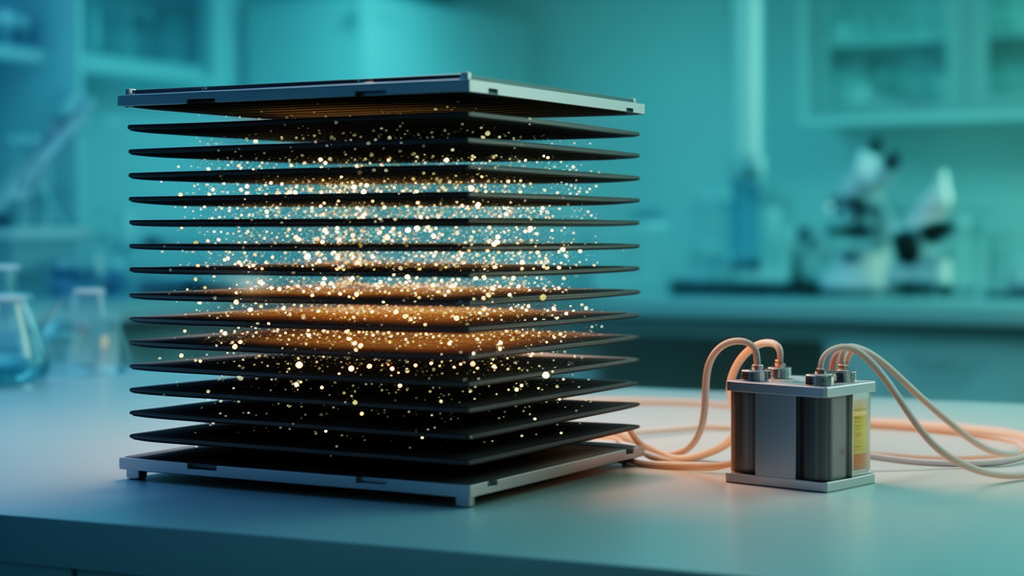
The Yan lab focused on resolving this energy problem by using electricity to capture carbon dioxide from air at room temperature. The machinery at the heart of the new study uses a nickel hydroxide battery electrode to capture carbon dioxide from air on one side of the device, then release it in a purified stream on the other. When the electrode is discharged, the process continues by using a second battery electrode while the first is recharged, making the system rechargeable so it can be used again and again. According to the researchers, the process consumes significantly less energy than conventional systems, less than one megawatt-hour per ton of carbon dioxide removed.
The chemistry was chosen deliberately. Nickel-hydroxide chemistry has long been used in rechargeable batteries, and Yan said the team picked it on purpose. Developing innovations that work within established supply chains and manufacturing capacity is part of his commercialization strategy, allowing his team to develop and bring technologies to market more quickly. “We want to do innovative work but, even more, we want to commercialize technologies that we can see used in the world today,” Yan said. The technology is built on early work at UD by Yan, the Henry Belin du Pont Chair of Chemical and Biomolecular Engineering and director of the Center for Clean Hydrogen, and leverages a patented membrane and direct air capture system invented at the university.
The path from laboratory bench to real-world hardware has already advanced beyond the lab. UD researchers and collaborator RepAir Carbon, which licenses the technology, have demonstrated that the method works both in the laboratory and at scale. RepAir licensed and scaled the UD-developed technology into a pilot-scale device in Israel and successfully ran it for over half a year, more than 5,000 hours, demonstrating the device’s durability over time. The company further proved, according to the university, that the technology is effective at scales necessary to operate in the real world. The technology was also licensed and commercialized by Versogen, headquartered on the University’s Science, Technology and Advanced Research Campus.
Inside the lab, the optimization work was neither quick nor trivial. James Buchen, the paper’s first author and a doctoral candidate working under Yan’s advisement in the Center for Clean Hydrogen, and Teng Wang, a UD research associate, spent two years optimizing the electrochemical battery cell’s durability and function. Buchen also built the system used to test the battery cell and validate the method’s effectiveness. That extended development period reflects the central engineering challenge of direct air capture: carbon dioxide exists in ambient air at very low concentrations, so any capture system must move enormous volumes of air while selectively grabbing a trace gas and then releasing it in purified form.
Yan likens the difficulty of the problem to separating sugar water into its component parts. “Imagine adding a teaspoon of sugar to a gallon of water,” he said. “The sugar dissolves readily, even without stirring, but recovering that tiny amount of sugar from the water is much harder. Capturing carbon dioxide from air presents a similar challenge and that challenge translates into energy cost of the direct air capture process.” The battery-inspired approach attacks that energy cost directly, substituting electrochemical binding and release for the thermal cycles that dominate incumbent designs.
The motivation extends even to a fully decarbonized energy system. “Even if we get rid of fossil fuels for everyday life and commit fully to renewables, we will still be emitting carbon dioxide,” Buchen said. “Direct air capture is a way to offset these emissions.” Agriculture and construction are two large industries where the researchers see direct-air carbon capture having an impact. Fertilizer for agriculture and concrete for construction produce significant carbon emissions, and the research team imagines a world where those emissions can be balanced while these important industries are maintained for society. While the technology will never fix the entire carbon emissions problem from large emitters such as industrial furnaces and fossil fuel power plants, Buchen said direct air capture can effectively address emissions from distributed sources like agriculture and construction within cost and efficiency goals set globally.
Cost remains the decisive metric for the field. Globally, researchers have been trying to reach 100 dollars per ton as an acceptable cost for direct-air capture, and Buchen said this technology brings those numbers within reach.
For now, the University of Delaware team and its commercial partners have what they describe as a durable, rechargeable, electricity-driven capture system that has survived thousands of hours of pilot operation and cuts the energy requirement roughly in half compared with conventional systems. Whether it can be manufactured at the scale and price the climate conversation demands will be tested in the years ahead, but the researchers have staked their strategy on a familiar principle: the technologies that change the world fastest are the ones that can be built with the tools and supply chains already in hand, much as LEDs did for lighting.
Subject of Research: Electrochemical direct air capture of carbon dioxide using nickel hydroxide battery electrodes
Article Title: Engineers cut carbon capture energy use in half
Article References: Engineers cut carbon capture energy use in half. Original publication (Bibliographic details unavailable.)
Image Credits: AI Generated
DOI: Not provided
Keywords: direct air capture, carbon dioxide removal, University of Delaware, nickel hydroxide battery, electrochemistry, Nature Energy, carbon capture cost, energy efficiency, RepAir Carbon, greenhouse gas emissions, climate technology, membrane technology
News Source: Faith Mcneil. (October 28, 2026). Battery-inspired system slashes the energy cost of pulling carbon dioxide from air. Scienmag.