A new study published in BMC Molecular and Cell Biology systematically examined how different cryopreservation strategies and disinfection methods affect the cells within autologous bone tissue, with results suggesting a simple formulation change may improve preservation.
The research team, led by Haoran Zhang, Yao Qian and colleagues including Jian Xie, focused on two questions that matter clinically: whether the basic cryoprotectant solution used to store autologous bone could be improved, and whether common disinfection treatments damage the living cells inside the bone. Their work was published as an open access article on 21 October 2026.
To test the preservation question, the researchers added bone marrow mesenchymal stem cells, known as BMSCs, and collagen to the basic cryopreservation solution. The idea was to evaluate whether this enriched formulation could better protect the bone cells during freezing compared with the base solution alone.
The results were clear on this front. Adding BMSCs and collagen to the basic cryoprotectant significantly increased the survival rate of cryopreserved bone cells, with the difference reaching statistical significance at P < 0.05. The enriched solution also inhibited cell apoptosis, the programmed cell death that typically erodes graft quality during storage, and it upregulated the expression of osteogenic-related genes, the molecular signals associated with bone formation.
Those osteogenic genes formed a detailed molecular readout of bone cell health. The team measured Runx2, a master transcription factor for bone development, along with osteocalcin (OCN), type I collagen (COL1), osteopontin (OPN) and alkaline phosphatase (ALP). Elevated expression of this gene set indicated that the preserved cells retained their bone-forming character rather than merely surviving in a degraded state.
The disinfection half of the study addressed a separate challenge. The researchers compared three methods applied to skull specimens: peracetic acid combined with ultraviolet light (PX-UV), supercritical carbon dioxide (SC-CO₂), and cold atmospheric plasma, a low-temperature plasma technique.
In the disinfection experiment, there were no significant differences between the PX-UV disinfection group and the control group in cell viability, apoptosis rate, or expression of the osteogenic genes, with all comparisons showing P > 0.05. In other words, bone cells treated with PX-UV behaved essentially like untreated cells across every measure the study recorded.
The authors concluded that adding BMSCs and collagen to the basic cryoprotectant solution is expected to improve the preservation of autologous bone tissue cells, and that PX-UV disinfection has a relatively small impact on cell survival rate and the osteogenic properties of autologous bone cells. Together, the findings point to a practical pairing: an enriched freezing solution to protect cells during storage and a disinfection method that leaves them largely unharmed.
The study was detected by CCK-8 assay for cell viability and TUNEL staining for apoptosis, standard laboratory techniques for quantifying living and dying cells. As the published version notes, this article was shared early to provide faster access to peer-reviewed, accepted research, and the version of record may reflect further edits. For surgeons and tissue banks working with cranial bone grafts, the work offers evidence-based guidance on both sides of the preservation pipeline, though the reported results are from the laboratory experiments described and their translation to clinical outcomes will depend on further validation.
Subject of Research: Effects of cryopreservation solution formulations and disinfection methods on the viability of cells in autologous bone tissue for cranial bone repair
Article Title: Effects of disinfection methods and cryopreservation solution formulations containing BMSCs on the cell viability of autologous bone tissue
Article References: Zhang, H., Qian, Y., Shi, T., Yang, X., Wang, W., & Xie, J. (2026). Effects of disinfection methods and cryopreservation solution formulations containing BMSCs on the cell viability of autologous bone tissue. BMC Molecular and Cell Biology. https://doi.org/10.1186/s12860-026-00608-5
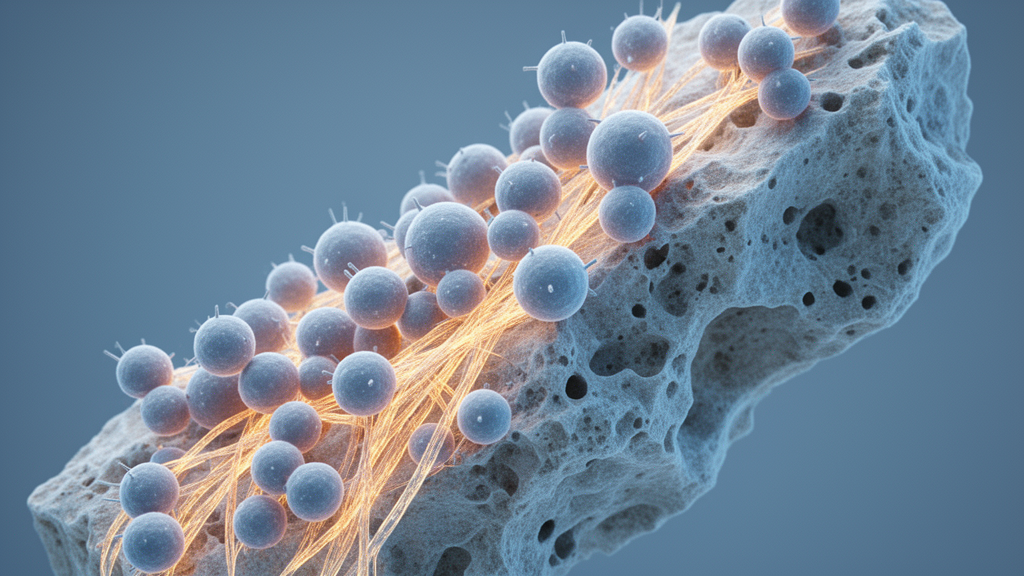
Image Credits: AI Generated
DOI: 10.1186/s12860-026-00608-5
Keywords: autologous bone transplantation, BMSCs, cryopreservation, collagen, peracetic acid-UV disinfection, cell viability, osteogenic genes, cranial bone repair, apoptosis, bone tissue banking, Effects, disinfection
News Source: Juliet Wilcox. (October 27, 2026). BMSCs and Collagen Boost Cell Survival in Cryopreserved Autologous Bone. Scienmag.