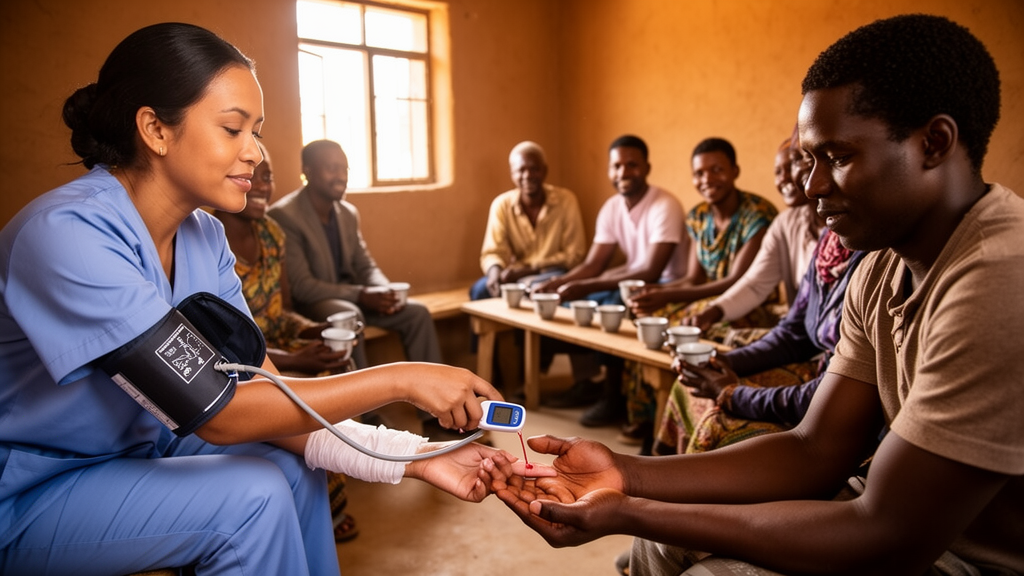
A randomized controlled trial conducted at a tertiary referral hospital in northern Ethiopia has found that a structured, group-based peer support program delivered alongside routine diabetes care produced a modest but statistically significant improvement in glycemic control over six months, at a total implementation cost of about US$690. The trial, carried out at Ayder Comprehensive Specialized Hospital (ACSH) with 100 patients with diabetes, reported a difference-in-differences estimate of a 0.4 percentage point reduction in glycated hemoglobin (HbA1c) favoring the intervention group, along with a significant reduction in fasting blood glucose. When the program’s provider-level costs were linked to the observed glycemic improvement, the researchers estimated an expenditure of roughly US$36 for each 1% reduction in HbA1c, a figure they describe as indicating a favorable cost profile for a resource-constrained healthcare setting.
The study, published in Discover Health Systems, randomized participants in a 1:1 allocation ratio, with 50 patients assigned to the peer support intervention and 50 to usual care. Ninety-seven participants completed the trial, 48 in the intervention arm and 49 in the control arm, after two participants in the intervention group and one in the control group were lost to follow-up. Baseline glycemic and biochemical characteristics were comparable between the groups, with mean ages of 38.6 and 40.3 years respectively. The trial was registered at ClinicalTrials.gov under identifier NCT07499375, with registration dated January 1, 2025.
Five peer supporters were purposively selected in collaboration with clinical service providers at the hospital’s diabetic center, based on predefined eligibility criteria and guidance from validated studies on peer support interventions for chronic diseases. The peer supporters received two days of standardized training before the intervention began, including role-playing exercises to prepare them for effective communication and engagement with group members. Intervention participants were then organized into five peer support groups, each comprising one trained peer supporter and 10 participants. Three face-to-face sessions were conducted over the six-month period, covering core diabetes self-management topics such as the definition of diabetes, precipitating factors, signs and symptoms, blood glucose monitoring, complications and self-care practices, and diabetes medication use and side effects. Interactive discussion and experience sharing were emphasized, and although the curriculum was standardized, the sessions allowed peer supporters to address questions and practical self-management challenges specific to either type 1 or type 2 diabetes.
Both groups continued to receive the hospital’s standard care throughout the trial. At the ACSH diabetic center, which provides follow-up care for around 5,000 patients, standard services include scheduled physician consultations, laboratory investigations, medication refills, and follow-up appointments typically scheduled every two to three months, with newly diagnosed patients receiving individualized counseling from the nurse on duty. The control arm received this usual care alone, while the intervention arm received the peer support sessions in addition to it. Because of the behavioral nature of the intervention, participants and peer supporters were not blinded, but the trained data collectors who conducted baseline and endline assessments were blinded to treatment allocation, and laboratory personnel performing biochemical measurements were not informed of group assignment, a step intended to reduce detection bias.
The primary glycemic outcome was measured using HbA1c, assessed at baseline and at the end of the six-month follow-up period, with all measurements performed in the hospital laboratory following standard clinical procedures. Mean HbA1c in the intervention group fell from 8.9 ± 1.4% at baseline to 8.3 ± 1.3% at endline, while the control group changed minimally, moving from 8.8 ± 1.3% to 8.6 ± 1.4%. The difference-in-differences analysis, which compares changes from baseline to follow-up between the two groups, confirmed a significant intervention effect on HbA1c of −0.4% with a p-value of 0.02. Notably, the authors point out that the between-group comparison at endline alone was not statistically significant; the difference-in-differences approach detected the effect by accounting for changes in both groups over time. Fasting blood glucose also showed a significant relative reduction, with a difference-in-differences estimate of −4.4 mg/dL and a p-value of 0.03.
Not every metabolic measure moved in a statistically meaningful way. Changes in body mass index and lipid profile parameters, including total cholesterol, LDL, HDL, and triglycerides, showed small favorable trends in the intervention group relative to the control group, but these differences did not reach statistical significance in the difference-in-differences analysis. The authors characterize these changes as modest. Statistical analysis was performed using SPSS Version 25, with results reported as mean differences and corresponding p-values, and statistical significance set at p < 0.05.
The economic evaluation focused narrowly on the direct implementation costs of the peer support program from the program or provider perspective, valued in United States dollars for the 2025 costing year and inflation-adjusted where applicable. Cost components included peer supporter recruitment, intervention group recruitment, peer supporter training, peer-support session delivery, and general program implementation activities, with resource utilization documented prospectively using a structured costing tool developed for the study. The total cost of delivering the three rounds of the intervention was approximately US$690, equivalent to about US$14.38 per participant or US$4.79 per patient per session. The largest share of expenditure was attributed to the peer support intervention sessions themselves, followed by recruitment and training activities. Using the observed difference-in-differences HbA1c reduction of 0.4%, the estimated cost was US$35.95 per 1% HbA1c reduction.
The authors situate their findings within a broader but uneven evidence base. Previous meta-analyses of randomized trials have reported HbA1c reductions ranging from approximately 0.24% to 0.57% among individuals receiving peer support compared with usual care, with greater effects observed in interventions involving more frequent and sustained engagement. The reduction observed in the Ethiopian trial is described as consistent with that evidence, including a meta-analysis of 13 randomized controlled trials that found significant HbA1c reductions with peer support, particularly where contact was sustained and engagement high. However, the effectiveness of peer support has not been uniform across settings: a cluster randomized trial in Austria found no significant improvement in HbA1c after adding peer support to an existing disease management program, suggesting that intervention intensity, delivery approach, and integration with routine care may influence outcomes. The authors suggest that the improvement in their study may be partly explained by the structured group-based approach, repeated peer interactions, and the focus on practical self-management challenges among patients receiving routine follow-up care.
Context matters for interpreting the result. The trial took place at a tertiary referral hospital operating in a resource-constrained, post-conflict setting, where shortages of medical supplies, trained personnel, and diagnostic services remain common, a reality the authors argue makes the hospital a practical setting for evaluating scalable interventions. In Ethiopia, gaps remain in access to essential diabetes services, including diabetes education, glucose monitoring, and continuous support for self-management, and diabetes management places a substantial financial burden on patients due to high out-of-pocket expenditures. Evidence from Uganda has previously demonstrated that peer support interventions can improve glycemic control and may be integrated into routine diabetes care. The authors also note that intensive individualized diabetes education delivered by healthcare professionals can improve self-management behaviors, but such approaches require substantial human resources and may be difficult to sustain and scale in resource-limited settings, whereas peer support offers a lower-resource alternative by drawing on the experiences of people living with diabetes.
The study carries important limitations that the authors state plainly. The sample size was determined based on the primary outcome of the parent trial, which was powered to detect differences in medication adherence measured with the MMAS-8 score, not glycemic control or implementation cost, so the study may have limited power to detect smaller differences in HbA1c and cost outcomes, and these findings should be interpreted as exploratory. Because the intervention involved only five peer support groups, cluster-adjusted analysis was not feasible, and future studies with a larger number of groups should account for potential group-level effects. The economic evaluation also did not include patient-borne costs such as transportation expenses and time spent attending sessions, and the authors call for future economic evaluations to consider both provider and patient perspectives. They conclude that group-based peer support represents a promising approach for strengthening diabetes management in resource-constrained settings, while emphasizing that further studies with larger sample sizes and longer follow-up periods are needed to evaluate the long-term sustainability, scalability, and broader economic impact of such interventions in Ethiopia and similar settings.
Subject of Research: Effectiveness and implementation cost of a group-based peer support intervention on glycemic control among patients with diabetes in Ethiopia
Article Title: Effect of a peer support intervention on glycemic control and its implementation cost among patients with diabetes on follow up at a tertiary hospital: a randomized controlled trial
Article References: Haile, H. K., Habte, B. M., & Fenta, T. G. (2026). Effect of a peer support intervention on glycemic control and its implementation cost among patients with diabetes on follow up at a tertiary hospital: a randomized controlled trial. Discover Health Systems, 5(1), Article 86. https://doi.org/10.1007/s44250-026-00429-5
Image Credits: AI Generated
DOI: 10.1007/s44250-026-00429-5
Keywords: diabetes, peer support, HbA1c, randomized controlled trial, glycemic control, implementation cost, Ethiopia, tertiary hospital, resource-limited settings, difference-in-differences, fasting blood glucose, self-management
News Source: Ophelia Keating. (October 27, 2026). Peer Support Lowers Blood Sugar at Low Cost in Ethiopian Diabetes Trial. Scienmag.