How inert chemistry on the early Earth crossed over into self-replicating cellular structures remains one of the deepest unsolved problems in origin-of-life research. A new open-access study published in Discover Life on 27 October 2026 proposes an unusually specific answer, and it comes not from a laboratory experiment but entirely from computer simulation. The paper, authored by Aydın Kurt, presents what it calls a quantum-biogenesis model in which methylated sulfur rings, held within matrices of the diamagnetic elements magnesium and silver, act as non-enzymatic templates that recruit fatty acids, drive the closure of bilayer membranes, and even push those membranes to split into daughter proto-cells.
The starting point of the model is homocyclic sulfur, the familiar eight-membered S₈ ring that the author describes as thermodynamically stable and abundant in volcanic-aqueous environments. In the proposed reaction scheme, thermal energy in the range of 150 to 300 degrees Celsius drives radical-mediated cleavage of these rings by primordial carbon and hydrogen sources such as methane, producing functionalized dimethyl disulfide chains. The net reaction written in the paper converts one S₈ ring and four methane molecules into two dimethyl disulfide units and four hydrogen sulfide molecules, a chemistry the author frames as a plausible prebiotic source of reactive organosulfur intermediates.
The quantum part of the argument begins once these methylated disulfides sit at the boundary between clusters of magnesium and silver. Because both elements are diamagnetic, they screen external magnetic fields and generate what the paper describes as asymmetric, highly localized magnetic shielding gradients. According to the density functional theory calculations, performed with ORCA 5.0 and Gaussian 16 using the B3LYP functional and the 6-31G(d) basis set, this asymmetry breaks the magnetic degeneracy of the protons in the methyl groups. The computed proton NMR shielding tensors show a spatial difference of 14.2 parts per million between the protons facing magnesium and those facing silver, a distinction the model treats as a static spin-polarization filter.
That filter, in turn, is proposed to do real chemical work. The calculations indicate that the localized electronic polarization enhances the non-covalent binding affinity of the carboxylic head groups of primitive fatty acids by 41.8 percent, lowering the critical micelle concentration at the metal interface. In plain terms, lipids would gather more readily and pack more densely around the polarized organosulfur-metal core than they would in open solution. The author links this mechanism to Chiral Induced Spin Selectivity, an effect in which spin-polarized electron transport influences molecular chirality, suggesting that the asymmetric shielding axis could dictate the geometric packing and stereochemical orientation of incoming amphiphiles during the earliest stages of self-assembly.
The large-scale consequences of these sub-nanometer forces were explored with molecular dynamics simulations run in GROMACS using the CHARMM36 force field. The simulated box contained a centered dimethyl disulfide complex flanked by Mg₄ and Ag₄ clusters, representing a mineral pore junction, together with 200 prebiotic fatty acid molecules based on decanoic acid and glycerol phosphate derivatives, and 15,000 SPC water molecules under periodic boundary conditions. The system was equilibrated for two microseconds under NPT ensemble conditions at 300 kelvin and 1 bar, and the entire workflow was repeated in three independent trials with randomized initial velocity seeds to guard against stochastic drift.
The trajectory results follow a clear timeline. In all three replication trials, the clustered lipids achieved complete vesicular encapsulation of the organosulfur-metal core within the first 1140 nanoseconds. Root-mean-square deviation analysis of the lipid head groups shows rapid structural reorientation during the first 500 nanoseconds, corresponding to the sorting and recruitment phase, followed by a stable plateau at roughly 0.35 nanometers between 500 and 1140 nanoseconds, which the author interprets as tightly packed vesicular closure around the core.
What happens next is the most striking claim in the paper. After encapsulation, between 1140 and 1920 nanoseconds, the lateral pressure profile across the bilayer becomes asymmetric because of opposing diamagnetic repulsion fields from the internal magnesium and silver atoms. This generates a localized pinching force at the vesicle’s equator. By 1680 nanoseconds the membrane exhibits stable necking, and at 1920 nanoseconds a complete fission event yields two distinct, stable daughter proto-cells, dividing the internal genetic templates with an accuracy the paper quantifies as plus or minus 12 percent. The core template is also proposed to lower activation barriers for nucleotide alignment into primitive RNA strands, tying membrane mechanics to early information-carrying chemistry.
The energetic foundation of the first step rests on nudged elastic band calculations, which put the activation barrier for homolytic cleavage of the S₈ ring followed by radical methane abstraction at 134.2 kilojoules per mole. The author argues that under hydrothermal conditions between 150 and 300 degrees Celsius this barrier is readily overcome, yielding a steady-state supply of reactive organosulfur intermediates. The paper situates this in a broader geochemical context, noting that magnesium is difficult to substitute in prebiotic chemistry because it coordinates six oxygen atoms efficiently, allowing it to bridge phosphate groups and stabilize primitive nucleotide condensation reactions, while localized accumulations of silver introduce sharp electronic polarization boundaries.
Important caveats are stated openly in the manuscript. The author acknowledges that standard density functional approximations such as B3LYP can systematically underestimate transition-state barrier heights and electronic energy gaps relative to high-accuracy wavefunction methods like CCSD(T), and assigns an inherent error margin of roughly 5 to 10 kilocalories per mole to the computed energetics. The two-microsecond simulation window, while sufficient to capture the immediate energetic transitions described, cannot account for thermodynamic events unfolding over evolutionary timescales, and the idealized NPT environment omits localized pH fluctuations, complex mineral surfaces, and chemical impurities that could reshape the energetic landscape.
Most significantly, the paper itself frames the entire pathway as theoretical. No laboratory experiment has yet demonstrated methylated sulfur rings templating lipid bilayers inside diamagnetic metal clusters, and no physical measurement has confirmed the computed shielding differences or the simulated fission dynamics. The author explicitly calls for in vivo or laboratory-based studies to empirically validate and complement the computational findings. Until such work appears, the model should be read as a mathematically consistent proposal, not a demonstrated route to life: a suggestion that quantum-level spin differentiation at mineral interfaces might have organized the first compartments, offered with the data and simulation trajectories openly archived in a Zenodo repository so that other researchers can test, reproduce, or challenge every step of the proposed chain from sulfur chemistry to dividing proto-cells.
Subject of Research: A computational model of quantum-driven proto-cell self-assembly from methylated sulfur and diamagnetic metals
Article Title: Quantum biogenesis driven by methylated colloidal sulfur within diamagnetic metal matrices and proto-cell self-assembly
Article References: Kurt, A. (2026). Quantum biogenesis driven by methylated colloidal sulfur within diamagnetic metal matrices and proto-cell self-assembly. Discover Life, 56(1), Article 52. https://doi.org/10.1007/s11084-026-09774-0
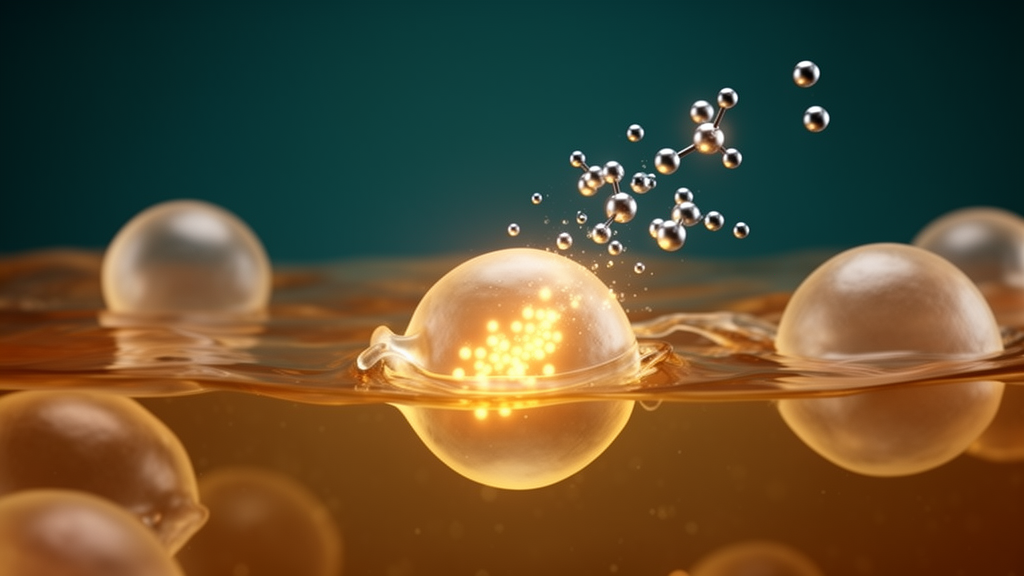
Image Credits: AI Generated
DOI: 10.1007/s11084-026-09774-0
Keywords: origin of life, proto-cells, quantum biogenesis, colloidal sulfur, molecular dynamics, DFT calculations, magnesium, silver, membrane fission, prebiotic chemistry, CISS, computational modeling
News Source: Drew Townsend. (October 27, 2026). Methylated Sulfur and Diamagnetic Metals Modeled as Drivers of Proto-Cell Assembly. Scienmag.