Women with stress urinary incontinence who completed six weeks of pelvic floor muscle exercise, progressive muscle relaxation exercise, or a combination of the two reported greater improvements in comfort over time than women receiving routine outpatient care alone, according to a four-arm randomized controlled trial published in Frontiers in Medicine. The study, conducted at Karaman Training and Research Hospital in Türkiye, found that the three conservative interventions produced distinct temporal patterns of change in comfort, with pelvic floor muscle exercise acting earliest, relaxation training building gradually, and the combined approach showing significant gains only from the fourth week onward.
Stress urinary incontinence, the involuntary leakage of urine during activities that raise intra-abdominal pressure such as coughing, sneezing, laughing, running, or lifting, is the most prevalent form of urinary incontinence among women. Epidemiological studies cited by the researchers indicate that roughly 25 to 45 percent of women worldwide experience urinary incontinence at some point in their lives, with prevalence exceeding 50 percent among women aged 60 and older. The condition is associated with embarrassment, anxiety, reduced self-esteem, sleep disturbances, sexual dysfunction, and withdrawal from social and physical activities, and it imposes economic costs through healthcare expenditures, continence products, and productivity loss. The true prevalence is likely underestimated, the authors note, because many women do not seek care, believing leakage is a normal consequence of aging or that effective treatment is unavailable.
The research team, led by Ahmet Şanlı of Karamanoğlu Mehmetbey University, set out to test whether comfort, a multidimensional outcome grounded in Kolcaba’s Comfort Theory, could serve as a meaningful patient-centered measure in this population. Comfort, in this framework, spans physical, psychospiritual, sociocultural, and environmental dimensions and encompasses states of relief, ease, and transcendence. The authors argue that comfort is conceptually distinct from symptom burden and quality of life: an intervention might improve a woman’s perceived comfort through reductions in fear, tension, or perceived loss of control even when changes in urinary symptom severity are not proportional. While pelvic floor muscle exercise is established as the first-line conservative treatment for stress urinary incontinence in international guidelines, the additional contribution of progressive muscle relaxation, a technique developed by Edmund Jacobson that involves sequential contraction and relaxation of muscle groups, had remained unclear with respect to comfort specifically.
Between 1 June 2025 and 1 May 2026, the researchers screened women aged 40 to 60 presenting at the hospital’s urology outpatient clinic with a clinical diagnosis of stress urinary incontinence. After exclusions, 96 women were randomized to the four study groups, and the final per-protocol analysis included 80 participants, 20 in each arm. Because the interventions were delivered in an outpatient setting where participants from different groups could encounter one another, the team used a day-based allocation procedure: clinic days were randomly assigned to the four groups by an independent researcher drawing opaque labels from a sealed bag, and all eligible women attending on a given day were assigned to that day’s designated group. The authors acknowledge that this approach, adopted to minimize cross-contamination, did not involve individual randomization and that selection bias cannot be excluded.
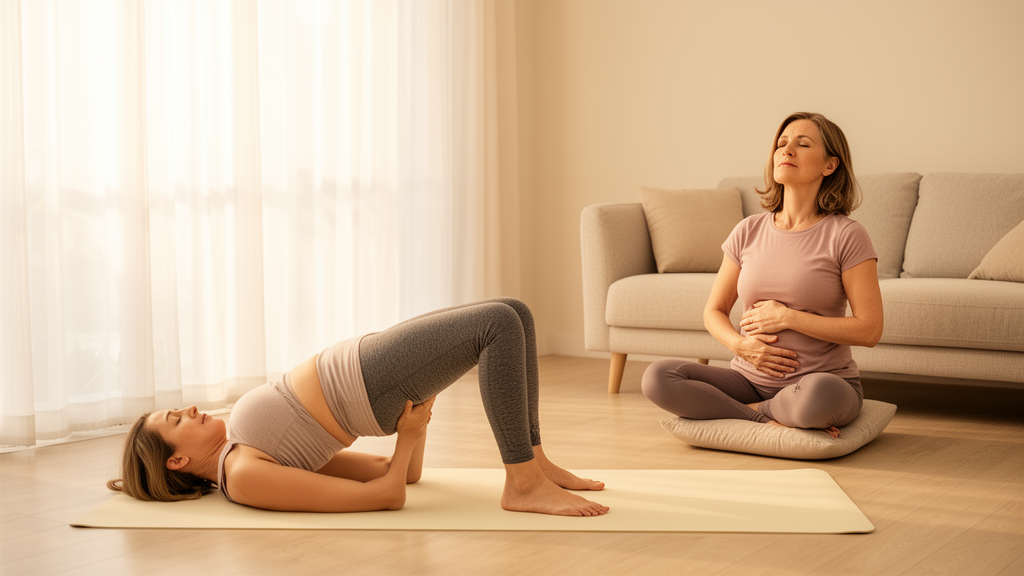
Participants in the pelvic floor muscle exercise group learned voluntary contraction techniques, beginning with contractions held for 3 to 4 seconds and progressing to 10 seconds, followed by 8 to 10 seconds of relaxation, performing at least 10 sets of 10 contraction-relaxation cycles daily. The relaxation group practiced Jacobson-style progressive muscle relaxation once daily for 20 to 30 minutes, sequentially contracting and releasing major muscle groups from the feet to the face after diaphragmatic breathing. The combined group performed both programs, and the control group received routine outpatient care only. All interventions were delivered individually by a specialist in physical medicine and rehabilitation, with weekly telephone follow-up and text message reminders from nurse academics supporting adherence over the six-week period.
Comfort was measured with the Urinary Incontinence and Frequency Comfort Questionnaire, a 28-item instrument developed by Dowd and colleagues based on Kolcaba’s theory and validated in Turkish by Zengin. Items are rated on a six-point scale, with total scores ranging from 28 to 168; in this study, scores were presented as item-mean values between 1 and 6 to standardize interpretation across dimensions. Assessments took place at baseline and at weeks 2, 4, and 6 through telephone interviews. The internal consistency coefficient in the present study was 0.83. Statistical analysis used mixed-design analysis of variance with group as the between-subjects factor and time as the within-subjects factor, applying Greenhouse-Geisser corrections after Mauchly’s test indicated the sphericity assumption was violated, and Bonferroni adjustments for multiple comparisons.
The results revealed a statistically significant group-by-time interaction (F = 32.068, p < 0.001, partial eta-squared = 0.559), the study’s primary finding, indicating that the trajectory of comfort change differed across the four groups. The main effect of time was also significant (F = 43.611, p < 0.001), but the main effect of group was not (F = 0.891, p = 0.450), meaning overall mean scores did not differ among groups when all measurement occasions were considered together. Baseline scores ranged from 4.46 in the relaxation group to 4.82 in the control group, with no significant baseline differences. By week 6, mean item scores were 4.61 in the pelvic floor exercise group, 4.66 in the relaxation group, 4.68 in the combined group, and 4.76 in the control group, which had started highest and declined slightly.
Follow-up simple-effects analyses characterized the differing trajectories. The pelvic floor exercise group improved significantly by week 2 (p = 0.002) and maintained that gain through weeks 4 and 6, with no additional significant differences among follow-up assessments, a pattern the authors attribute to the strengthening-based intervention’s early functional effect on muscle strength, endurance, and urethral support. The relaxation group showed significant improvement at every assessment relative to baseline, with further gains between weeks 2 and 4 and weeks 2 and 6, consistent with a more gradual adaptation in muscle relaxation, awareness, and neuromuscular control. The combined group showed no significant change at week 2 (p = 0.085) but significant improvement by week 4 (p = 0.013) and week 6 (p < 0.001), suggesting the dual intervention required longer for its effects on both strengthening and relaxation mechanisms to emerge. The control group exhibited a slight decline after baseline followed by relative stabilization.
The authors themselves urge caution in interpreting these findings. Although the interaction effect size was large, the absolute changes in questionnaire scores were relatively small, and relatively high baseline comfort scores may have produced a ceiling effect. No minimal clinically important difference has been established for the instrument, so the observed changes demonstrate statistically detectable shifts in comfort trajectories rather than a clinically meaningful magnitude of improvement from the participants’ perspective. Additional limitations include the single-center design, the six-week follow-up that precluded evaluation of long-term sustainability, the per-protocol analysis that excluded dropouts and may introduce attrition bias, and the reliance on self-reported adherence and telephone interviews without objective verification tools such as perineometry or electromyography, which may have introduced self-report and social desirability biases.
The study was registered with ClinicalTrials.gov under identifier NCT07762391 and approved by the Ethics Committee of Karamanoğlu Mehmetbey University Faculty of Medicine. The researchers conclude that both pelvic floor muscle exercise and progressive muscle relaxation are effective conservative interventions for improving comfort in women with stress urinary incontinence, and that individualized rehabilitation programs incorporating muscle strengthening, relaxation, and neuromuscular coordination may optimize outcomes. However, they explicitly state that the findings do not demonstrate clinical superiority of the combined intervention over either approach alone, and they call for multicenter randomized controlled trials with larger sample sizes, longer follow-up periods, individual randomization, and objective functional outcomes to confirm the results.
Subject of Research: The effects of pelvic floor muscle exercise, progressive muscle relaxation, and their combination on comfort in women with stress urinary incontinence
Article Title: The effect of pelvic floor muscle exercise, progressive muscle relaxation exercise, and their combined application on comfort in women with stress urinary incontinence: a four-arm randomized controlled trial
Article References: Şanlı, A., Göke Arslan, G., Çelik, D., & Demir, B. (2026). The effect of pelvic floor muscle exercise, progressive muscle relaxation exercise, and their combined application on comfort in women with stress urinary incontinence: a four-arm randomized controlled trial. Frontiers in Medicine, 13, Article 1967374. https://doi.org/10.3389/fmed.2026.1967374
Image Credits: AI Generated
DOI: 10.3389/fmed.2026.1967374
Keywords: stress urinary incontinence, pelvic floor muscle exercise, progressive muscle relaxation, comfort, randomized controlled trial, women's health, conservative treatment, Kolcaba Comfort Theory, urinary incontinence, rehabilitation, nursing research, Türkiye
News Source: Ophelia Keating. (October 27, 2026). Pelvic floor exercises and relaxation training both eased comfort in women with stress incontinence. Scienmag.