Transmitting electricity without losing any energy may sound impossible, yet this is precisely the promise of superconductivity. For nearly 40 years, scientists have been working to understand materials that exhibit this remarkable property at relatively high temperatures, and a new experiment has now captured, in real time, a hidden contest between two quantum states that lies at the heart of the puzzle. The findings, published in Nature Physics by an international team led by Professor Fabio Boschini of the Institut national de la recherche scientifique (INRS) in Quebec, provide fresh evidence that the so-called pseudogap and superconductivity compete with one another rather than cooperate, challenging a long-standing hypothesis about how these extraordinary materials work.
Among the most promising of the materials that superconduct at relatively high temperatures are the cuprates, a family of copper-based compounds discovered in 1986. The breakthrough was so significant that its discoverers, Bednorz and Müller, were awarded the Nobel Prize in Physics the following year. Despite decades of intensive research, however, the mechanisms that allow cuprates to become superconducting remain poorly understood. Unlocking their secrets could one day help make power grids more efficient, enhance medical technologies, and support the development of quantum computing, which is why the question of what happens inside these compounds continues to draw intense attention from physicists around the world.
At the center of the debate sits the pseudogap, a mysterious quantum state whose exact role continues to spark discussion. Some scientists believe it helps superconductivity emerge, while others see it as a competing phenomenon that works against it. That question is precisely what the team led by Boschini, Canada Research Chair in Quantum Materials’ Dynamics and recipient of an Alfred P. Sloan Research Fellowship, set out to investigate. In their study, the researchers provide new evidence suggesting that the pseudogap and superconductivity compete with one another rather than work together, a conclusion with direct implications for how physicists model these materials.
“The pseudogap is one of the greatest mysteries in condensed-matter physics. Understanding how it interacts with superconductivity is essential if we want to explain why these materials can carry electricity without energy loss at unusually high temperatures,” says Boschini, a professor at INRS and a specialist in ultrafast spectroscopy of quantum condensed matter. His framing captures why the result matters beyond a single experiment: any successful theory of cuprate superconductivity must account for how the pseudogap and the superconducting state relate to each other, and the new data point toward rivalry rather than partnership.
The research was carried out at the INRS Énergie Matériaux Télécommunications Research Centre, using world-class research infrastructure, including the time- and angle-resolved photoemission spectroscopy, or TR-ARPES, endstation at the Advanced Laser Light Source (ALLS). The INRS team also collaborated with several international partners, including the Center for Computational Quantum Physics at the Flatiron Institute in New York. The combination of ultrafast laser-based spectroscopy on the experimental side and advanced theoretical computation on the other allowed the team to attack a problem that has resisted conventional measurement techniques for decades.
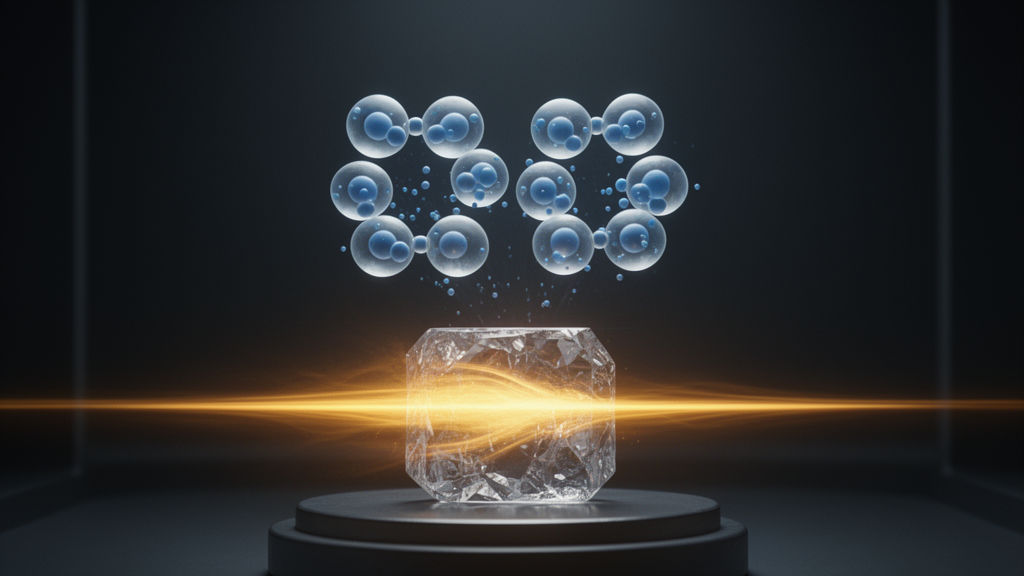
The experimental strategy was elegantly direct. To better understand the role of the pseudogap, the researchers temporarily suppressed superconductivity using a pulse of light and then observed how the material responded in real time. This pump-and-probe approach effectively switched the superconducting state off for a fleeting moment and recorded what the electrons in the material did next, giving the scientists a dynamic view of a process that had previously been studied only through static, equilibrium measurements.
The experiment allowed the team to observe, for the first time, a light-induced transient pseudogap and to access electronic states that had previously remained hidden from conventional techniques. “Thanks to the unique capabilities of the TR-ARPES system at the ALLS laboratory at INRS, we were able to directly observe what happens when superconductivity temporarily disappears and then re-emerges. It is a bit like uncovering missing frames from a film that scientists have been trying to piece together for decades,” says Dario Armanno, a PhD student at INRS and first author of the study. The analogy is apt: where earlier experiments could capture only the beginning and end of the story, the ultrafast measurements filled in the intermediate frames.
The results show a striking seesaw behavior. When superconductivity is suppressed by the light pulse, the pseudogap emerges in its place. As superconductivity returns, the pseudogap fades away. This inverse relationship, observed directly in the same material on ultrafast timescales, suggests that the two phenomena compete rather than cooperate, challenging the long-standing hypothesis that the pseudogap acts as a precursor to superconductivity. In other words, the pseudogap does not appear to be a stepping stone on the way to the superconducting state, but rather a rival state that yields only when superconductivity is present and reasserts itself the moment superconductivity is removed.
The theoretical side of the collaboration reinforced the significance of the observation. “The pseudogap and superconducting states in cuprates are among the most complex phenomena to reproduce theoretically. Our study reveals that they compete with one another and provides new insight into their behavior when both are excited simultaneously,” said Olivier Gingras, Associate Research Scientist at the Flatiron Institute’s Center for Computational Quantum Physics. Capturing both states in a single theoretical framework has been a formidable challenge, and the experimental data now provide a concrete benchmark for what happens when the two are forced to coexist, even briefly, in a driven material.
The work, published under the title “Light-induced asymmetric pseudogap below the critical temperature in cuprates” in Nature Physics, remains fundamental research, but the discovery represents an important step forward in understanding a phenomenon that could play a key role in the development of next-generation superconductors and, ultimately, more energy-efficient technologies. “This research is essential to advancing the quantum technologies of the future. It contributes to the training of highly qualified personnel in a field that is critical to Canada’s technological sovereignty and to the implementation of its National Quantum Strategy,” says François Légaré, Director of the INRS Énergie Matériaux Télécommunications Research Centre. The work at ALLS was supported by the Canada Foundation for Innovation’s Major Science Initiatives Fund, with additional support from the Alfred P. Sloan Foundation, the Natural Sciences and Engineering Research Council of Canada, the Canada Research Chairs Program, the Fonds de recherche du Québec – Nature et technologies, the Québec Ministry of Economy, Innovation and Energy, PRIMA Québec, and the Gordon and Betty Moore Foundation’s EPiQS Initiative. For now, the immediate payoff is conceptual: physicists watching the missing frames of the cuprate film finally saw the pseudogap step aside, and step back in, in perfect opposition to superconductivity.
Subject of Research: Competition between the pseudogap and superconducting states in cuprate superconductors observed with ultrafast photoemission spectroscopy
Article Title: A new light on one of modern physics’ greatest mysteries
Article References: A new light on one of modern physics’ greatest mysteries. Original publication (Bibliographic details unavailable.)
Image Credits: AI Generated
DOI: Not provided
Keywords: superconductivity, cuprates, pseudogap, quantum materials, TR-ARPES, ultrafast spectroscopy, condensed matter physics, Nature Physics, INRS, light-induced transient states, high-temperature superconductors, light
News Source: Katie Riggs. (October 27, 2026). Light pulse reveals hidden rivalry behind high-temperature superconductivity. Scienmag.