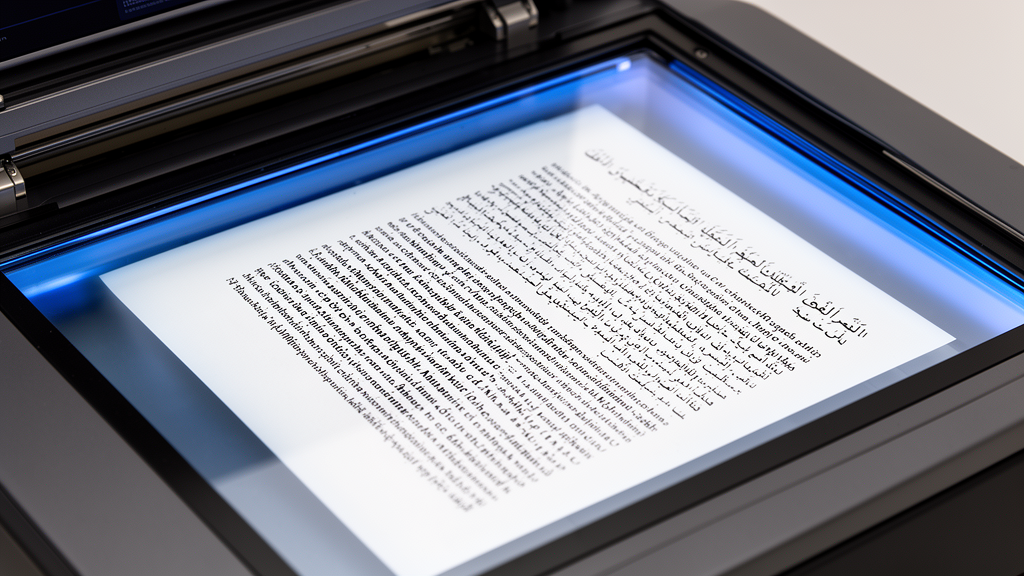
Digital libraries are increasingly relying on artificial intelligence to transform scanned documents into searchable text, yet a significant gap remains in the accurate recognition of complex scripts such as Arabic and Urdu. A new study published in the journal Discover Artificial Intelligence presents a system-engineering framework that integrates classical image preprocessing with deep learning engines to address this challenge. The research, led by Yijun Chen and colleagues, does not introduce a new neural network architecture but rather focuses on the structured integration of existing components into a reproducible multilingual pipeline. By combining adaptive signal processing with language-sensitive post-processing, the framework aims to enhance the reliability of Optical Character Recognition (OCR) for diverse linguistic collections, thereby supporting more equitable access to global knowledge assets.
The core of the proposed system is a preprocessing-enhanced deep OCR pipeline that utilizes two pre-trained deep learning engines, PaddleOCR and MMOCR, operating in inference mode. Before these engines process the text, the input images undergo a series of classical signal processing operations, including Otsu binarization, Hough-based skew correction, and morphological filtering. These steps are designed to standardize input quality by removing noise and correcting geometric distortions without relying on learned machine learning models for the preprocessing stage. This approach ensures that the subsequent recognition stages receive optimized images, which is particularly critical for documents with varying scan qualities and historical degradation patterns common in archival materials.
Following recognition, the pipeline employs a language-sensitive post-processing module that serves as the primary driver of accuracy improvements. This module applies a sequence of correction steps, including text normalization, spelling correction using KenLM n-gram language models, token filtering, and context-based validation. For scripts like Arabic and Urdu, the system uses finite-state transducers to enforce ligature coherence, while for Hindi, it verifies the integrity of Devanagari matras. The post-processing rules are manually designed based on established script grammars and validated by native speakers, allowing the system to correct specific error patterns that generic deep learning models often miss. This linguistic guidance is essential for handling the contextual character shapes and bidirectional writing patterns that characterize cursive scripts.
The framework was evaluated on two public benchmark datasets: the ICDAR 2019 MLT19 scene-text dataset, which covers English, Hindi, Chinese, and Arabic, and the synthetic printed Urdu dataset MMU-OCR-21. Together, these datasets provide a comprehensive test across five languages and four distinct script families. The evaluation revealed that script complexity is a major determinant of OCR error, with English achieving the lowest error rates and Urdu and Arabic showing the highest baseline errors due to their cursive nature and context-dependent character forms. The results indicate that while modern deep learning engines significantly outperform traditional systems like Tesseract, they still struggle with the nuanced structural requirements of low-resource and complex scripts without additional linguistic refinement.
Quantitative analysis shows that the post-processing module substantially reduced recognition errors across all tested languages. The average Character Error Rate (CER) decreased from 0.188 to 0.107, representing a mean relative reduction of 42.6%, while the average Word Error Rate (WER) dropped from 0.272 to 0.156. These improvements were statistically significant for all five languages, with paired t-tests yielding p-values less than 0.001. The study also conducted an ablation analysis to isolate the contribution of each component, finding that dual-engine fusion alone did not reduce average CER relative to the stronger single engine, MMOCR. Consequently, the measured accuracy gains are attributed primarily to the combination of adaptive preprocessing and the language-sensitive post-processing module, rather than the fusion of the two recognition engines.
To bridge the gap between OCR performance and collection management, the researchers introduced the Language Coverage Index (LCI), a metric that quantifies the proportion of languages in a collection whose OCR output meets a defined accuracy threshold. With a working threshold of 0.15 for CER, the LCI rose from 40% to 100% on the benchmark test partition after applying the proposed pipeline. This metric provides libraries with a practical tool to identify which languages require further OCR improvement before reliable downstream tasks, such as full-text search indexing and metadata generation, can be performed. The study emphasizes that while the LCI measures OCR-enabled language coverage, it does not directly measure the actual diversity or equity of the library’s physical holdings, which depend on acquisition policies and cataloguing practices.
A supplementary evaluation on 150 digitized library pages from the Internet Archive provided a more direct, though limited, assessment of the framework’s applicability to real-world archival materials. In this test, the system achieved a consistent but smaller CER reduction of 37.3%, with an LCI of 60%. Notably, Arabic and Urdu remained above the accuracy threshold in this real-world subset, highlighting the persistent challenges posed by historical typefaces, multi-column layouts, and degraded ink. This finding underscores the domain gap between synthetic or scene-text benchmarks and genuine digitized library collections, indicating that while the framework shows directional promise, it is not yet fully deployment-ready for all types of archival documents without further domain-specific optimization.
The study acknowledges several limitations, including the reliance on scene-text and synthetic datasets for primary evaluation, which may not fully replicate the complexity of institutional library collections. The researchers note that the KenLM language models used for spelling correction are corpus-dependent and would require retraining for specialized or historical text corpora. Additionally, the processing speed of the pipeline, measured at approximately 3.2 seconds per 640×640 image on an NVIDIA A100 GPU, may present scalability challenges for large-scale real-time digitization workflows in resource-constrained environments. Future work will focus on large-scale validation on genuine digitized collections, such as those from the HathiTrust Digital Library, and on integrating transformer-based OCR architectures directly into the fusion pipeline to further enhance recognition accuracy.
Ultimately, this research highlights the importance of system-level engineering in advancing multilingual OCR for digital libraries. By formally linking OCR output quality to collection diversity analytics, the framework offers a pathway for libraries to monitor and improve the accessibility of their multilingual holdings. The integration of linguistically informed post-processing with robust deep learning engines provides a reproducible solution for the challenges of digitizing complex scripts. As digital libraries continue to expand their global collections, such tools will be essential for ensuring that non-Latin-script materials are preserved, indexed, and made available to researchers and the public with high fidelity and equitable access.
Subject of Research: AI‑based multilingual OCR and OCR-enabled collection diversity analytics in libraries
Article Title: AI‑based multilingual OCR and OCR-enabled collection diversity analytics in libraries
Article References: Chen, Y., Wu, L., Zhang, C., Wang, W., & Mo, X. (2026). AI‑based multilingual OCR and OCR-enabled collection diversity analytics in libraries. Discover Artificial Intelligence, 6(1), Article 1591. https://doi.org/10.1007/s44163-026-02471-x
Image Credits: AI Generated
DOI: 10.1007/s44163-026-02471-x
Keywords: based, multilingual, OCR-enabled, collection, diversity, analytics, libraries, scientific research
News Source: Denise Maddox. (October 27, 2026). AI Pipeline Boosts Multilingual Library OCR Accuracy. Scienmag.