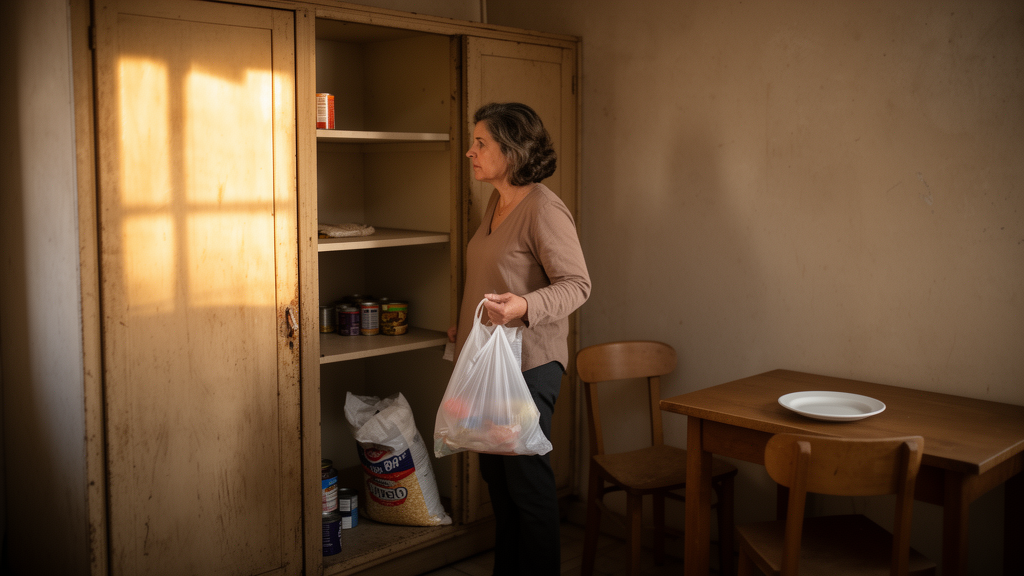
A cross-sectional study published in BMC Public Health reports that 92.1% of women shellfishers across three estuarine sites in Ghana were food insecure. The research, conducted between June and July 2021, surveyed 504 women aged 15 to 49 years who were engaged in oyster harvesting, processing, and retailing. The study specifically examined the prevalence of food insecurity and the factors associated with it within this coastal population.
The findings indicate that the majority of participants experienced severe food insecurity, with 78.6% falling into this category, while 11.1% reported moderate food insecurity and 2.4% reported mild food insecurity. The study utilized the Household Food Insecurity Access Scale to measure food insecurity among the participants. The researchers compared prevalence rates across the three selected sites: the Densu, Narkwa Lagoon, and Whin estuaries.
Using Pearson’s chi-square test, the analysis found no statistically significant difference in the overall prevalence of food insecurity across these locations. The specific prevalence rates were 93.5% at the Densu site, 94.0% at the Narkwa Lagoon site, and 87.7% at the Whin site, with a p-value of 0.081 for the comparison. To identify specific factors associated with food insecurity, the researchers performed binary logistic regression on an analytic sample of 501 women.
After multivariable adjustment, residence at the Densu site was associated with a higher likelihood of food insecurity compared to residence at the Whin site. The adjusted odds ratio for this association was 2.98, with a 95% confidence interval ranging from 1.30 to 7.05 and a p-value of 0.011. This suggests that women living at the Densu site had nearly three times the odds of being food insecure compared to those at the Whin site, after controlling for other variables.
Marital status was also identified as a significant factor in the multivariable model. Being unmarried was associated with an increased likelihood of food insecurity, with an adjusted odds ratio of 2.46. The 95% confidence interval for this association was 1.07 to 6.15, and the p-value was 0.043.
These results indicate that unmarried women shellfishers in the study population had higher odds of experiencing food insecurity compared to their married counterparts, independent of other measured factors. The study also examined the relationship between household asset ownership and food insecurity. A higher household asset score was inversely associated with food insecurity, meaning that women with more household assets had lower odds of being food insecure.
The adjusted odds ratio was 0.76, with a 95% confidence interval of 0.59 to 0.98 and a p-value of 0.035. This inverse association suggests that greater ownership of household assets was linked to a reduced likelihood of food insecurity in this population. In contrast, the analysis found no significant association between oyster consumption and food insecurity.
The adjusted odds ratio for oyster consumption was 0.95, with a 95% confidence interval ranging from 0.33 to 3.48 and a p-value of 0.935. This lack of statistical significance indicates that the frequency or extent of oyster consumption by the women shellfishers was not a distinguishing factor for their food security status in this cross-sectional analysis. The authors note that the study design was cross-sectional and the sites were purposively selected, which limits the ability to establish causal relationships.
The findings describe associations between specific factors and food insecurity rather than demonstrating causal or interventional effects. The study highlights that food insecurity is highly prevalent among women shellfishers in these coastal areas of Ghana, with specific associations linked to site location, marital status, and household asset levels. The research provides data that may inform the design and evaluation of ecosystem-sensitive support for coastal livelihoods.
By identifying the specific factors associated with food insecurity, the study offers a baseline for understanding the challenges faced by women in this sector. The study contributes to the understanding of food security status among women who depend on degraded estuarine ecosystems and limited livelihood alternatives. The compounding risks from environmental degradation, seasonal harvesting restrictions, and economic precarity are contextual factors mentioned in the study's background.
The results provide a detailed snapshot of the food insecurity landscape among women shellfishers in the selected Ghanaian estuaries.
Subject of Research: Prevalence and factors associated with food insecurity among women shellfishers in Ghana
Article Title: Prevalence and factors associated with food insecurity among women shellfishers across three selected estuarine sites in Ghana
Article References: Taabia, F. Z., Adu-Afarwuah, S., Oaks, B. M., Kyei-Arthur, F., & Ohemeng, A. N. (2026). Prevalence and factors associated with food insecurity among women shellfishers across three selected estuarine sites in Ghana. BMC Public Health. https://doi.org/10.1186/s12889-026-29695-x
Image Credits: AI Generated
DOI: 10.1186/s12889-026-29695-x
Keywords: food insecurity, women shellfishers, Ghana, estuarine sites, cross-sectional study, BMC Public Health, oyster harvesting, coastal livelihoods, household assets, marital status, Prevalence, factors
News Source: Ophelia Keating. (October 27, 2026). Study Links Food Insecurity to Site and Marital Status. Scienmag.