Some of the most medicinally valuable molecules in nature and in the pharmacy share a deceptively simple structural motif: a β-amino alcohol, in which an amino group and a hydroxyl group are attached to two neighboring carbon atoms. This arrangement appears in compounds as diverse as sphingosine, a lipid central to cell signaling, and ephedrine, a long-known bronchodilator. Yet the biological behavior of such molecules depends exquisitely on their three-dimensional geometry. Two compounds can share the exact same chemical formula and connectivity while behaving in profoundly different ways inside a living organism, simply because their substituents point in different directions in space. For chemists tasked with making these building blocks in the laboratory, that means selectivity is not a luxury but a requirement, and one particular geometry has stubbornly resisted reliable catalytic synthesis.
The challenge comes down to a distinction that sounds minor but matters enormously. In the syn form of a β-amino alcohol, the amino and hydroxyl groups sit on the same side of the carbon chain; in the anti form, they point to opposite sides. Both forms are chemically valid, but enzymes and drug targets can distinguish between them with ruthless precision, so a synthesis that delivers an uncontrolled mixture of the two is of limited use. The workhorse transformation for building these frameworks is the Henry reaction, a well-studied carbon–carbon bond-forming process that couples an aldehyde with a nitroalkane to produce a β-nitro alcohol. Because the nitro group can later be reduced to an amino group using well-established chemistry, the Henry reaction is a natural gateway to β-amino alcohols. The problem is that most catalytic versions of the reaction favor the syn product, leaving the anti form frustratingly out of reach.
That long-standing gap is now the target of a new study from Chiba University in Japan. A research team led by Professor Takayoshi Arai of the Graduate School of Science, working with co-authors Dr. Soushi Tsurusaki and Dr. Hidesato Iwama, has designed a chiral nickel catalyst that steers the Henry reaction decisively toward the anti product. The study, published online in the journal Angewandte Chemie International Edition on September 24, 2026, describes a catalyst architecture that does something conceptually elegant: it recruits several different types of molecular interactions at once, marshaling them in a single coordinated system to control how two reacting molecules find each other.
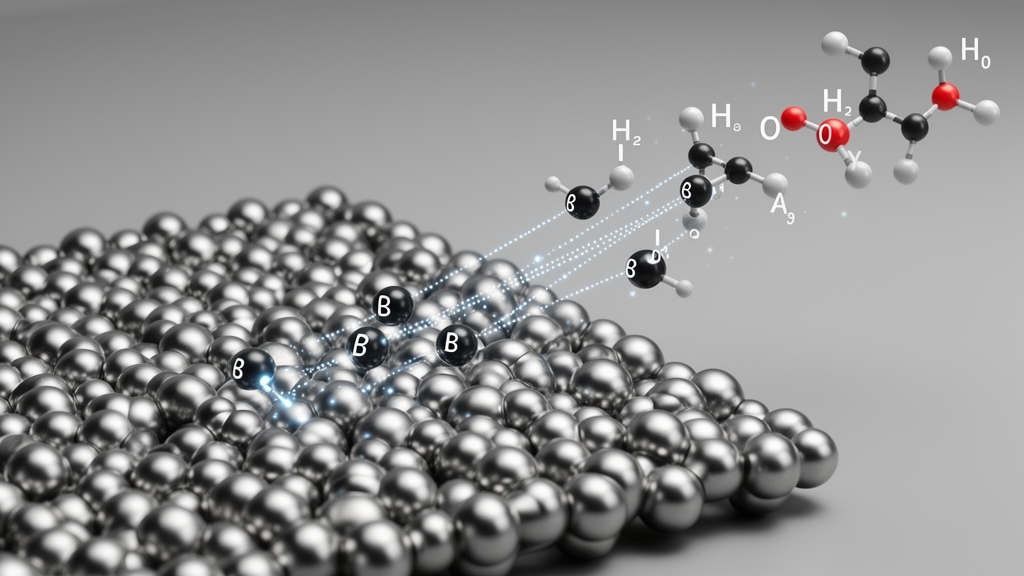
The catalyst, designated o-X-F4-PyBidine-Ni(OTf)2, where X is either bromine or iodine, is built around a nickel complex containing a molecular scaffold called PyBidine. The key innovation lies in a deliberate chemical modification: the researchers installed a bromine or iodine atom at a specific position on the ligand, creating a site capable of forming a halogen bond. Halogen bonding is a non-covalent interaction that arises when a region of positive electrostatic potential, known as a σ-hole, forms on the outer surface of a halogen atom. That positively charged patch can attract electron-rich functional groups on a nearby molecule, effectively gripping the aldehyde substrate and locking it into a defined orientation before the reaction takes place.
But halogen bonding is only one player in what is essentially a molecular choreography. Alongside the halogen bond, conventional hydrogen bonding, the familiar attractive force between a hydrogen atom and an electronegative atom, helps hold the aldehyde in place and simultaneously activates it toward reaction. Meanwhile, the nickel center, working in concert with a base called triethylamine, activates the nitroalkane, priming it to form the new carbon–carbon bond. The result of this multi-pronged arrangement is that the two reacting partners are held in a stretched-out, precisely aligned geometry that channels the reaction toward the anti product rather than the syn product that conventional catalysts tend to deliver.
The performance numbers are striking. Using alcohol as the solvent, the catalyst achieved up to 96:4 selectivity for the anti form over the syn form across many combinations of reactants, meaning that for every hundred product molecules, as many as ninety-six carried the desired anti geometry. Equally impressive is the enantioselectivity: the reaction delivered up to 99 percent enantiomeric excess, which means nearly every product molecule was the same one of the two possible mirror-image versions of the anti form. For a field where controlling both relative and absolute stereochemistry simultaneously is the central difficulty, those figures represent the kind of result that can change how chemists approach an entire class of targets.
The substrate scope adds to the practical appeal. The method proved compatible with a wide range of aromatic aldehydes, including examples bearing heterocyclic rings, which are common features in pharmaceutical compounds and often complicate catalytic reactions. Several kinds of nitroalkanes also worked as coupling partners. That breadth matters because a synthetic method that only functions with a narrow set of substrates rarely escapes the laboratory; one that tolerates diverse aromatic and heteroaromatic aldehydes has a realistic path toward applications in medicinal chemistry, where β-amino alcohol motifs recur constantly. As Professor Arai put it, the coordinated functioning of diverse interactions on a single catalyst represents an advance in state-of-the-art catalytic chemistry.
Curious about why the system works so well, the team turned to computer simulations to dissect the mechanism at a finer level of detail. These calculations revealed that the most favorable reaction pathway involves a halogen bond between the catalyst’s bromine atom and the aromatic ring of the aldehyde, working in tandem with hydrogen bonding and interactions between the nickel center and the nitro group of the nitroalkane. In other words, the selectivity is not the product of any single interaction but of several weak forces acting simultaneously, each contributing to the precise positioning of the reacting molecules. Interestingly, the bromine version of the catalyst was often more active than the iodine variant, possibly because bromine’s smaller size leaves more room for the substrate molecules to approach the reactive site.
Beyond the immediate synthetic payoff, the study carries a broader conceptual message for chemists who design catalysts. Halogen bonding, though increasingly recognized in recent years, has rarely been deployed alongside hydrogen bonding and metal coordination within a single catalytic system, particularly in protic solvents like alcohols, where such delicate interactions are easily disrupted. Demonstrating that these forces can cooperate on a metal catalyst under practical conditions opens a design space that catalyst developers have barely explored. Professor Arai noted that the higher-ordered cooperation of halogen bonds and hydrogen bonds on a metal catalyst in protic solvents is fascinating for the development of artificial metalloenzymes and halogen-bond-driven medicines, pointing toward catalytic systems that mimic the sophisticated multi-interaction control that enzymes achieve naturally.
The longer-term implications extend in several directions at once. For synthetic chemists, the work provides a dependable route to anti-β-amino alcohols, since the nitro group in the products can be readily converted into an amino group by well-established reduction chemistry, completing the gateway from the Henry reaction to the desired building blocks. For catalyst designers, it offers a template for engineering selectivity not through brute-force steric bulk but through the cooperative action of multiple weak, directional interactions. And for the emerging field of artificial metalloenzymes, synthetic catalysts that aspire to enzyme-like precision, it demonstrates that nature’s strategy of combining many subtle molecular forces can be reproduced in a small, human-made framework. The research was supported by the IAAR Research Support Program at Chiba University and by JSPS KAKENHI grant number 26K01496, and the authors declare no conflicts of interest. What began as an attempt to solve a stubborn stereochemical problem may end up reshaping how chemists think about controlling reactions altogether, one weak interaction at a time.
Subject of Research: Halogen-bond-assisted anti-selective Henry reaction using a chiral nickel catalyst for β-amino alcohol synthesis
Article Title: Innovative nickel catalyst unlocks hard-to-make β-amino alcohols
Article References: Innovative nickel catalyst unlocks hard-to-make β-amino alcohols. (n.d.). Original publication
Image Credits: AI Generated
DOI: Not provided
Keywords: nickel catalyst, β-amino alcohols, Henry reaction, halogen bonding, hydrogen bonding, enantioselective synthesis, organocatalysis, stereochemistry, Angewandte Chemie, Chiba University, artificial metalloenzymes, pharmaceutical building blocks
News Source: Bethany Barker. (October 8, 2026). Nickel Catalyst Uses Halogen Bonds to Deliver Elusive Anti-β-Amino Alcohols. Scienmag.