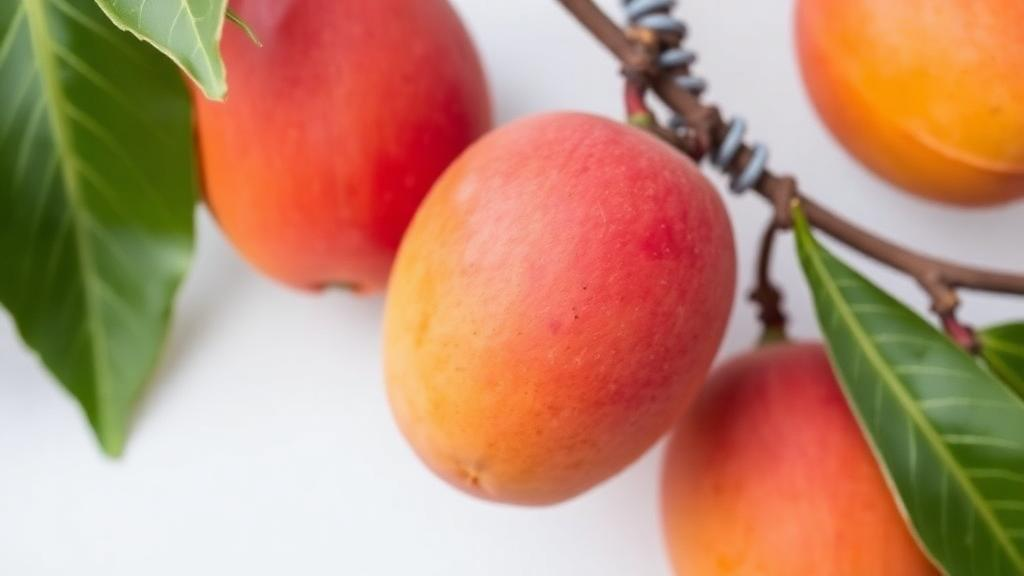
Mango growers across the tropics have long operated on a simple assumption: the more fertilizer you apply, the better your harvest. A new field study from northern India challenges that logic at its foundation, showing that slashing the recommended fertilizer dose by as much as half—when paired with foliar micronutrient sprays—can simultaneously improve soil biology, boost nutrient availability, and produce measurably sweeter, more nutritious fruit. The research, conducted on the prized Dashehari mango variety under medium-density planting, was published in BMC Plant Biology and offers one of the most detailed portraits yet of how integrated nutrient management reshapes the underground ecosystem of a tropical orchard.
The experiment took place during the 2023–2024 growing season at the Horticulture Research Centre in Pantnagar, Uttarakhand, a region renowned for producing some of India’s finest mangoes. Researchers from Govind Ballabh Pant University of Agriculture and Technology, working with collaborators in India, China, and Saudi Arabia, set up a randomized block design with three replications to test ten distinct fertilization strategies. These ranged from the full 100 percent recommended fertilizer dose down to just 25 percent, each either applied alone or combined with soil-applied micronutrients, one foliar spray, or two foliar sprays of micronutrients. The goal was to determine whether the standard full-dose prescription is actually the best recipe for both the soil and the fruit.
What makes this study technically significant is the breadth of measurements taken. The team did not simply weigh fruit and call it a day. They assessed soil chemical properties, enumerated microbial populations, measured the activities of key soil enzymes, quantified the density of arbuscular mycorrhizal fungi spores, and tracked nutrient levels in both leaves and fruit. On the quality side, they analyzed total soluble solids, individual sugars, ascorbic acid, carotenoids, flavonoids, total phenols, antioxidant activity, and shelf life. This comprehensive dataset allowed them to move beyond simple treatment comparisons and probe the actual mechanisms connecting soil health to fruit chemistry.
The standout treatments were T8, which combined 75 percent of the recommended fertilizer dose with two foliar micronutrient sprays, and T9, which paired just 50 percent of the recommended dose with the same double spray regimen. Both consistently outperformed the conventional 100 percent fertilizer treatment across nearly every metric the researchers tracked. In other words, cutting synthetic fertilizer inputs by a quarter to a half did not starve the trees—it appeared to unlock a more productive collaboration between the orchard’s soil microbes and the plants themselves.
The soil biology data tell a compelling story. Under the reduced-dose-plus-spray treatments, researchers recorded higher spore densities of arbuscular mycorrhizal fungi, the symbiotic fungi that colonize plant roots and extend their nutrient-gathering reach deep into the soil matrix. Bacterial populations also increased, as did the activities of soil enzymes, which serve as sensitive indicators of microbial community function and nutrient cycling capacity. Reduced fertilizer application likely eased the osmotic and chemical stress that high synthetic inputs can impose on soil organisms, allowing these biological partners to flourish and, in turn, supply the trees with a steadier, more diversified nutrient stream.
Those underground gains translated directly into fruit quality. The best treatments pushed total soluble solids to 20.78 degrees Brix, a measure of sugar concentration that mango buyers and processors watch closely. Alongside the elevated sweetness, the fruit accumulated higher levels of sugars, ascorbic acid, carotenoids, flavonoids, and total phenols, and showed greater antioxidant activity and longer shelf life. For consumers, that means a sweeter, more aromatic mango with a richer payload of health-promoting compounds. For growers and supply chains, extended shelf life carries real economic weight, reducing post-harvest losses in a crop that is notoriously perishable.
The study’s multivariate analyses added statistical muscle to these observations. Principal component analysis and redundancy analysis revealed clear positive associations among soil biological properties, nutrient availability, plant nutrient status, and fruit quality, while correlation and regression analyses traced the same pattern across individual variables. This coherence matters because it suggests the improvements were not isolated flukes but part of a linked chain: healthier soil biology supports better nutrient availability, which lifts the nutritional status of the leaves, which ultimately feeds the biochemical machinery that builds flavor, color, and antioxidants in the developing fruit.
Not every result was uniform, and the authors are careful to note the nuances. Soil organic carbon and several micronutrient responses varied across treatments, with some of the highest values appearing under a different treatment, T5, rather than the two star performers. Soil pH shifts, while statistically significant, were relatively small in magnitude. These details underscore a broader point about orchard management: soil systems are complex, and responses to nutrient inputs are rarely linear. What the data do support is a clear conclusion that within the conditions of this study, applying 50 to 75 percent of the recommended fertilizer dose with two foliar micronutrient sprays improved soil biological functioning, nutrient availability, plant nutrient status, and fruit quality compared with the conventional full dose.
The practical implications extend well beyond a single mango orchard in Uttarakhand. Fertilizer represents one of the largest recurring costs in fruit production, and its overuse carries well-documented environmental consequences, including nutrient runoff, groundwater contamination, and greenhouse gas emissions. If half the recommended dose can deliver superior fruit while rebuilding the soil’s biological engine, the economics and the ecology of mango farming both shift favorably. The findings also align with a growing global interest in integrated nutrient management, an approach that blends reduced synthetic inputs with organic amendments and biological interventions to sustain productivity over the long term.
There are, of course, caveats to keep in mind. The study covers one season, one variety, and one planting system, and the authors note that their findings apply specifically to medium-density tropical mango production under the conditions they tested. The work is part of a broader research framework, with companion preprints examining nutrient dynamics, yield responses, and economic modeling of the same experimental field. Still, the central message is striking enough to resonate far beyond the research community: sometimes the path to better fruit runs not through more inputs, but through letting the soil’s own living machinery do more of the work. For the world’s mango producers, that is a recipe worth testing in their own orchards.
Subject of Research: Integrated nutrient management effects on soil biology and fruit quality in mango orchards
Article Title: Integrated nutrient management, soil biological functions, and their linkages with fruit quality in mango (Mangifera indica L.) under medium-density planting
Article References: Kuldeep, Singh, A. K., Singh, O., Shivran, J. S., Mani, G., Divya, Gaurav, K., Gangola, S., Kumar, P., Manzoor, M. A., Khan, F., & Perveen, K. (2026). Integrated nutrient management, soil biological functions, and their linkages with fruit quality in mango (Mangifera indica L.) under medium-density planting. BMC Plant Biology. https://doi.org/10.1186/s12870-026-09991-9
Image Credits: AI Generated
DOI: 10.1186/s12870-026-09991-9
Keywords: integrated nutrient management, mango, Dashehari, soil microbiology, arbuscular mycorrhizal fungi, soil enzymes, foliar micronutrients, fruit quality, fertilizer reduction, antioxidants, sustainable agriculture, orchard management
News Source: Alan Morgan. (October 7, 2026). Cutting Fertilizer by Half Could Make Mangoes Sweeter, Study Finds. Scienmag.