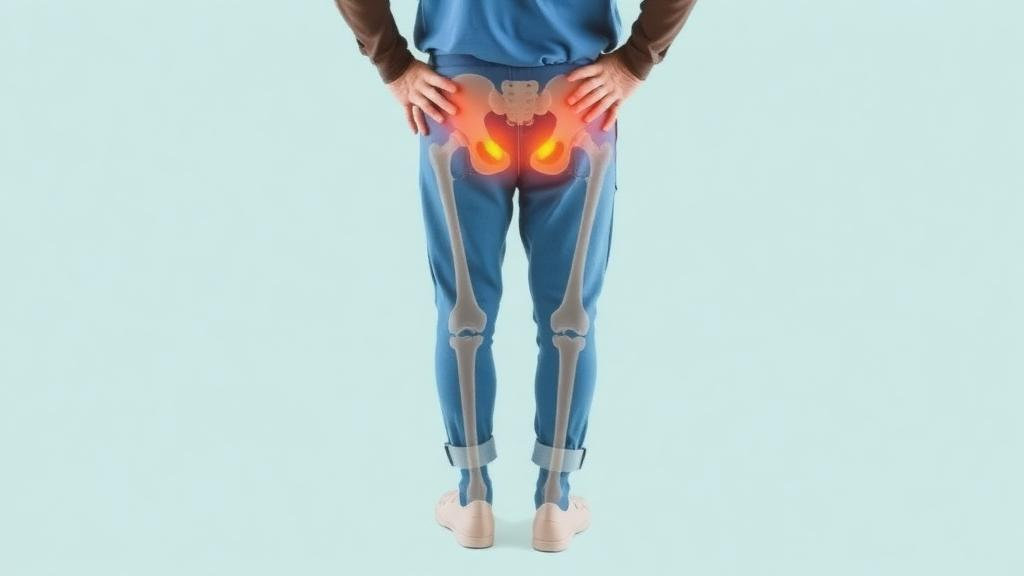
When an older man breaks a hip, the fracture itself is only the beginning of the story. A new study from Finland suggests that two symptoms that are rarely discussed in the emergency department — involuntary loss of urine and involuntary loss of stool — may hold crucial clues about who will survive the year that follows. The research, published in European Geriatric Medicine, followed 644 men aged 65 and older who sustained their first hip fracture at Seinäjoki Central Hospital between 2007 and 2019, and it found that fecal incontinence before the fracture independently predicted death within twelve months, while urinary incontinence tracked closely with cognitive and functional decline.
The numbers are striking. Before their fractures, 45 percent of the men already had urinary incontinence and 12 percent had fecal incontinence, and nearly all of the men with fecal incontinence — 59 out of 66 — also leaked urine. One year after the fracture, 34 percent of the cohort had died. Mean survival time declined in a stepwise fashion with worsening continence: continent men survived a mean of 312 days, men with urinary incontinence alone 269 days, and men with fecal incontinence, with or without co-existing urinary incontinence, only 217 days. The pattern held even before any statistical adjustment, hinting that continence status captures something fundamental about an older patient’s physiological reserve.
To understand whether incontinence was merely a marker or a genuine prognostic factor, the researchers turned to Cox proportional hazards regression, the standard statistical tool for modeling time-to-event outcomes. In models adjusted for age alone, both urinary and fecal incontinence were associated with one-year mortality. But when the full multivariable model was fitted — incorporating age, polypharmacy, mobility, nutritional status, comorbidity as measured by the American Society of Anesthesiologists risk score, living arrangements, and the timing of urinary catheter removal — a clear divergence emerged. Fecal incontinence retained its independent predictive power, carrying a hazard ratio of 1.72, meaning men with fecal incontinence faced roughly a 72 percent higher risk of death within the year compared to continent men with otherwise similar characteristics. Urinary incontinence, by contrast, lost its statistical significance once other factors were accounted for.
This dissociation between the two types of incontinence is the study’s most consequential finding, and it aligns with a growing body of evidence. A large community-based cohort study by Jamieson and colleagues previously showed that among older adults with complex needs, fecal incontinence — but not urinary incontinence — independently predicted mortality. The Finnish team’s results extend that pattern to the specific and notoriously high-risk population of men with hip fracture, a group that already suffers disproportionately poor outcomes compared with women: men tend to fracture at a younger age but carry more comorbidity, experience more post-operative complications, and die more frequently during the first post-fracture year.
Why would fecal incontinence, in particular, signal impending death? The authors point to the concept of accelerated physiological decline. Prior longitudinal research has shown that older adults with fecal incontinence experience faster deterioration in physical performance over four years of follow-up than their continent peers, and fecal incontinence has been established as an independent risk factor for falls in frail individuals. A recent nationally representative analysis added a molecular dimension to the picture, finding that phenotypic age acceleration — an estimate of biological aging derived from an array of clinical biomarkers — partially mediated the association between fecal incontinence and mortality. In other words, losing bowel control may be an outward manifestation of a body aging faster than its chronological years, a hypothesis the study’s authors treat as the most plausible underlying driver of the mortality link.
Urinary incontinence tells a different story. Although it was highly prevalent and associated with shorter survival in crude analyses, its apparent prognostic signal dissolved after adjustment for comorbidity and frailty. The researchers interpret this to mean that urinary incontinence primarily reflects the underlying disability and frailty of the affected individual rather than conferring independent risk on its own. This interpretation is consistent with the team’s earlier work in older women with hip fracture, in which neither urinary incontinence nor double incontinence independently predicted mortality, despite a similar stepwise worsening of survival with worsening continence status. The other independent predictors of death in the multivariable model — being 80 or older, taking ten or more daily medications, non-independent mobility, poor nutritional status as measured by the Mini-Nutritional Assessment Short Form, and delayed removal of the urinary catheter — paint a coherent portrait of the vulnerable, depleted patient.
The catheter finding deserves particular attention because it is one of the few modifiable factors in the list. Men whose urinary catheters were removed after hospital discharge rather than during the initial admission had a hazard ratio of 1.50 for one-year mortality. Prolonged catheterization is a care-related factor, and current guidelines recommend minimizing unnecessary catheter use. Yet the authors caution against a simple causal reading: delayed catheter removal may also reflect greater frailty and clinical complexity, meaning the catheter could be a consequence of poor health rather than a cause of death. Disentangling the two would require prospective interventional studies testing whether optimized catheter management actually improves outcomes — a research gap the study explicitly identifies.
The second half of the analysis shifted from mortality to function. Of the original cohort, 331 men survived long enough to attend a comprehensive geriatric assessment at the hospital’s outpatient clinic a median of six months after the fracture, performed by a multidisciplinary team including a geriatric nurse, a physiotherapist, and a geriatrician. At that visit, 47 percent had urinary incontinence. Binary logistic regression revealed that two factors tripled the odds of urinary incontinence: a known diagnosis of cognitive disorder (odds ratio 3.22) and non-independent mobility (odds ratio 3.07). Within the assessment itself, abnormal scores on the mini mental state examination, the Lawton and Brody instrumental activities of daily living scale, the Elderly Mobility Scale, and the Timed Up and Go test each remained independently associated with urinary incontinence after multivariable adjustment.
These associations underscore the syndromic nature of incontinence in geriatric medicine. Cognitive impairment and incontinence are closely intertwined, with incontinence rates substantially higher among cognitively impaired individuals, and cognitive impairment is itself linked to physical frailty, falls, and elevated hip fracture risk. Among hip fracture patients, known or newly identified cognitive impairment has been reported in up to half of cases, which may partly explain the high incontinence rates observed in this population. Clinically, cognitively impaired hip fracture patients tend to reach the emergency department later and in worse condition, and they face increased risks of complications and death. For men — who already carry a disproportionately heavy burden of mortality after hip fracture — the coexistence of cognitive impairment and urinary incontinence may flag a particularly high-risk subgroup deserving intensified follow-up.
The study has limitations that the authors acknowledge candidly. Incontinence was assessed with brief structured questions rather than validated continence questionnaires, chosen deliberately to maximize response rates in a population with substantial cognitive impairment, but this meant the severity, frequency, and subtype of incontinence went unrecorded. No data were available on urological conditions such as benign prostatic enlargement or prior prostate surgery, leaving room for residual confounding. The retrospective design, the decade-long data collection window, and the high mortality itself — which removed the frailest patients before the outpatient assessment — likely led to underestimates of incontinence prevalence at follow-up and prevented reliable modeling of fecal incontinence as an outcome. Still, the cohort’s inclusiveness, with no losses to mortality follow-up and nearly a third of participants having a cognitive disorder, strengthens its real-world relevance. The practical message is straightforward: routine continence assessment covering both bladder and bowel should be part of every comprehensive geriatric evaluation after hip fracture in men, because a simple question about control may reveal which patients are quietly facing the gravest risks.
Subject of Research: Prevalence and prognostic significance of urinary and fecal incontinence in older men after hip fracture
Article Title: Fecal and urinary incontinence in older men with hip fracture: a geriatric syndrome with prognostic significance
Article References: Hellman-Bronstein, A. T., Luukkaala, T. H., Ala-Nissilä, S. S., & Nuotio, M. S. (2026). Fecal and urinary incontinence in older men with hip fracture: a geriatric syndrome with prognostic significance. European Geriatric Medicine. https://doi.org/10.1007/s41999-026-01624-6
Image Credits: AI Generated
DOI: 10.1007/s41999-026-01624-6
Keywords: hip fracture, fecal incontinence, urinary incontinence, older men, geriatric syndrome, mortality, comprehensive geriatric assessment, cognitive impairment, frailty, polypharmacy, urinary catheter, Finland
News Source: Beatrice Stafford. (October 7, 2026). Incontinence After Hip Fracture in Older Men Predicts Death Within a Year, Study Finds. Scienmag.