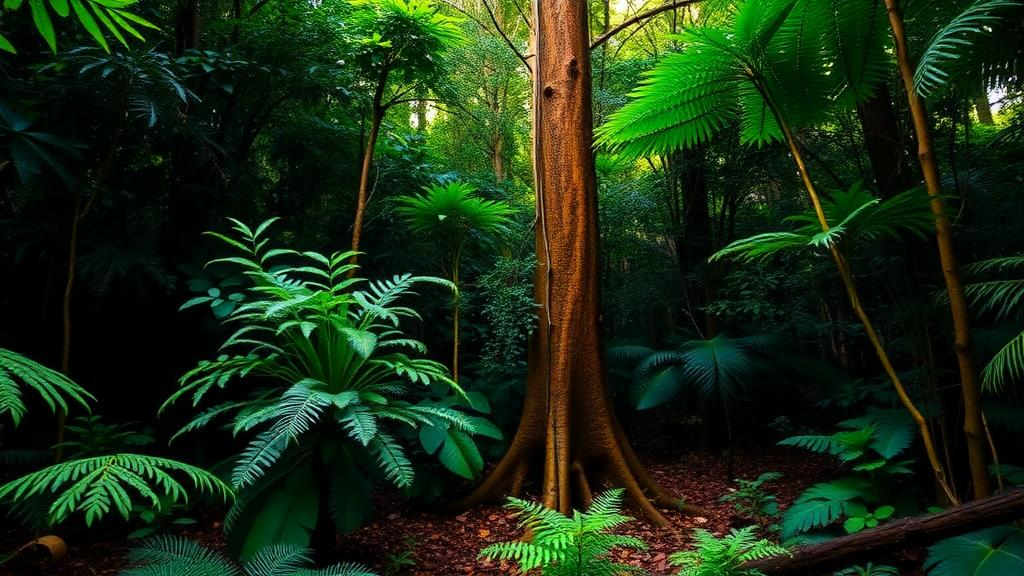
Deep in the lowland rainforests of Indonesia grows a towering member of the dipterocarp family that has, until now, kept its genetic secrets well hidden. Parashorea lucida, a Near Threatened tree native to these fast-disappearing forests, has become the latest addition to the growing library of fully sequenced chloroplast genomes, thanks to a team of Indonesian and Chinese researchers who have published the first complete plastome for the species. The work, released in the Indian Journal of Genetics and Plant Breeding, offers both a technical milestone and a practical toolkit for conserving one of Southeast Asia’s most ecologically vital yet imperiled groups of trees.
The chloroplast, the green organelle that powers photosynthesis, carries its own small circular genome that has become a workhorse of plant evolutionary biology. Because chloroplast DNA is abundant in leaf tissue, relatively easy to assemble, and evolves at a rate useful for resolving relationships among species and genera, complete plastomes have become the reference standard for plant phylogenetics. For commercially and ecologically dominant families such as Dipterocarpaceae, which anchor the lowland rainforests of Borneo, Sumatra and the Malay Peninsula, such genomic references have been strikingly incomplete. The new study closes one of those gaps.
The researchers worked from fresh leaf material collected at the Bogor Botanic Gardens in Indonesia, one of the oldest tropical botanical gardens in the world and an important ex situ refuge for dipterocarp diversity. DNA extracted from the leaves was sequenced on an Illumina platform, and the chloroplast genome was assembled de novo from the resulting reads. The team then annotated the genome, compared its structure with related dipterocarps, and placed it within a family-wide phylogenetic framework using modern maximum likelihood and Bayesian inference pipelines.
The resulting genome measures 152,067 base pairs and displays the classic quadripartite architecture seen across most flowering plants: a large single-copy region of 84,173 base pairs, a small single-copy region of 20,036 base pairs, and a pair of inverted repeats of 23,929 base pairs each that separate the two single-copy blocks. The overall guanine-cytosine content came in at 37.22 percent, a figure squarely within the range typical of angiosperm plastomes. In total, the team annotated 132 genes, comprising 87 protein-coding genes, 37 transfer RNA genes and 8 ribosomal RNA genes, a gene inventory consistent with the canonical plastid gene set of land plants.
Comparative analysis against other Dipterocarpaceae chloroplast genomes revealed a highly conserved genomic structure across the family. Gene order, gene content and the boundaries between the single-copy regions and the inverted repeats showed little variation, confirming that the plastome of P. lucida fits comfortably within the family’s established genomic blueprint. This structural conservatism is good news for comparative work: it means that variation among species is concentrated in sequence differences rather than large rearrangements, making the plastome a clean and interpretable signal for reconstructing evolutionary relationships.
That phylogenetic signal delivered a clear verdict. In the team’s analyses, Parashorea lucida fell squarely within the Parashorea clade, cleanly separated from Shorea, the largest and taxonomically most notoriously difficult genus in the family. The distinction matters because dipterocarp classification has been contested for decades, with morphological characters such as fruit calyx and flower anatomy producing conflicting groupings. Recent taxonomic revisions have begun to dissect the tribe Shoreae more rigorously, and complete plastomes like this one provide the kind of whole-genome evidence needed to test whether traditional genus boundaries reflect true evolutionary lineages.
Beyond the tree of life, the study delivered a practical bonus for conservation genetics. The team identified 80 simple sequence repeat loci, short tandemly repeated DNA motifs that are highly variable and easily typed, along with three highly variable intergenic regions. These markers give researchers a ready-made set of tools for probing population structure, gene flow and genetic diversity in wild and cultivated P. lucida populations. For a species listed as Near Threatened on the IUCN Red List, whose lowland forest habitat continues to be cleared and degraded across its native range, such markers can inform everything from seed collection strategies for restoration to the design of genetically representative protected areas.
The broader context gives the work its urgency. Dipterocarps dominate the canopy of Southeast Asian lowland rainforests and are famous for their irregular, mass-flowering and masting reproductive cycles, which make seed availability unpredictable and regeneration vulnerable to disturbance. Many family members are prized timber trees, and logging, land conversion and fire have pushed a large fraction of the roughly 500 species toward extinction risk. Recent genomic assessments of dipterocarps at the margins of Asian rainforests have documented small population sizes and substantial genomic erosion, underscoring how quickly genetic diversity can be lost even before a species disappears entirely. Reference genomes and molecular markers are the raw material for detecting and countering that erosion.
The study also fits into a wider effort led from Indonesia’s National Research and Innovation Agency, BRIN, which funded the work through its life sciences research organization. The project’s stated theme is the complete chloroplast genome sequencing of dipterocarp collections held in Indonesian botanic gardens that appear on the IUCN Red List, with the explicit aim of supporting conservation and sustainable use. By sequencing living collections that are already curated, documented and propagated, the researchers are effectively converting botanical garden accessions into genomic reference points, a strategy that multiplies the conservation value of ex situ collections. The assembled genome has been deposited in GenBank under accession number PX673255, with raw reads archived in the Sequence Read Archive, making the resource immediately usable by other laboratories.
What makes the achievement notable is how much conservation leverage a single 152,067-base-pair circle can provide. The genome settles the species’ phylogenetic home, confirms the structural stability of the family’s plastome, and hands practitioners a panel of variable markers, all from one sequencing run on garden-grown material. As the costs of sequencing continue to fall, the approach demonstrated here, pairing botanic garden collections with genome skimming and comparative plastomics, offers a scalable template for building a genomic safety net for the entire family. For Parashorea lucida and the rainforests it helps to build, the first complete chloroplast genome is less an endpoint than an opening move: the beginning of a genetic record that may prove essential to keeping the species, and the forests it defines, alive through the coming decades.
Subject of Research: Complete chloroplast genome sequencing and phylogenetic analysis of the Near Threatened dipterocarp tree Parashorea lucida
Article Title: First Complete Chloroplast Genome of Parashorea lucida (Miq.) Kurz (Dipterocarpaceae): Phylogenetic Resolution and Genomic Insights into a Native Species and Near Threatened Dipterocarp of Indonesian Lowland Rainforests
Article References: Febria, R., Priyadi, A., Pratiwi, R. A., Zulkarnaen, R. N., Andila, P. S., Prihatini, I., Rahayu, S., & Cao, Y. (2026). First Complete Chloroplast Genome of Parashorea lucida (Miq.) Kurz (Dipterocarpaceae): Phylogenetic Resolution and Genomic Insights into a Native Species and Near Threatened Dipterocarp of Indonesian Lowland Rainforests. Indian Journal of Genetics and Plant Breeding. https://doi.org/10.1007/s44489-026-00048-7
Image Credits: AI Generated
DOI: 10.1007/s44489-026-00048-7
Keywords: chloroplast genome, Parashorea lucida, Dipterocarpaceae, conservation genomics, plastome, phylogenetics, simple sequence repeats, Indonesia, lowland rainforest, IUCN Red List, genome assembly, botanic gardens
News Source: Juliet Wilcox. (October 6, 2026). Scientists Decode the Complete Chloroplast Genome of a Threatened Indonesian Rainforest Giant. Scienmag.