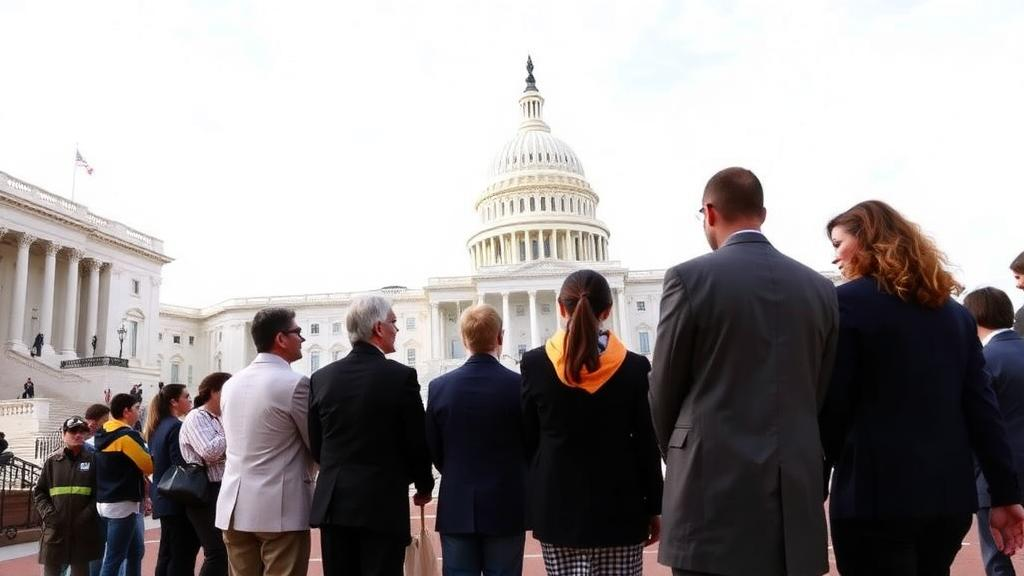
When forty-five internal medicine residents walked into the California State Capitol in Sacramento in May 2025, they were not there for a routine rotation or an elective shadowing experience. They were there to sit across the desk from state legislators and talk about health policy, armed with skills they had learned only days and weeks before. The event, described in a recent study published in the Journal of General Internal Medicine, represents one of the most concrete attempts yet to turn physician advocacy from an abstract professional ideal into a trainable, measurable competency. The program, known as the California Internal Medicine Resident Community-Engaged Advocacy Conference, was built through a partnership spanning five institutions and two community advocacy coalitions, and its early results suggest that even a brief, structured immersion in legislative advocacy can dramatically shift how young physicians see their role in shaping health policy.
The premise behind the conference rests on a tension that has long troubled medical educators. The Accreditation Council for Graduate Medical Education formally recognizes advocacy as a core competency for residents, meaning that programs are expected to produce physicians who can speak up for patients not only at the bedside but in the arenas where health-determining decisions are actually made. Yet national surveys of residency program directors have repeatedly shown that dedicated advocacy curricula remain scarce, fragmented, or optional. A systematic review of advocacy curricula in graduate medical education found that while interest is widespread, structured, experiential opportunities are the exception rather than the rule. Residents frequently graduate having never drafted a policy brief, never testified, and never met a legislator, despite being expected to understand how legislation shapes everything from insurance coverage to housing policy that affects their patients.
The organizers of the California conference, led by Natalie Colaneri of the University of California San Diego along with colleagues from UC San Francisco, UC Davis, and Stanford School of Medicine, set out to close that gap with a deliberately practical design. Rather than confining the training to lectures about the legislative process, they built a two-day experience that culminated in real meetings with state legislators. The first day was devoted to skill-building: didactic sessions on how the California legislature works, workshops on crafting and delivering an effective advocacy message, mock legislative meetings in which residents could rehearse their pitches and receive feedback, and a career panel featuring physicians who have made advocacy a central part of their professional lives. The second day moved the residents out of the classroom and into the Capitol itself, where they met with legislators and their staff to discuss policy issues relevant to the health of their communities.
What distinguishes this program from many earlier advocacy curricula is its community-engaged architecture. The conference was developed in partnership with the California Pan-Ethnic Health Network, a Sacramento-based organization focused on health equity for communities of color, and the End the Epidemics Coalition, a statewide campaign addressing the intertwined epidemics of HIV, viral hepatitis, sexually transmitted infections, and overdose. The GLIDE Foundation in San Francisco, a longtime provider of services to San Francisco’s most marginalized residents, also supported the effort. Community partners helped identify policy priorities and grounded the training in the lived realities of the populations residents serve, rather than in the abstract language of policy white papers. This co-creation approach reflects a growing body of educational theory suggesting that curricula designed jointly with stakeholders, including community members, produce learning that is more relevant, more durable, and more likely to change behavior.
The multi-institutional dimension was equally deliberate. Residents came from internal medicine programs across the University of California system and Stanford, meaning that the conference pooled trainees who would otherwise never learn together. This design carries practical advantages beyond economies of scale. Legislative advocacy is inherently relational, and building a network of physician-advocates across institutions creates a durable cohort that can support one another’s policy work long after residency ends. It also signals to residents that advocacy is not the idiosyncratic passion of a single mentor at their home program but a shared professional expectation across major California training centers. Funding came from a patchwork of institutional sources, including endowed teaching chairs, community grants, and a workforce training grant from the California Department of Health Care Access and Information, illustrating both the feasibility and the fragility of this kind of collaboration.
The evaluation, though modest in scale, delivered striking results. Sixteen of the forty-five residents completed a post-conference survey, and among those respondents the findings were unanimous. One hundred percent reported gaining relevant skills to participate in advocacy, and one hundred percent reported an increased likelihood that they would participate in advocacy in the future. A majority rated every individual session as having a major or moderate impact on their advocacy training, and every single respondent assigned that level of impact to the meetings with legislators. In medical education research, where survey interventions often produce incremental gains on Likert scales, a uniformly positive response is notable, and the organizers point to the experiential format, particularly the real legislative meetings, as the likely driver of that enthusiasm.
The findings align with a broader evidence base on advocacy training. Prior studies of single-day legislative advocacy experiences, including work with physicians-in-training published in BMC Medical Education, have shown that even brief exposure to the legislative process can improve self-reported competencies and attitudes. A three-tiered pediatric curriculum in New York demonstrated that residents can be taught advocacy at the individual, community, and legislative levels through a longitudinal design. What the California conference adds is a demonstration that such training can be delivered across multiple institutions simultaneously, with community organizations as genuine partners rather than token collaborators, and that the model can be mounted in a single academic year by a volunteer organizing team. The authors frame the conference as a template that other states and specialties could adapt, potentially multiplying its reach well beyond the forty-five residents who attended.
The study’s authors are candid about the obstacles. Funding was a persistent challenge, assembled from multiple grants rather than a stable institutional commitment. Time constraints loomed large, since residents operate under rigid clinical schedules and duty-hour limits, and pulling forty-five trainees out of their programs for two days required significant coordination. Identifying policy priorities that resonated across diverse institutions and communities demanded extensive negotiation with community partners. The low survey response rate of sixteen out of forty-five also limits the certainty of the conclusions, a limitation the authors acknowledge; the unanimous enthusiasm among respondents may partly reflect self-selection by residents who were already most engaged. Still, the program was reviewed and exempted by institutional review boards at all participating universities, and the organizers published their materials so that others can replicate the design.
The stakes of this kind of training extend well beyond residency education. Physicians occupy a distinctive position of public trust, and studies dating back more than a decade have documented that the public regards physicians as credible voices on health policy. Yet surveys of practicing physicians have consistently found that most engage in little or no political activity, citing lack of time, training, and confidence. If advocacy is genuinely a core competency, then the pipeline problem begins in training, and interventions like the California conference represent an attempt to intervene at the moment when professional identity is still forming. The residents who met with legislators in Sacramento in May 2025 may or may not become career policy advocates, but the evaluation suggests they now see advocacy as something they are equipped to do, not merely something they are told matters.
For the broader medical education community, the California experiment offers a practical answer to a question that has lingered since advocacy entered the competency framework: not whether physicians should be trained to advocate, but how. The answer emerging from Sacramento is experiential, communal, and collaborative, pairing classroom preparation with real-world practice and pairing academic institutions with the community organizations that understand health inequities most intimately. As the authors conclude, the conference addresses a genuine gap in resident education and offers a model for future community-engaged, multi-institutional collaborations. Whether that model spreads will depend on funding, institutional will, and the willingness of residency programs to treat the statehouse as an extension of the teaching hospital. The forty-five residents who made the trip suggest there is no shortage of demand among the trainees themselves.
Subject of Research: A legislative advocacy training conference for internal medicine residents developed with community coalitions in California
Article Title: Establishing a Multi-Institutional, Community-Engaged California State Legislative Advocacy Conference for Internal Medicine Residents
Article References: Colaneri, N., Griffiths, E. P., Teasdale, S., Jain, S., Charat, S., Santiago, C., Yamamoto, K., Binder, E., & Shankar, M. (2026). Establishing a Multi-Institutional, Community-Engaged California State Legislative Advocacy Conference for Internal Medicine Residents. Journal of General Internal Medicine. https://doi.org/10.1007/s11606-026-10717-8
Image Credits: AI Generated
DOI: 10.1007/s11606-026-10717-8
Keywords: physician advocacy, legislative advocacy, medical education, internal medicine residency, health equity, graduate medical education, community engagement, health policy, California legislature, ACGME core competencies, curriculum design, advocacy training
News Source: Ophelia Keating. (October 6, 2026). Doctors in the Capitol: Residents Learn Legislative Advocacy Through Hands-On Training. Scienmag.