When thousands of exposure scientists gather each year, the questions on the table are deceptively simple: what chemicals are people actually exposed to, how much of those chemicals enter their bodies, and what does that mean for human health? Answering those questions requires an enormous amount of technical work, from analytical chemistry and aerosol physics to toxicology, biomonitoring and computational modeling. That work will be on full display this week as the International Society of Exposure Science convenes its 2026 Annual Meeting in Vancouver, Canada, running from October 4 through October 8. Among the research teams presenting at the meeting is Chemical Insights, the chemical safety research institute of UL Research Institutes, which is bringing a substantial slate of symposium content, talks, a workshop and poster presentations focused on the impacts of chemical emissions on human health.
Chemical Insights’ footprint at the meeting is unusually broad for a single research organization. According to the institute, its scientists are hosting one symposium, delivering five presentations, leading one workshop and presenting six poster sessions. The topics span some of the most pressing exposure questions of the moment: the chemical emissions produced when electric vehicles catch fire, the smoke that wildfires carry into communities, the volatile organic compounds released by resins used in dental 3D printing, and the hidden chemical ingredients in everyday consumer products ranging from cosmetics to mobility aids. Together, the presentations illustrate how modern exposure science connects laboratory measurements of emissions to real-world estimates of the doses people receive.
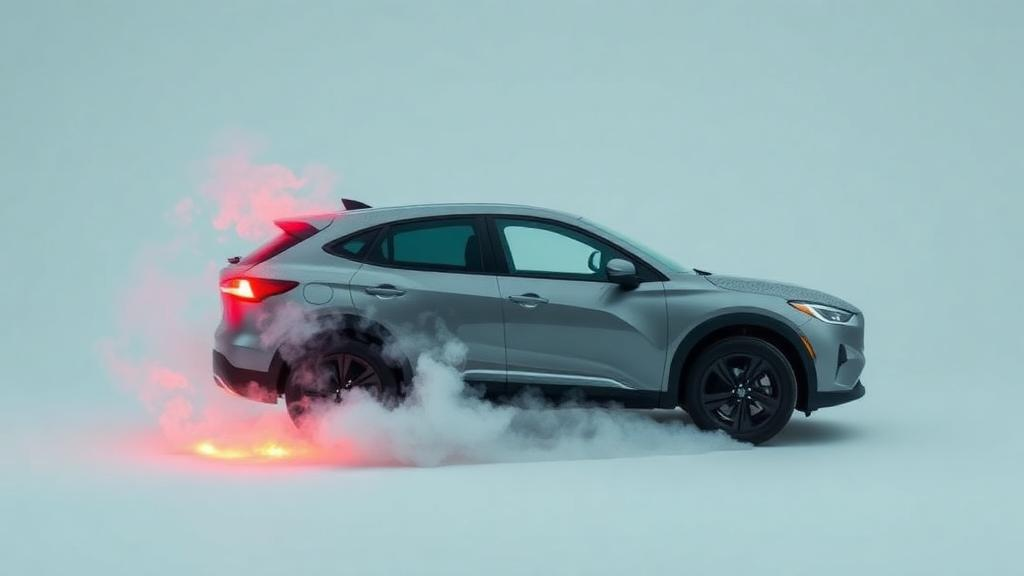
One of the most technically ambitious threads in the Chemical Insights program concerns electric vehicle fires. Lithium-ion battery failures, known as thermal runaway events, can release dense clouds of gases and fine particles containing metals and other hazardous species. Three separate contributions address this emerging risk from complementary angles. A poster presentation documents exposure to particulate matter and metals during controlled burns of electric vehicles, while another characterizes gas and particle-phase emissions from full-scale electric vehicle fires and discusses the implications for emerging exposure risks. A third presentation describes the physicochemical and toxicological characterization of particle emissions collected from those fires, linking the physical and chemical properties of the particles to their biological activity. A related poster examines the emissions profile of thermal runaway in mobility-aid batteries and evaluates how fire suppression systems influence those emissions.
The significance of this work lies in the gap it addresses. As electric vehicles, e-bikes, scooters and other battery-powered devices proliferate, first responders, occupants of nearby buildings and communities downwind of fire incidents face exposure scenarios that traditional fire-safety research never fully characterized. Battery fires can burn hotter and release different chemical species than conventional hydrocarbon fires, including metal-containing particles that may penetrate deep into the respiratory tract. By conducting controlled burns under laboratory conditions and collecting emissions for detailed analysis, researchers can begin to quantify what is released, in what quantities, and with what toxicological signatures — the raw material needed for exposure and risk assessments that protect firefighters, investigators and the public.
Wildfire smoke, another major theme at the meeting, receives dedicated attention in a scientific session on estimating and monitoring wildfire smoke exposures. Wildfire events have grown in frequency and intensity across many regions, pushing smoke plumes hundreds or thousands of kilometers from the fire line and exposing populations far removed from the flames. Estimating what people actually inhale during these events is a formidable measurement challenge: smoke composition changes as it ages in the atmosphere, monitoring networks are unevenly distributed, and individuals move through microenvironments with very different concentrations. The session reflects a growing effort across the exposure science community to combine ground sensors, satellite data, models and personal monitoring to produce exposure estimates that are accurate enough to support public health decisions such as school closures, clean-air shelter recommendations and targeted advisories for vulnerable groups.
Indoor and occupational exposures receive their share of the spotlight as well. One presentation examines the toxicity of volatile organic compound emissions from a dental 3D printing resin using a human alveolar tissue model. Dental laboratories and clinics increasingly rely on resin-based additive manufacturing, which can emit volatile organic compounds during printing and post-processing. Testing those emissions against human lung tissue models in the laboratory offers a way to assess potential respiratory toxicity without relying solely on animal studies or chemical-by-chemical literature reviews. It is a concrete example of a broader methodological trend in toxicology: the use of advanced in vitro systems derived from human cells to evaluate the hazards of complex chemical mixtures rather than single compounds in isolation.
Consumer products present a different kind of exposure puzzle, and two Chemical Insights posters tackle it directly. One, titled “The Ingredients You Can’t Read: Expanding Access to Consumer Product Chemical Data,” addresses a persistent transparency problem — many products contain chemical ingredients that are not disclosed on labels, leaving consumers, researchers and regulators without the information needed to assess exposure. A companion poster describes the integration of chemical profiling with Monte Carlo modeling for multi-route exposure risk assessment of cosmetic spray products. Monte Carlo methods allow researchers to propagate uncertainty across the many variables that shape real exposures, including how often a product is used, how much is applied, and how much of each chemical is inhaled, absorbed through the skin or ingested. Combining analytical chemical profiling of the products themselves with probabilistic modeling produces risk estimates that reflect the full range of real-world use patterns rather than a single worst-case scenario.
Several contributions push the methodological frontier of the field. A presentation on a systematic framework for exposure reconstruction from biomarker data addresses one of exposure science’s hardest inverse problems: working backward from chemicals measured in blood, urine or other biological samples to infer the magnitude, timing and source of the original exposure. Biomarkers integrate exposure across all routes and sources, but interpreting them requires careful modeling of how chemicals are absorbed, distributed, metabolized and eliminated. Another presentation leverages non-targeted analysis of human biomonitoring data, an analytical strategy that screens samples for a vast array of chemical features without deciding in advance which compounds to look for, allowing previously unrecognized exposures to surface. Chemical Insights is also participating in a scientific session on artificial intelligence and machine learning in exposure science, a rapidly growing area where algorithms are being applied to everything from sensor networks to large biomonitoring datasets.
The workshop on advancing exposure forensics for environmental health protection highlights another emerging discipline. Exposure forensics applies the investigative tools of exposure science to determine the source, pathway and timing of chemical exposures after the fact — whether in litigation, in outbreak investigations, or in community health studies where residents suspect an environmental cause of illness. Building capacity in this area requires shared methods for chemical fingerprinting, source attribution and reconstruction of past exposures, along with standards for how such evidence is communicated to regulators, courts and affected communities. A presentation titled “Beyond the Logo: Advancing the Exposome Through Collaborative Exposure Science at UL Research Institutes” situates the institute’s portfolio within the exposome concept, the ambitious framework that seeks to capture the totality of environmental exposures a person experiences across a lifetime, from chemicals and pollutants to psychosocial stressors.
Finally, a poster on the CIExpo Portfolio describes an effort to integrate exposure data from source to intake — that is, to trace chemicals from the moment they are emitted by a product, material or process through the environmental pathways they travel to the point where they enter a human body. That source-to-intake chain is the conceptual backbone of exposure science, and integrating data across it remains one of the field’s central technical challenges, requiring alignment of emission measurements, environmental fate modeling, microenvironmental monitoring and human activity patterns. Taken together, the Chemical Insights program at the ISES Annual Meeting offers a snapshot of where exposure science is heading: toward complex real-world scenarios such as battery fires and wildfire smoke, toward human-relevant toxicological models and non-targeted chemistry, and toward computational tools — from Monte Carlo simulation to machine learning — capable of turning fragmented measurements into actionable knowledge for protecting public health.
Subject of Research: Chemical exposure science research on emissions from electric vehicle fires, wildfire smoke, 3D printing and consumer products
Article Title: Chemical Insights’ research to make an impact at The International Society of Exposure Science Annual Meeting
Article References: Chemical Insights’ research to make an impact at The International Society of Exposure Science Annual Meeting. (n.d.). Original publication
Image Credits: AI Generated
DOI: Not provided
Keywords: exposure science, ISES Annual Meeting, electric vehicle fires, thermal runaway, wildfire smoke, volatile organic compounds, 3D printing resin, biomonitoring, Monte Carlo modeling, consumer product chemicals, particulate matter, UL Research Institutes
News Source: Denise Maddox. (October 5, 2026). Electric Vehicle Fires, Wildfire Smoke and 3D Printing Take Center Stage as Exposure Scientists Gather in Vancouver. Scienmag.